Acne Patch Market Trends 2026: What OEM Brands Need to Know
VEILTA
09/04/2025
The acne patch category is still growing, but the easy phase is over. In 2026, brands are no longer competing only on whether the patch works. They are competing on format, ingredient clarity, packaging logic, and how well the SKU fits the way people discover and buy skincare now.
That matters for OEM brands because a slow development cycle can leave you with the wrong product mix. A patch that looked safe twelve months ago can already feel dated by launch. The brands that move well in this category are usually not the ones chasing every trend. They are the ones choosing the few trends that actually fit their price point, customer, and sales channel.
This guide looks at the acne patch market trends that matter most in 2026 and what they mean for OEM product planning.
Trend Snapshot for OEM Brands
| Trend | What It Means | Best Fit |
|---|---|---|
| Category growth continues | More opportunity, but more competition | All brands in the category |
| Microneedle gains visibility | Premium upgrade path is stronger than before | Premium, innovation-led brands |
| Ingredient transparency rises | Clearer formula story matters more | Ingredient-led and trust-led brands |
| Custom shapes stay relevant | Social visibility can still drive recognition | Gen Z and social-first brands |
| Sustainable packaging pressure rises | Waste-heavy pack structures look weaker | Retail-facing and premium brands |
Quick Takeaways
- The acne patch category is still growing, but competition is tighter.
- Basic hydrocolloid remains the volume anchor, but it is no longer enough by itself for many brands.
- Microneedle patches are drawing more attention, though they still need careful positioning.
- Ingredient transparency is becoming a stronger trust signal.
- Custom shapes and visible patches still matter in social-driven segments, especially for younger buyers.
- Sustainable packaging is becoming harder to ignore, even when price remains important.
- For many OEM brands, the strongest 2026 strategy is a mixed SKU structure rather than a single hero format.
1. Category Growth Is Still There, But Buyers Are More Selective
The acne patch market is not standing still. Public market reports still point to category growth.
According to Grand View Research, the global anti-acne dermal patch market was valued at USD 571.2 million in 2023 and is projected to reach USD 870.3 million by 2030, growing at a 6.2% CAGR from 2024 to 2030. In the U.S., Grand View Research estimates the market at USD 133.6 million in 2024, with a projected 6.8% CAGR from 2025 to 2033.
That is healthy growth, but it does not mean every OEM launch will win. Growth categories usually become harder once more brands enter. By 2026, the challenge is less about whether the category has momentum and more about whether your SKU still looks relevant in a crowded shelf or feed environment.
Why This Matters for OEM Brands
For OEM brands, category growth creates two pressures at the same time:
- more room to launch
- more pressure to differentiate
A plain hydrocolloid patch still has a market, but more brands now need a clearer reason to exist. That may come from product format, ingredient story, packaging, shape design, or channel-specific positioning.
2. Microneedle Is Moving Out of the Niche Category
Microneedle acne patches are still not the default format, but they are no longer a fringe concept.
Public OEM and market-facing content over the last year shows more suppliers and brands talking about microneedle patches as a premium or upgraded acne treatment format. That does not automatically mean mass-market dominance in 2026, but it does mean the consumer education burden is lower than it was a few years ago.
This matters because a format that once required heavy explanation now has more built-in recognition, especially among shoppers already familiar with active skincare and targeted treatment products.
What Microneedle Changes for OEM Brands
Microneedle patches can give a brand:
- a more premium-looking SKU
- a stronger technology story
- more room for differentiated positioning
- higher perceived value compared with a plain patch
That said, microneedle is not a universal answer. It usually comes with higher cost, more technical complexity, and a narrower fit for buyers who just want a simple, affordable breakout patch.
The better question is not whether every brand should launch microneedle. It is whether this SKU fits your customer, channel, and margin structure.
When Microneedle Is Worth Testing
Microneedle is usually more worth testing when:
- the brand already sells higher-ticket skincare
- the customer is comfortable with active-driven or premium treatment products
- the product line needs a stronger innovation signal
- the margin structure can absorb a more expensive format
- the brand is willing to spend more on explanation, testing, and positioning
For many OEM brands, microneedle works best as a selective premium SKU, not the first SKU in the line.
3. Ingredient Transparency Is Becoming a Stronger Purchase Signal
Consumers are not just looking at the front of the pack anymore. More of them are paying attention to what is inside and whether the brand explains it clearly.
That does not mean every buyer is reading a full INCI panel like a formulator. But the direction is clear. Ingredient trust, label clarity, and proof-based claims are getting more attention across beauty and personal care.
Recent signals support this shift:
- Grand View Research notes ongoing demand for natural and personalized anti-acne products in the U.S.
- McKinsey’s 2025 packaging research found that label information has become more important to U.S. consumers
- Mintel commentary in early 2025 highlighted stronger demand for transparency and proof in beauty purchasing
For acne patch brands, this usually shows up in simple ways:
- consumers ask what the patch actually contains
- active ingredients are part of the conversion story
- unclear or overhyped claims create more skepticism than before
What This Means in Practice
In 2026, it is harder to rely on vague product language.
Brands should expect more attention on:
- ingredient list clarity
- active ingredient purpose
- whether the patch is plain hydrocolloid or medicated
- whether claims sound realistic
- whether packaging and product story match the actual formula
A cleaner, more understandable ingredient story is becoming part of product trust.
What OEM Brands Should Do About It
For OEM brands, this usually means:
- simplify ingredient messaging
- avoid overclaim-heavy packaging
- make the formula story easier to explain in one sentence
- keep the visible product story consistent with the actual ingredient profile
A patch does not need a long ingredient narrative. It needs a believable one.
4. Custom Shapes Still Matter Because Social Visibility Still Matters
One mistake buyers make is assuming fun patch shapes are just a short-term gimmick. That is too simple.
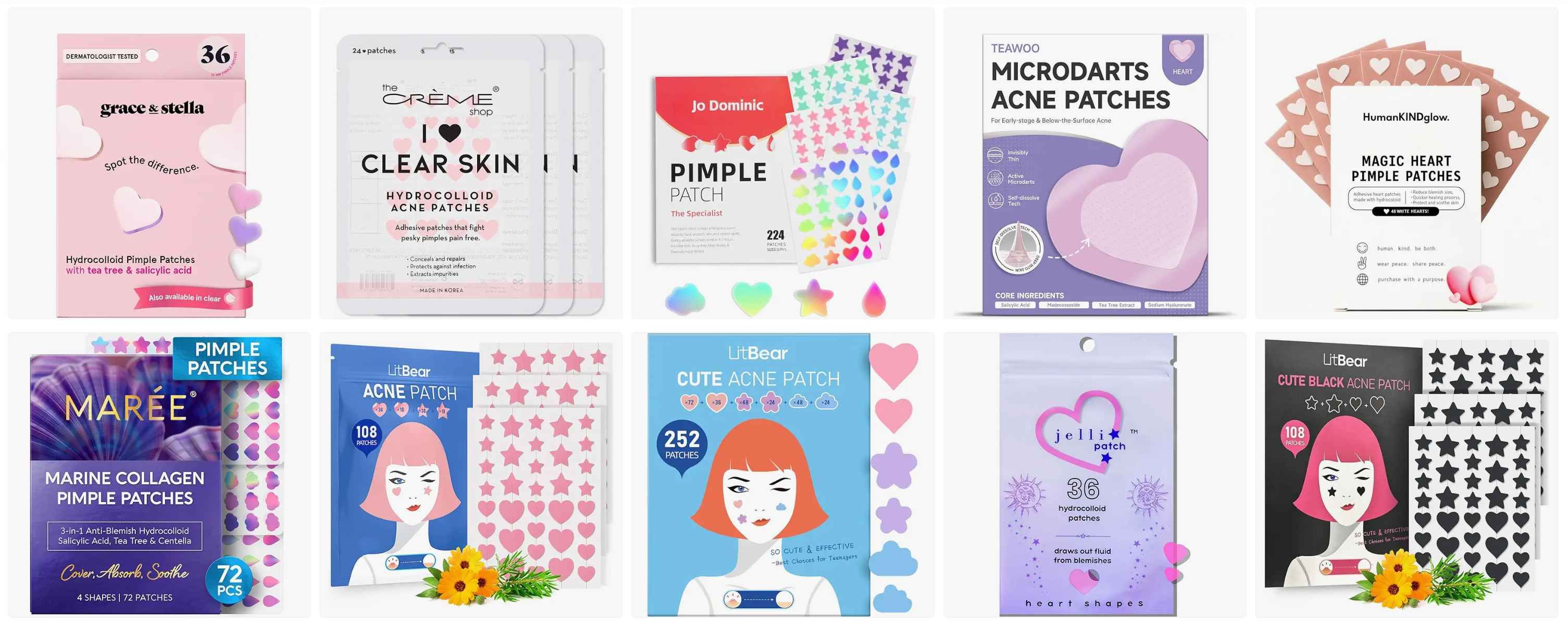
Visible acne patches still have social value, especially for younger consumers. In some segments, the patch itself has become part of personal style, content behavior, or low-stakes self-expression.
That does not mean every brand should make stars, hearts, or novelty shapes. It does mean shape design is no longer a purely secondary detail.
For Gen Z-led or social-first brands, custom shapes can do three useful things:
- make the product more recognizable in content
- create a stronger brand signature
- reduce the medical feeling of breakout treatment
Where Custom Shapes Make Sense
Custom shapes tend to work best for brands that are:
- social-first
- Gen Z-facing
- retail-friendly in visual merchandising
- trying to build stronger brand recognition
- selling both function and personality
For more clinical or minimalist brands, transparent or near-invisible formats may still be the better call.
When Custom Shapes Are Not the Best First Bet
Custom shapes are less useful when:
- the brand is still proving baseline demand
- the channel is driven more by function than aesthetics
- cost control is more important than visual differentiation
- the brand does not yet know whether the customer will pay for novelty
In many OEM projects, shape is a second-stage brand tool, not the first product decision.
5. Sustainable Packaging Is Becoming Harder to Ignore
Sustainability is not the only thing consumers care about. Price, quality, and convenience still matter more in many categories. But that does not make packaging sustainability optional.
McKinsey’s 2025 packaging research shows that environmental impact is still a meaningful factor for many buyers, and younger consumers are generally more willing to pay more for sustainable packaging. The same research also points to recyclability as a major sustainability signal.
For acne patch brands, this does not mean every pack needs to be radically redesigned overnight. It does mean buyers and retailers are less likely to ignore packaging choices that look unnecessarily wasteful.
What OEM Brands Should Watch
In practical terms, sustainable packaging pressure often shows up through:
- requests for simpler pack structures
- pressure to reduce unnecessary inserts
- more questions about recyclability
- interest in paper-based or lower-plastic secondary packaging
- more scrutiny when premium packaging creates obvious waste
The main mistake here is overengineering the sustainable story. In most cases, the better move is simpler packaging, clearer material logic, and less waste rather than dramatic claims.
Which Trends Fit Scale and Which Fit Small-Batch Testing
Not every trend deserves immediate scale.
A practical way to think about 2026 product planning is this:
| Trend Direction | Better for Scale | Better for Pilot or Small-Batch Test |
|---|---|---|
| Standard hydrocolloid | Yes | Yes |
| Ingredient-led medicated patch | Yes, if claims and formula are clear | Yes |
| Microneedle patch | Usually after validation | Yes |
| Custom-shape patch | Sometimes, if branding is strong | Yes |
| New sustainable pack structure | Sometimes, if supply chain is stable | Yes |
This matters because many brands lose money by scaling the most visible trend instead of the most commercially stable one.
6. The Best 2026 OEM Strategy Is Usually a Smarter SKU Mix
For most brands, 2026 is not the year to bet everything on one patch type.
A more practical strategy is a layered SKU structure. That often means:
- one volume-friendly standard hydrocolloid SKU
- one upgraded active or medicated SKU
- one more differentiated or premium SKU, such as microneedle or another advanced treatment format
- one optional custom-shape or channel-specific SKU if social visibility matters
This kind of mix works because it gives the brand:
- an entry point
- a mid-tier trade-up path
- a more premium or differentiated option
That is usually stronger than trying to make one product solve every price point and customer need.
A Practical 2026 SKU Mix for OEM Brands
| SKU Type | Role in the Line | Why It Matters |
|---|---|---|
| Standard hydrocolloid patch | Volume base | Easier entry point and broadest demand |
| Medicated or active patch | Mid-tier upgrade | Gives the brand a clearer ingredient story |
| Premium patch or microneedle patch | Differentiation layer | Adds higher perceived value and stronger innovation signal |
| Custom-shape or social-first patch | Brand visibility layer | Useful for younger or more shareable positioning |
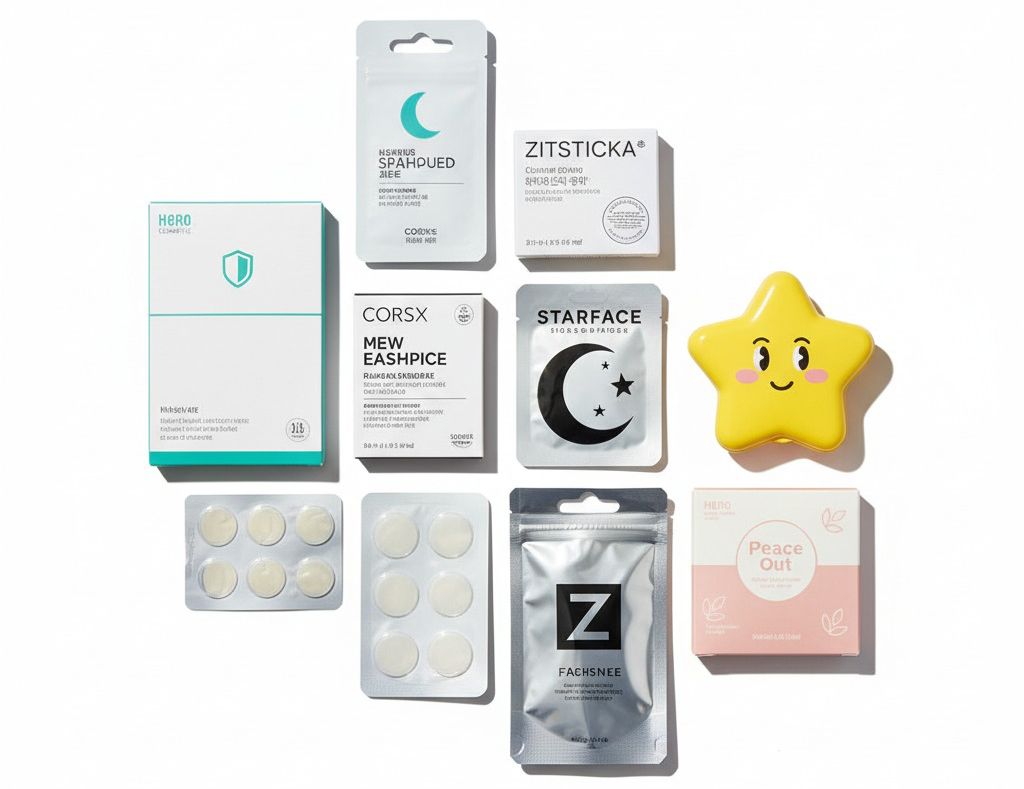
Not every brand needs all four. But most brands benefit from thinking in terms of product roles, not just single-product launches.
The Most Practical 2026 Bet for OEM Brands
If the brand is still early, the safest structure is usually:
- standard hydrocolloid for volume
- one ingredient-led upgrade for margin and story
- one premium or experimental SKU for testing, not for immediate heavy inventory
That mix usually gives enough range without forcing the business to bet too much on the least proven format.
What OEM Brands Should Actually Do Next
If you are planning acne patch products for 2026, the safest next step is not to chase every new idea. It is to narrow the category into a few choices your brand can actually support.
Focus on these questions:
- Is our customer buying on price, image, or ingredients?
- Do we need one hero SKU or a small line with trade-up options?
- Can we support a more advanced patch format commercially, not just creatively?
- Does custom design help conversion in our channel, or just make development more expensive?
- Where can we simplify packaging without making the product feel cheap?
Good product planning usually comes from those questions, not from trend watching alone.
Final Thoughts
The acne patch market is still growing, but growth alone is no longer enough. In 2026, brands need a sharper point of view on format, ingredients, packaging, and SKU structure.
If you need the broader framework behind supplier selection, OEM planning, and manufacturing decisions, read our OEM Pimple Patches Sourcing Guide.
FAQs About Acne Patch Market Trends in 2026
Is the acne patch market still growing in 2026?
Yes. Public market reports still point to continued category growth. Grand View Research estimates the global anti-acne dermal patch market at USD 571.2 million in 2023 and projects it to reach USD 870.3 million by 2030.
Are microneedle acne patches becoming more mainstream?
They are gaining more attention and becoming easier for consumers to understand, especially in premium skincare. They are still not the default format, but they are no longer a niche concept known only to early adopters.
Why is ingredient transparency more important for acne patch brands now?
Consumers are paying more attention to ingredient clarity, product claims, and label information. Brands that explain what the patch contains and what it is meant to do tend to build trust more easily than brands using vague claim language.
Do custom-shape acne patches still matter in 2026?
Yes, especially for brands targeting younger and more social-first audiences. Shape can affect recognizability, shareability, and brand personality even when the underlying function is similar.
Is sustainable packaging important in acne patch products?
Yes, although price and quality still matter a lot. Sustainable packaging is becoming more relevant, especially for younger consumers and brands that want to avoid packaging choices that look unnecessarily wasteful.
What is a smart OEM SKU strategy for acne patches in 2026?
For many brands, a balanced product mix works best: a standard hydrocolloid SKU for volume, an active or medicated SKU for trade-up, and a more differentiated premium SKU for stronger brand positioning.
Which acne patch trends are better for large-scale launch and which are better for testing first?
Standard hydrocolloid and clear ingredient-led patches are usually easier to scale. Microneedle formats, custom shapes, and new packaging structures are often better tested first in smaller runs before committing to heavier inventory.
What is the safest acne patch product mix for an OEM brand in 2026?
For many brands, the safest mix is a standard hydrocolloid volume SKU, one ingredient-led upgrade SKU, and one premium or experimental SKU tested more cautiously. That gives both market coverage and room for differentiation without overcommitting too early.