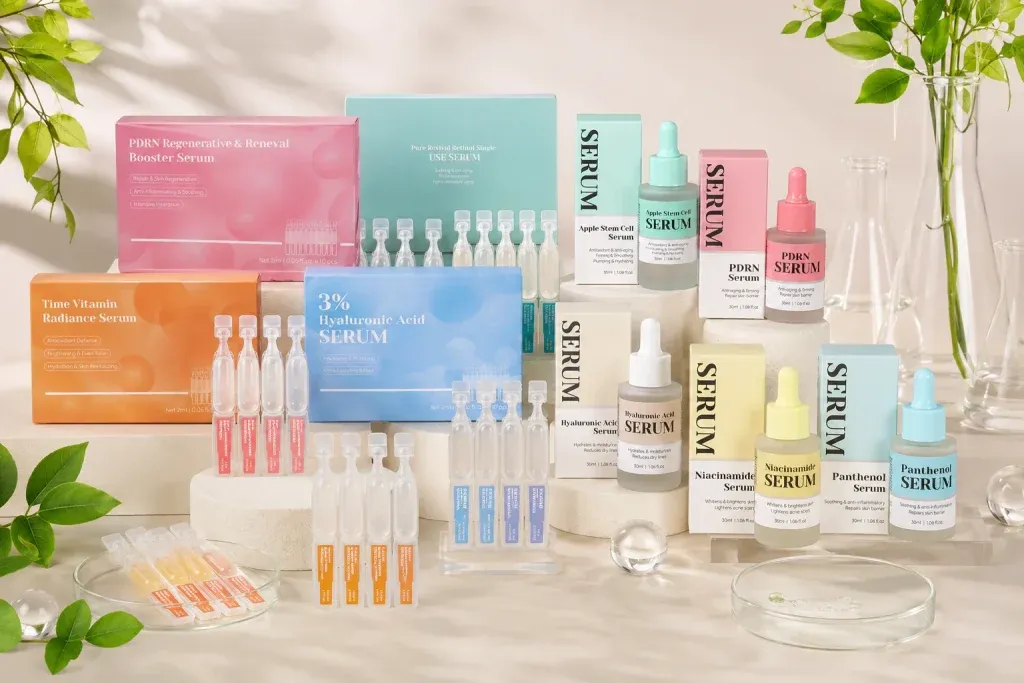
Dropper, airless and ampoule serums formulated and filled in-house — from 5,000 pieces, with stability tested before the packaging is committed.
Product fundamentals
A serum is a low-viscosity aqueous or anhydrous concentrate, usually 15–50 ml, dispensed by dropper, pump or single-use ampoule. What decides commercial success is not the hero ingredient but viscosity, pH and how much air the pack lets in.
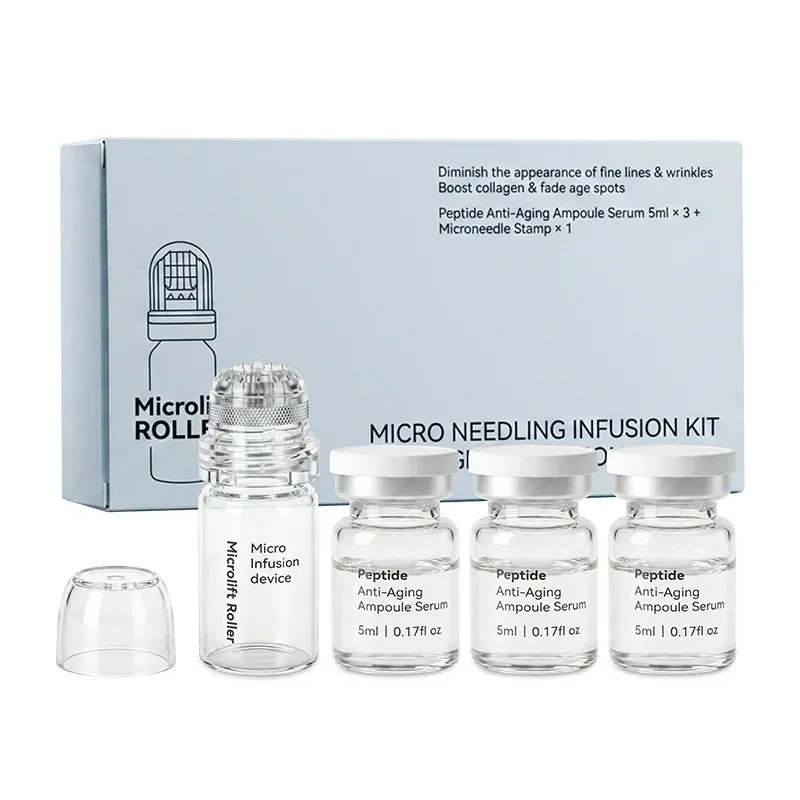
A serum can pass every lab test and still fail in market. The usual causes are predictable:
That is why we develop the formula and the pack together. A 15 ml dropper bottle allows more headspace and more air ingress than a 30 ml airless pump, and the difference shows up as colour change at month six, not at release.
Swipe the table →
| Parameter | Typical range |
|---|---|
| Minimum order | 5,000 pieces per formula, 10,000 per printed carton |
| Fill volume | 15 / 30 / 50 / 100 ml; ampoule 1.5–2 ml |
| Viscosity | 500–8,000 cps |
| pH range | 4.0–6.5 typical; 3.0–3.5 for L-ascorbic acid systems |
| Fill accuracy | ±1% by weight, checked hourly |
| Dispensing formats | Dropper, airless pump, ampoule, vial, pump bottle |
| Sample lead time | 7–10 working days |
| Bulk lead time | 25–30 working days after artwork approval |
At 30 ml, a 3% overfill is 0.9 ml per unit — invisible on one bottle, worth around USD 900 on a 30,000-piece run. Conversely an underfill is a labelling violation in most markets, because the declared net content must be met on average across the batch. We fill by weight rather than volume and check hourly, which is the only approach that holds tolerance across a shift.
Packaging selection
Serum packaging is not a cosmetic choice. Each format imposes a different oxygen exposure, a different preservative demand and a different unit cost.
Swipe the table →
| Format | Air exposure | Preservative demand | Relative cost | Best suited to |
|---|---|---|---|---|
| Glass dropper bottle | High — every use opens the pack | High | Low | Water-based serums with a robust preservative system, 15–30 ml |
| Airless pump | Very low — piston follows product | Low | Medium–high | Retinol, vitamin C, peptides, any oxidation-sensitive formula |
| Single-use ampoule | None until opened | Low per unit | Medium | High-activity concentrates, travel and treatment retail |
| Glass vial with cap | Moderate | Medium | Low | Clinical and professional-channel positioning |
| Pump bottle (50–100 ml) | Low | Medium | Medium | Body and scalp serums at larger volumes |
A glass dropper bottle is the cheapest and most recognisable format, and it is the wrong choice for an oxidation-sensitive formula. Every time the cap comes off, the headspace exchanges with room air. A 15% L-ascorbic acid serum in a dropper will typically darken noticeably within three to four months of opening, which generates exactly the kind of review a new brand cannot afford.
An airless pump costs roughly 30–50% more per unit on the component alone. For a formula containing retinol, vitamin C or a delicate peptide, that premium buys shelf life and colour stability — and it is far cheaper than reformulating to a more stable but less marketable active level.
Single-use ampoules remove the preservative burden almost entirely and signal "treatment" to the buyer. They also cost more per millilitre, generate packaging waste, and require a filling line with different tolerances. Ampoules suit professional channels, travel retail and gift sets far better than a mass e-commerce listing.
Formulation scope
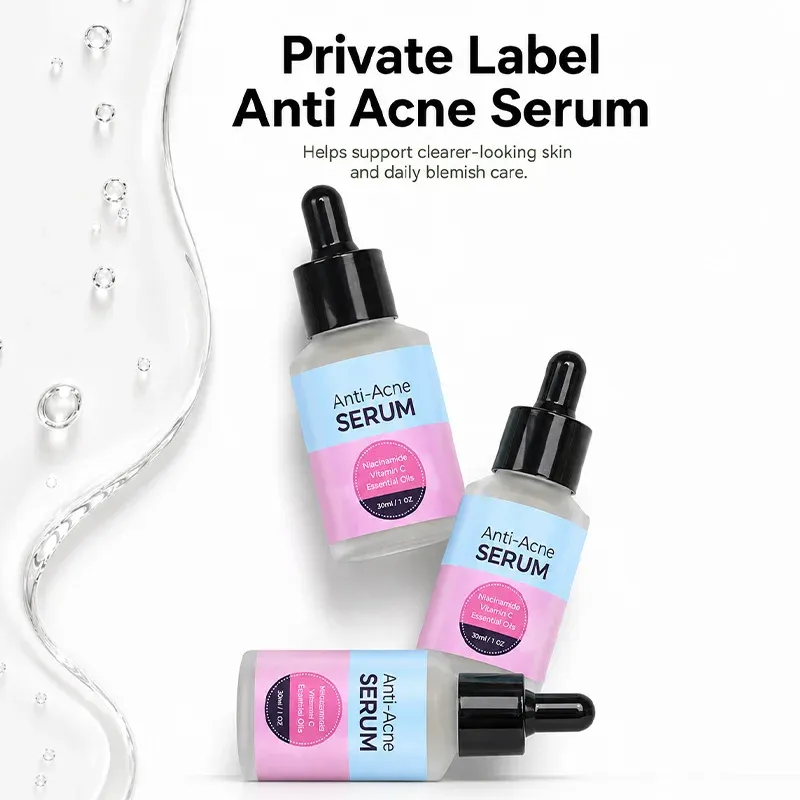
Most 'can you formulate this' questions have a numeric answer. The table below shows the concentration ranges we routinely work to, and the constraint each active imposes.
Swipe the table →
| Active | Typical use level | Main formulation constraint |
|---|---|---|
| L-ascorbic acid | 10–20% | Requires pH below 3.5; oxidises rapidly, needs airless or single-use pack |
| Niacinamide | 2–10% | Stable at pH 5–7; above 10% flushing risk rises and gain flattens |
| Salicylic acid | 0.5–2% | Needs pH 3–4 and a solubiliser; regulatory limit varies by market |
| Hyaluronic acid (multi-weight) | 0.1–2% | Viscosity climbs steeply with molecular weight; high levels feel tacky |
| Retinol | 0.1–1% | Light and oxygen sensitive; requires airless, opaque pack and antioxidant system |
| Peptides | 1–5% | Compatibility with preservatives and chelators must be checked per peptide |
| Panthenol | 1–5% | Easy to formulate; plasticky feel above 5% |
| Centella asiatica extract | 1–5% | Colour varies by lot; standardise on madecassoside where claim depends on it |
| Caffeine | 1–3% | Poorly soluble in water alone; needs glycol or a solubiliser |
"Can we do 20% vitamin C?" Yes, but only in a pack that excludes oxygen, and only with a pH below 3.5 — which many consumers find stinging. Most commercial 15% products trade a little efficacy for tolerance.
"Why not 20% niacinamide?" Because the dose-response curve flattens around 5% and irritation rises. Above 10% the formula is harder to sell on claim and no easier to justify on cost.
"Can we combine retinol and vitamin C?" Not in one aqueous formula at effective levels. The pH windows do not overlap. Separate products, or separate times of day, are the honest answer.
Swipe the table →
| Element | Options | Effect on minimum order |
|---|---|---|
| Formula | Library or bespoke | Library at base MOQ; bespoke +5,000 pcs |
| Viscosity and texture | Water-light to gel-serum, 500–8,000 cps | Included |
| Fragrance | Fragrance-free or specified | Included |
| Colour | Clear, tinted, pearlescent | +2,000 pcs for pearlescent |
| Pack | Dropper, airless, ampoule, vial | Structure-dependent |
| Carton | Up to 6 colours, spot UV, foil | +5,000 pcs per design |
We decline briefs that specify a concentration with no tolerance for the formula being unstable. If the marketing plan requires 20% L-ascorbic acid in a clear dropper bottle on a 24-month shelf claim, the honest answer is that it will not hold — and no reputable formulator should say otherwise.
01
Brief and claim review
Target concern, hero active, retail price and market. We flag within two working days any claim that needs substantiation, and any active level that will not hold in the pack you have in mind.
02
Formula development or library selection
Library formulas launch fastest. Bespoke development takes a lab batch, a compatibility check against the chosen pack, and a preservative efficacy review.
03
Pack compatibility testing
The formula is held in the actual pack — not a generic jar — through an accelerated cycle. Pump elastomer and dropper bulb interactions surface here, not in market.
04
Sampling and stability
7–10 working days for samples. Accelerated stability runs at 40°C/75% RH with colour, pH and viscosity logged at each timepoint.
05
Filling and in-process control
Fill by weight to ±1%, checked hourly. Bottles are torque-checked, cartons are coded per batch, and retained samples are pulled from the start, middle and end of the run.
06
Release and export documentation
Micro results, batch record and COA before release. Export cartons and shipping documents prepared against your forwarder's specification.
Commercials
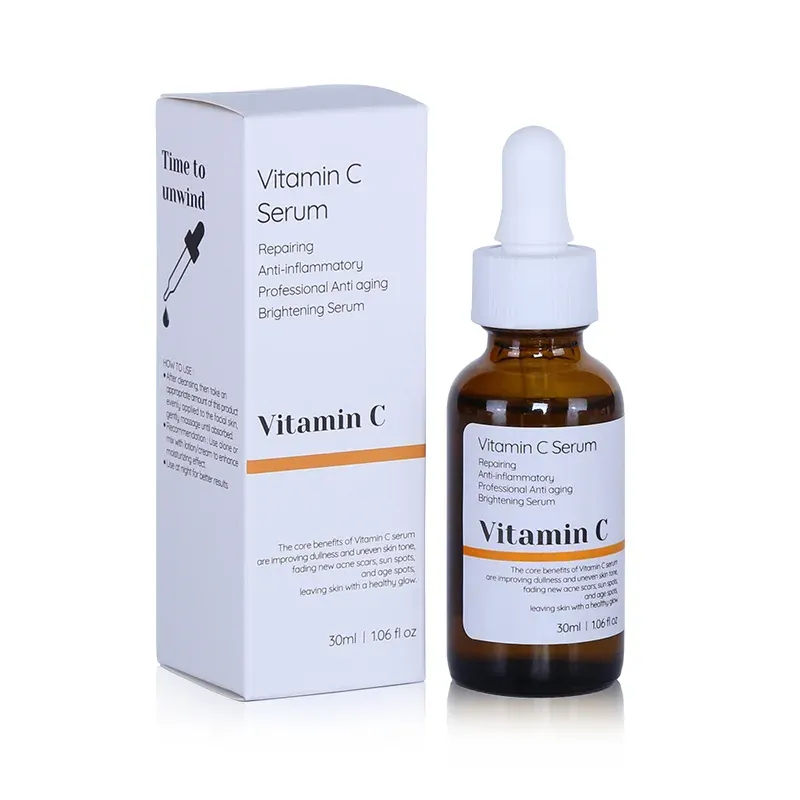
Serum is the category where packaging dominates unit cost. On a 30 ml dropper product, the formula is often the smallest line item.
Swipe the table →
| Order quantity | Relative unit cost | Production window |
|---|---|---|
| 5,000–9,999 pcs | Highest | 25–28 working days |
| 10,000–49,999 pcs | Mid | 25–30 working days |
| 50,000–199,999 pcs | Lower | 30–35 working days |
| 200,000+ pcs | Lowest | Scheduled per project |
A finished 30 ml serum breaks down roughly as: primary pack 30–45%, formula 15–25%, carton and labelling 10–15%, filling and QC 10–15%, export packing and freight 5–10%. Two consequences matter commercially.
First, the pack is the negotiation lever, not the active. Moving from an airless pump to a dropper can reduce unit cost by 30% or more on the component — and it changes what formula you can sell. Second, fill volume is a pricing decision: a 15 ml dropper and a 30 ml dropper share almost the same component cost, so the smaller unit carries a much higher cost per millilitre. That is why 15 ml exists as a trial or travel format, not as a volume product.
Library-formula samples are charged at cost and credited against the bulk order. Bespoke formulation carries a development fee that is credited once production passes 20,000 pieces; the fee covers lab time and a stability run, both of which are real costs regardless of eventual volume.
25–30 working days starts from signed artwork and received deposit. The variable that most often slips is pack availability: airless pumps and glass droppers in non-standard finishes are frequently 3–5 weeks lead-time items on their own. If launch date is fixed, confirm pack stock before approving artwork.
Quality and compliance
A serum fails in three ways: it separates, it changes colour, or it grows something. Each has a specific test, and each test has a timepoint that matters.
Swipe the table →
| Document | What it covers | When issued |
|---|---|---|
| INCI list | Full declaration in your market's required order | With quotation |
| COA | Batch-specific results against specification | With shipment |
| SDS / MSDS | Handling and transport classification | With quotation |
| Stability report | Accelerated and real-time data at the timepoint reached | After stability run |
| Preservative efficacy report | Challenge test results for the formula | After challenge test |
| CPSR support | Safety assessment inputs for EU placement | On request |
On a serum, colour change is the earliest visible failure and the one customers report. It has two usual causes: oxidation of an active, or a fragrance component reacting with the container. Both are predictable in an accelerated run and both are expensive to discover after launch.
Buyer's checklist
Serum suppliers all claim custom formulation and fast turnaround. These questions reach the parts of the process that differ.
This page covers one category only. Brands assembling a complete line usually pair it with Face Cream OEM and Acne Patch OEM. MOQ, lead times and material options for every category we run sit on the OEM/ODM service page.
The questions brands ask during evaluation, answered with the figures we quote against.
5,000 pieces per formula. A printed carton raises the minimum to 10,000 pieces per design. Bespoke formulation carries a 10,000-piece minimum because development and stability testing are fixed costs that do not scale down with order size.
7–10 working days for samples, longer for a bespoke formula that needs a stability pre-check. Bulk production is 25–30 working days after signed artwork and deposit. Pack lead time is separate and frequently longer than the fill lead time.
Yes, with two conditions: the pH must sit below 3.5 for L-ascorbic acid to remain effective, and the pack must exclude oxygen. In practice that means an airless pump or single-use ampoule, not a clear dropper bottle. A 20% formula in a dropper will darken within three to four months of opening.
2–10%, stable at pH 5–7. The dose-response curve flattens around 5%, and above 10% the risk of flushing and irritation rises without a proportional benefit. Most commercial products settle between 4% and 10%.
Yes. We fill droppers, airless pumps, ampoules, vials and pump bottles. Airless pumps add 30–50% to component cost but are the correct choice for retinol, vitamin C and oxygen-sensitive peptides, because the piston excludes air as product is dispensed.
Yes. Accelerated stability runs at 40°C/75% RH for three months with pH, viscosity and colour logged at each timepoint, plus real-time data at the timepoint reached. We supply photographs as well as pass/fail summaries, because colour drift is a market problem that a summary can hide.
Yes. Send the full formula with ingredient percentages and we will review it for compatibility with our gel system, run a lab batch, and confirm whether it casts and dries cleanly. Formulas that rely on high alcohol content or oil-heavy phases often need adjustment before they will hold a sheet.
15, 30, 50 and 100 ml for bottles and pumps, and 1.5–2 ml for ampoules. Fill accuracy is ±1% by weight, checked hourly. Note that a 15 ml and a 30 ml dropper share almost the same component cost, so the smaller unit carries a much higher cost per millilitre.
Yes. Fragrance-free is standard at no MOQ penalty. Vegan formulations avoid animal-derived ingredients including collagen and silk protein, substituting plant-derived equivalents and declaring them in the INCI list. Both options are available across the library and in bespoke development.
Full INCI, batch COA, SDS/MSDS, accelerated and real-time stability data, preservative efficacy results and the inputs a safety assessor needs for an EU CPSR. We also supply export documentation for your forwarder. The CPSR itself is issued by a qualified assessor.
Send us your brief and we will come back with a formulation direction, a realistic MOQ and a production schedule.