VEILTA
11/17/2025
Starface didn't invent the hydrocolloid acne patch. They put a star on it. That's the whole thing.
The product underneath is the same material that wound care suppliers have sold for decades. Starface's contribution was the shape — and the argument that carrying a visible star on your cheek was something to be proud of, not embarrassed about. That reframe built a brand reportedly worth over $30 million.
Most acne patch brands haven't figured out what Starface figured out: shape isn't a product feature, it's a content strategy. This guide is about how to use it.
Quick summary
- A round patch signals "skin problem." A shaped patch becomes a prop, a talking point, something to post about. That difference drives organic reach.
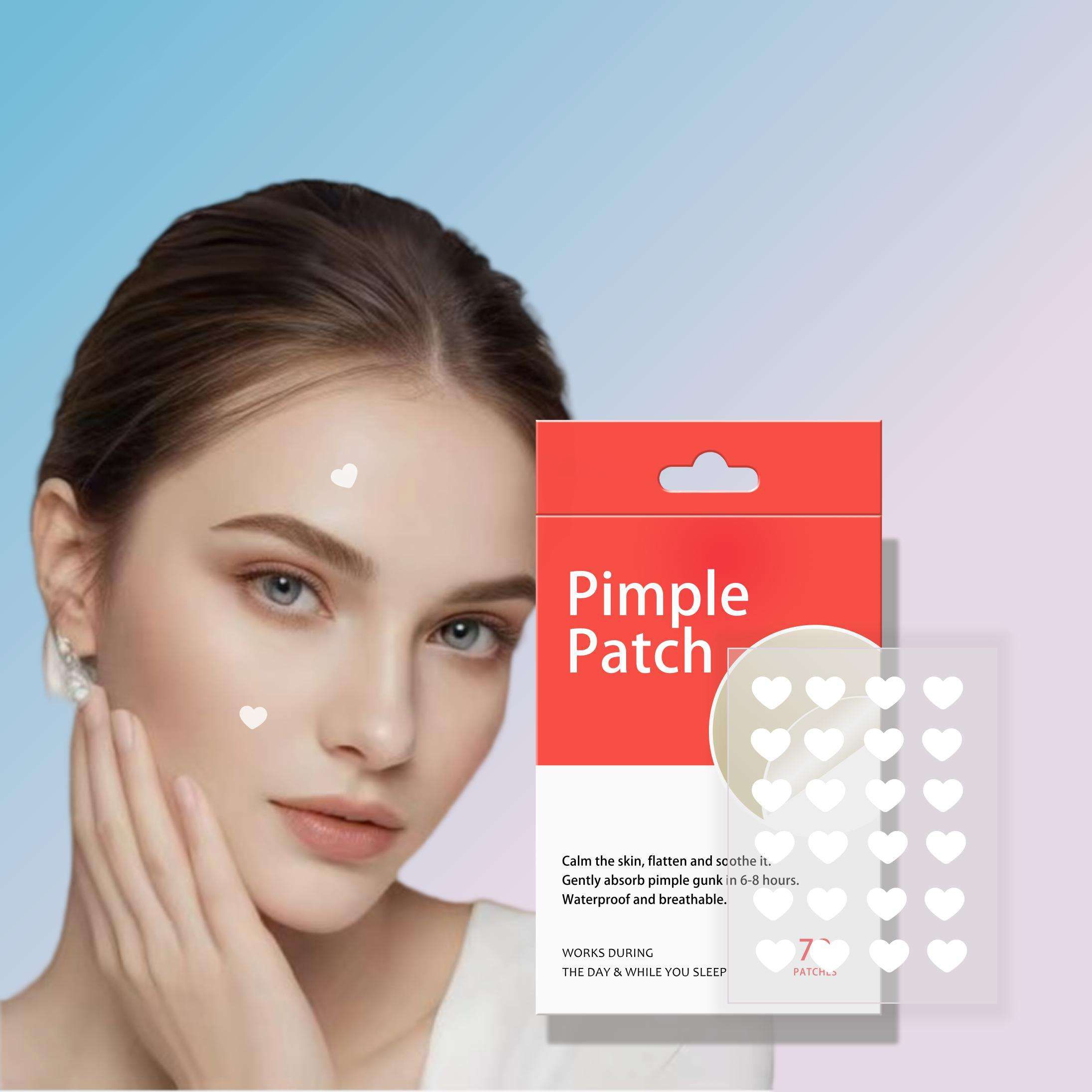
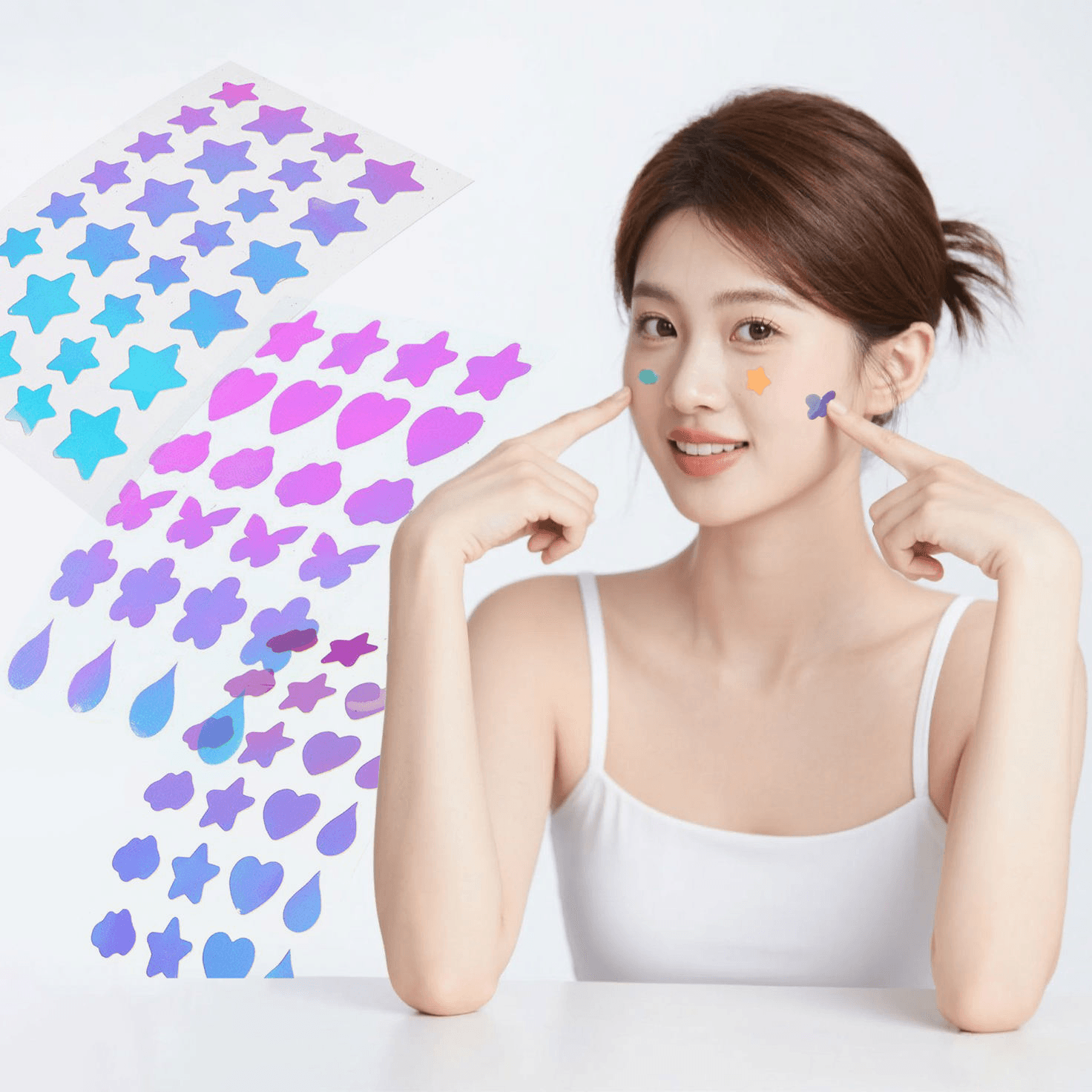
- Different shapes work better with different content angles — hearts for self-acceptance narratives, stars for Gen Z identity content, seasonal shapes for holiday gifting.
- Three TikTok formats consistently work for acne patches: the wear-time reveal, the GRWM integration, and the first-apply reaction.
- UGC starts with the product. If the shape is genuinely novel, users photograph it without being asked.
- Put 70–80% of your creator budget into micro-creators. That's where the cost-per-acquisition math works.
The gap in social performance between shaped and round patches isn't random. It comes from how visual content actually moves on TikTok and Instagram.
A round patch looks like a bandage. That's accurate — it is a bandage, functionally. But on a platform built around aspirational content, a product that reads as "I'm treating a problem" creates friction at the point of sharing. Most people don't post about their wound dressings.
A star-shaped patch doesn't read as wound care. It reads as an accessory decision. There's something to look at, something to ask about, something to save. The barrier to sharing drops.
According to Glossy's 2024 Beauty Brand Report, shaped patch content on TikTok generates 3–5x more saves and shares than equivalent round patch content with identical product claims. Saves and shares are the signals that push content outside an account's existing followers — so this gap translates directly into reach.
Three specific things drive it:
Novelty. A ghost patch in October is something people haven't seen. A round patch in October is not. First exposure to a genuinely new shape drives shares because people want to show others.
Identity signaling. Shapes that map to existing aesthetic identities — Y2K, cottagecore, K-beauty, dark academia — get shared as self-expression, not product promotion. The patch becomes part of how someone presents themselves online.
Comment bait. An unusual shape visible in a video pulls comments: "wait, what is that?" Comments are engagement signals. Engagement signals amplify reach.
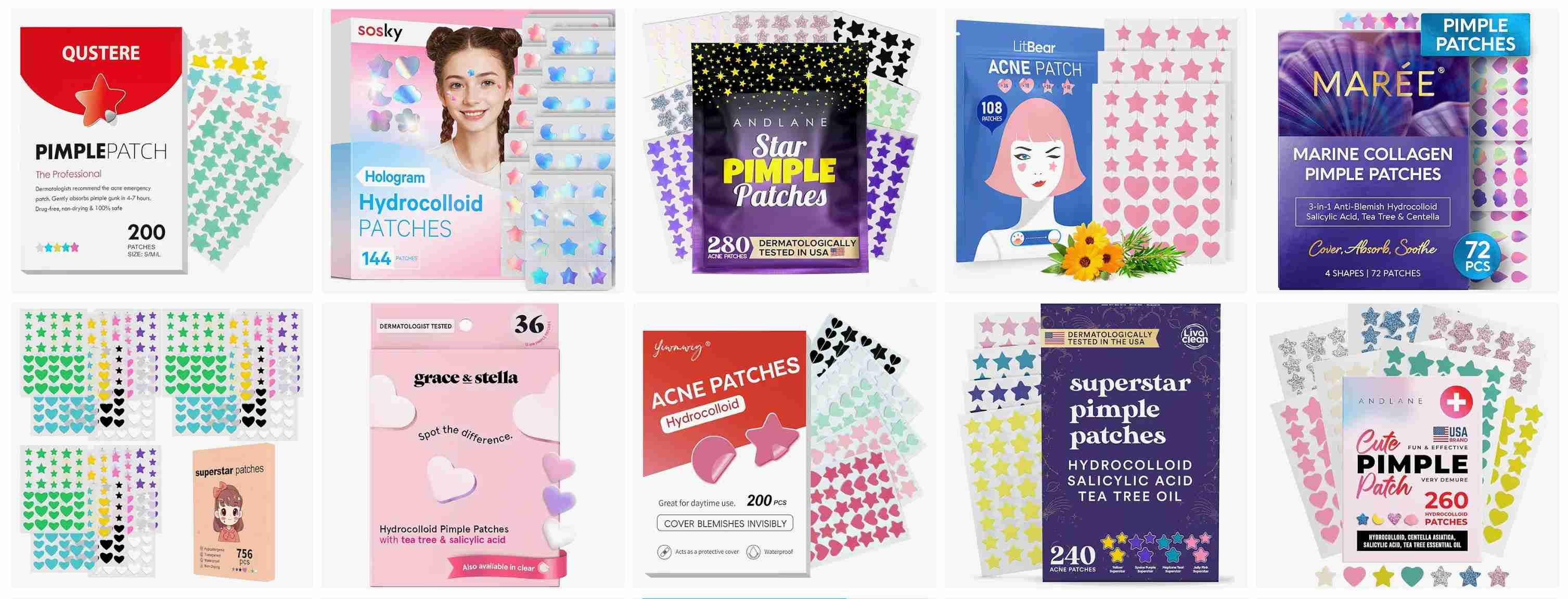 Custom shaped patches generate significantly more saves and shares than round patches on TikTok and Instagram — the shape is the content hook.
Each shape has a different natural content angle. Forcing a star-shaped patch into the same narrative you'd use for a heart doesn't work as well as building content around what the shape already communicates.
| Shape | Content angle | Best platform | UGC potential | Natural caption energy |
|---|---|---|---|---|
| Heart | Self-love, body acceptance, confidence | TikTok, Instagram Reels | High | "Bad skin day, choosing love anyway" |
| Star / holographic | Gen Z self-expression, aesthetic flex | TikTok, Pinterest | Very high | "Main character era, breakout and all" |
| Animal (cat, bear) | Cute aesthetic, kawaii, softness | TikTok, Instagram | High | "My little guy helping me heal" |
| Seasonal (pumpkin, ghost, snowflake) | Holiday content, gifting urgency | TikTok, Instagram Stories | Medium | "October skincare is a vibe" |
| Brand logo / custom | Community belonging, brand identity | Instagram, YouTube | Lower | "You know it's ours" |
A few platform-specific points: TikTok rewards novelty over polish — a shaky first-apply video outperforms a produced brand video there. Instagram carousels work well for shape comparisons and educational content about the format. Pinterest drives long-tail discovery for seasonal shapes — content pinned in September still gets clicks in November.
TikTok content for acne patches clusters into three formats. Each one works for a different reason.
Apply the patch. Show the shape on skin. Cut to 6–8 hours later. Remove the now-white patch. Show it.
This format answers the two questions every potential buyer has before purchasing: does it actually do anything, and how will I know? The color change is visible evidence, and the shaped patch makes the opening frame more interesting than a round sticker would be.
No editing required beyond a single cut. Natural light, real skin. This is the format where authentic execution consistently beats polished brand production — which makes it ideal for micro-creator distribution.
Show a morning or nighttime routine. The patch goes on as one step among others — not the focus, just part of the sequence.
The patch gets normalized as part of an aspirational routine rather than flagged as a skin problem. Someone watching aspires to the routine and buys the product to participate in it. The shaped design makes it fit aesthetically with skincare products rather than sticking out as medical.
This works best when the patch matches the visual coding of the rest of the content — clean girl, dark academia, 10-step K-beauty. Mismatched aesthetic kills the effect.
Open the packaging. See the shape for the first time. Apply it. React.
First reactions to genuinely novel products are the most trustworthy content on TikTok. This format works especially well for seasonal and collaboration shapes where the design is actually new.
The catch: it can't be scripted convincingly. Gen Z audiences read staged "first reactions" instantly. Send product to creators with no talking points. The real reaction is the asset.
 The wear-time reveal and GRWM integration are the two TikTok formats with the most consistent conversion rates for custom shaped patches.
UGC is cheaper than paid creator content and often converts better because it comes with built-in social proof. Custom shaped patches have a structural UGC advantage — if the shape is genuinely novel, people photograph it without prompting. But that advantage needs some activation.
In-packaging insert. A small card with a branded hashtag and a low-friction ask: "Post your patch, tag us." Include a QR code to a community gallery. This makes the ask feel like an invitation to join something rather than a request to promote a brand. The difference in response rate is real.
Launch seeding cluster. Before launch, send product to 20–30 micro-creators in the skincare or acne space with no posting obligation. The goal is multiple posts appearing simultaneously at launch — TikTok's algorithm reads concurrent content around a hashtag or sound as a trending signal and amplifies it. One post from one creator won't do this. Twenty posts in the same week often will.
Comment engagement. When UGC appears, reply to comments on those posts from the brand account. This keeps the content active in the algorithm and creates notification-driven engagement loops that extend reach.
Hashtag structure. One primary brand hashtag (e.g., #[BrandName]Patch) plus one shape-specific or campaign hashtag (#StarPatch, #HeartPatch). The secondary hashtag gives users a more natural tagging reason than the brand name alone.
For an early-stage brand, putting the majority of creator budget into micro-creators isn't just the cautious choice — it's the one with the better math.
Micro-creators in beauty generate more authentic content, engage their audiences at higher rates, and cost a fraction of what macro-creators charge. The following rates are from CreatorIQ's 2025 Influencer Marketing Report and apply to US beauty categories on TikTok.
| Tier | Followers | Rate per post | Engagement rate | When to use |
|---|---|---|---|---|
| Nano | Under 50k | Product only | 5–10% | Pre-launch seeding |
| Micro | 50k–500k | $200–800 | 3–6% | Core paid program |
| Mid-tier | 500k–2M | $2,000–8,000 | 1–3% | Hero launch content |
| Macro | 2M–5M | $8,000–25,000 | 0.5–1.5% | Brand awareness at scale |
| Mega / celebrity | 5M+ | $25,000+ | Under 1% | Not yet, unless you have conversion data |
For a new brand launching a custom shaped patch: put 70–75% of budget into 10–15 micro-creators, 20–25% into one mid-tier creator for a hero launch piece, and 5% into nano-creator gifting.
Brief guidance: tell creators what the product does, give them the shape, set the hashtag and posting window, then get out of the way. Scripted content performs like an ad. Unscripted content performs like a recommendation.
The most common mistake with seasonal patch launches: starting content too late. TikTok takes 1–2 weeks to amplify new content, and skincare purchase decisions for holiday occasions happen 2–3 weeks before the event — not in the final days.
| Holiday | Shape | Seed creators | First brand post | Peak content | Sell-through target |
|---|---|---|---|---|---|
| Valentine's Day (Feb 14) | Heart | Jan 5–10 | Jan 13 | Jan 20 – Feb 10 | 80% by Feb 14 |
| Easter / Spring | Bunny, egg, flower | Feb 20 | Mar 1 | Mar 10 – Apr 5 | 70% by Easter |
| Halloween (Oct 31) | Ghost, pumpkin, bat | Sep 10 | Sep 18 | Oct 1–28 | 85% by Oct 31 |
| Thanksgiving / Fall | Leaf, acorn | Sep 25 | Oct 5 | Oct 15 – Nov 20 | 70% by Nov 25 |
| Christmas (Dec 25) | Star, snowflake, tree | Nov 1 | Nov 10 | Nov 15 – Dec 20 | 80% by Dec 25 |
| New Year | Champagne, firework | Dec 5 | Dec 12 | Dec 20 – Jan 2 | 90% by Jan 5 |
Order seasonal shapes conservatively. Selling out creates scarcity and positive UGC. Sitting on unsold pumpkin patches in December does neither.
A round patch reads as wound care. A star or heart reads as an accessory choice — the barrier to sharing drops significantly. Glossy's 2024 Beauty Brand Report found shaped patch content generates 3–5x more TikTok saves and shares than round patch content with identical product claims.
Three formats work consistently: the wear-time reveal (apply, cut to white patch 6–8 hours later), the GRWM integration (patch as part of a routine, not the focus), and the first-apply reaction for seasonal or limited-edition shapes. Authentic execution outperforms produced brand videos in all three.
If the shape is genuinely novel, users photograph it without being asked. To amplify this: include a branded hashtag on packaging inserts, seed 20–30 micro-creators before launch with no posting obligation, and reply to early UGC comments from the brand account to keep content active.
For a new brand: 70–75% of creator budget to 10–15 micro-creators ($200–800 each), 20–25% to one mid-tier creator, 5% to nano-creator gifting. This generates broader content variety and lower cost-per-acquisition than concentrating spend on a single large account.
Start creator seeding 5–6 weeks before the holiday. First brand posts 4 weeks before. Peak content window is 3–2 weeks before the event — that's when purchase decisions actually happen. For Valentine's Day (Feb 14): seed January 5–10, first brand post January 13.
For OEM production details on custom patch shapes — tooling costs, MOQs, and what shapes are actually manufacturable — see: Custom Acne Patch Shapes: OEM Cost and Production Guide →
For data on which shapes drive the best sell-through by market: Custom Shaped Pimple Patches: Which Shapes Sell Best →
VEILTA makes custom shaped acne patches in heart, star, cloud, seasonal, and brand logo formats — with 3D prototype sampling within 5 business days.