VEILTA
12/19/2025
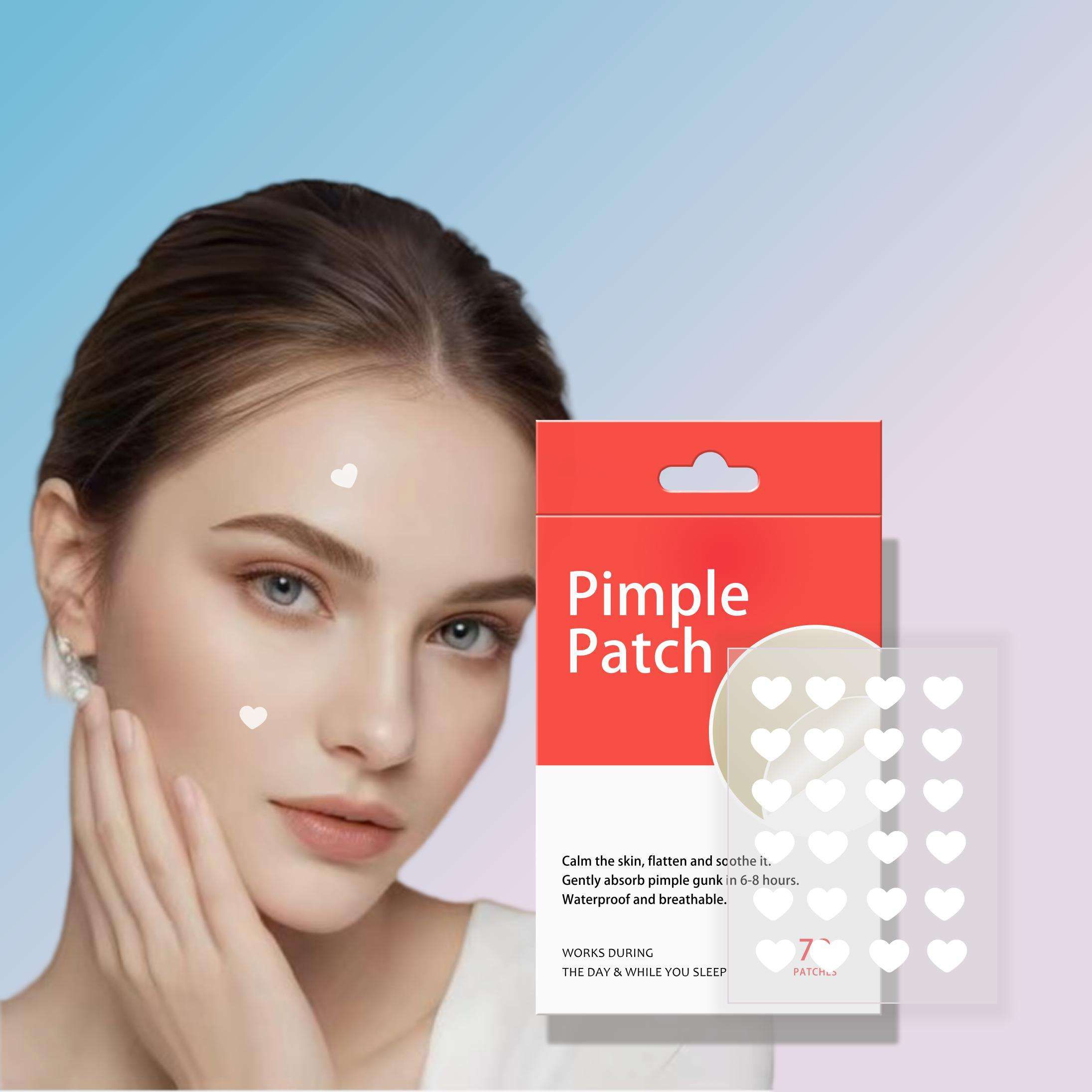
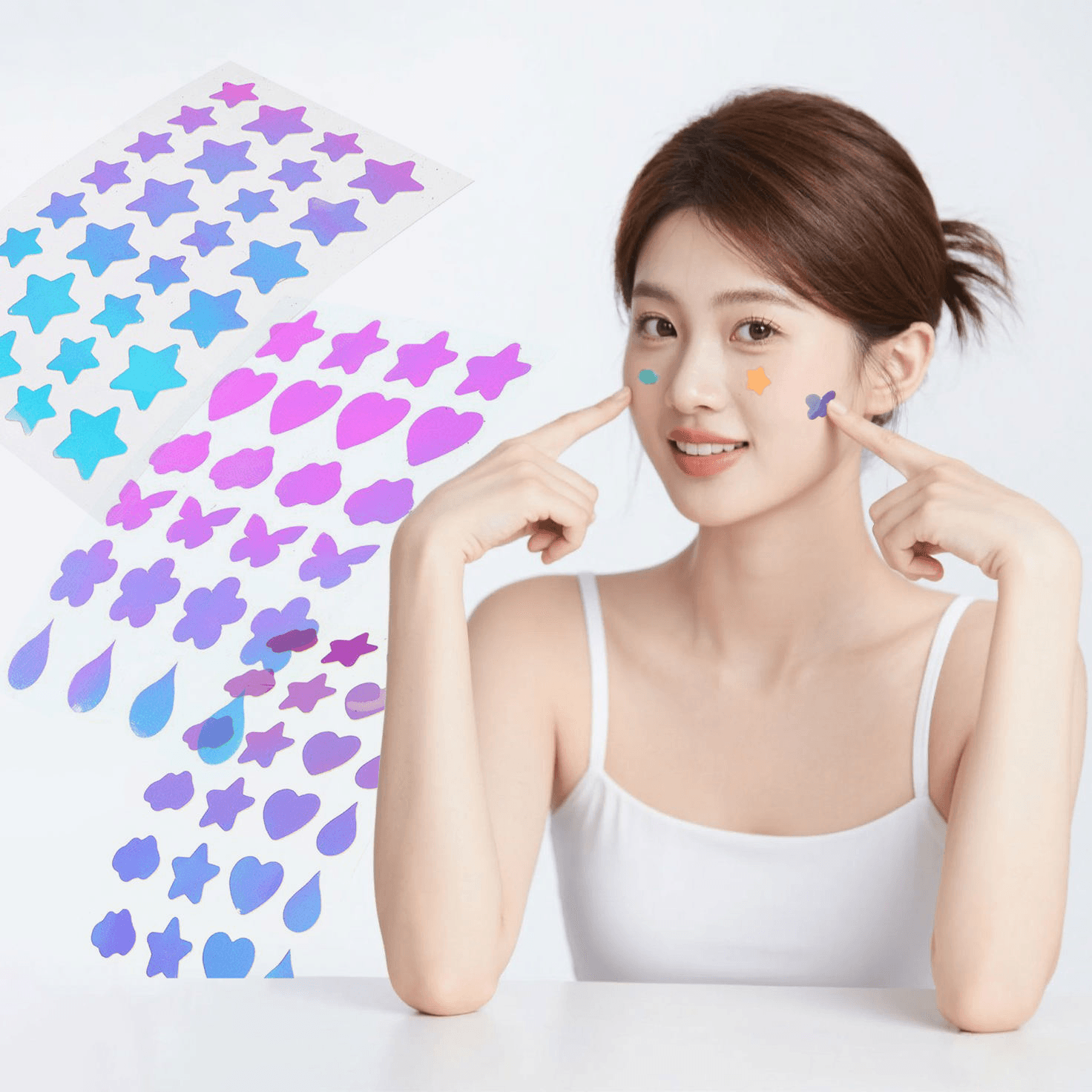
Brands ask about custom shapes early. The heart patch, the star patch, the ghost patch for Halloween. Then they get a quote and the conversation changes.
The price isn't necessarily shocking — but the conditions are. A higher MOQ than expected. A tooling fee nobody mentioned. A timeline that pushes the launch past the holiday window they had in mind. Most of this is avoidable if you know what you're walking into.
This is what it actually costs to move from a standard round patch to a custom shape — broken down by die type, MOQ requirements, and the technical constraints that determine whether your shape idea is practical or expensive.
Quick summary
- Round and oval patches use standard equipment — no tooling fee. Custom shapes start at $150–800 per die.
- First-order MOQ for custom shapes typically runs 10,000–15,000 units, vs. 3,000–5,000 for round patches.
- Shape doesn't meaningfully affect absorption. Surface area does.
- Stars, hearts, and clouds are the cheapest to tool. Interior cutouts (donut shapes, letters) cost 2–3x more.
- First custom shape run: 8–12 weeks from design brief to shipped goods.
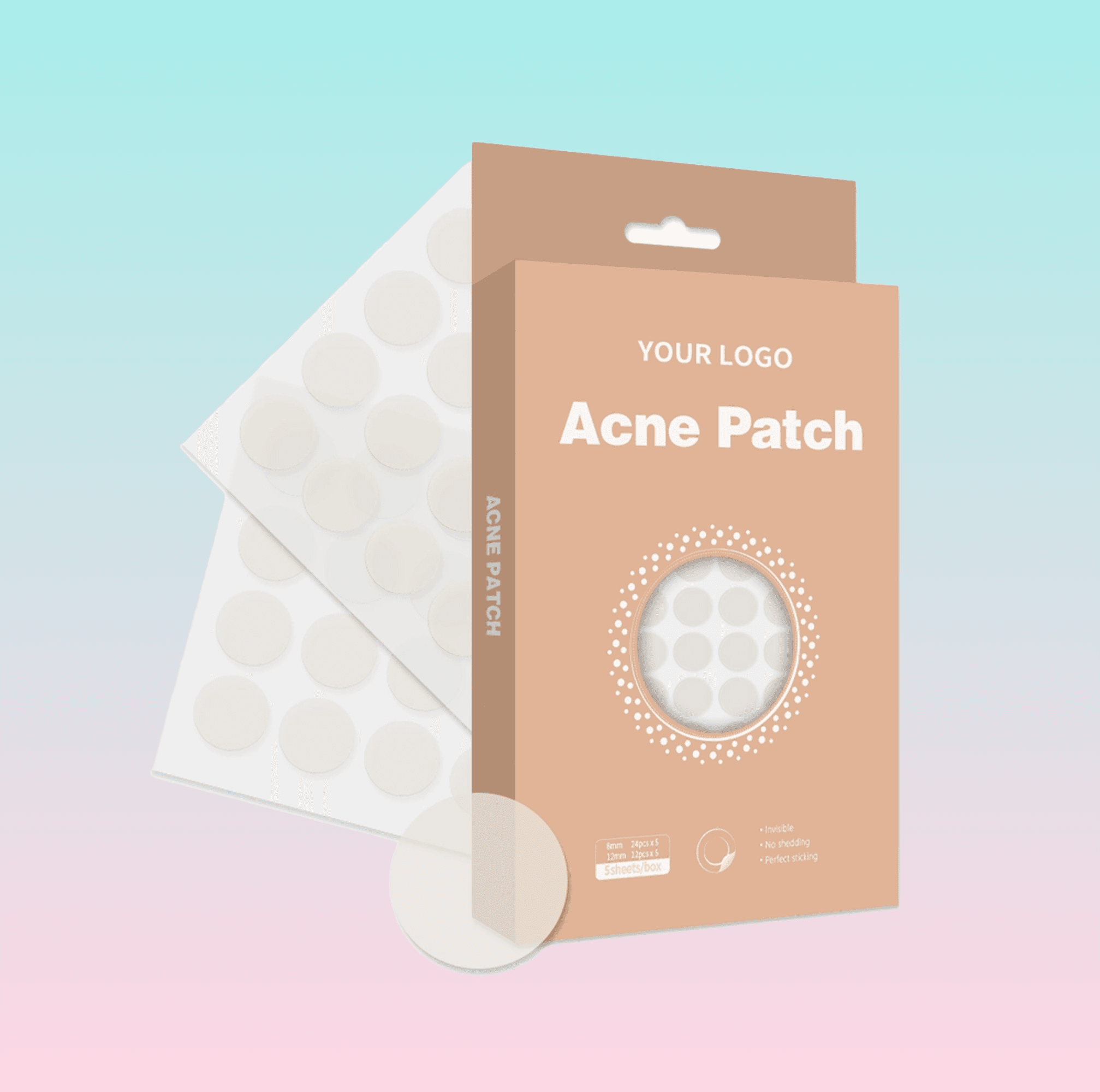
The difference between a round patch and a custom shape, from a manufacturing standpoint, is one thing: tooling. Every hydrocolloid patch factory runs equipment built for round and oval cuts. That equipment exists, it's maintained, and you pay nothing extra to use it.
The moment you want a star, a heart, or anything that isn't a standard geometric shape, the factory needs a custom die — a precision cutting tool made specifically for your shape. That's the tooling fee.
| Shape category | Examples | Tooling needed | Added cost |
|---|---|---|---|
| Standard | Round, oval | None | — |
| Simple custom | Star, heart, cloud, moon | Single-stroke die | $150–800 one-time |
| Complex custom | Logo, animal silhouette | Multi-component die | $400–1,500 one-time |
| Interior cutout | Donut, letter shapes | Secondary tooling | $800–2,500 one-time |
The tooling fee is one-time. Once a die exists, it runs on every production order for that shape. On a first run of 10,000 units, a $400 die adds $0.04 per unit. By the third run, the cost per unit from tooling is negligible.
From our production floor: Stars and hearts are what most brands want, and they're also the most forgiving to tool. Our star tooling costs have ranged from $280 to $450 depending on point count and sharpness. Logo shapes are where we push back — anything with lines thinner than 1.5mm tears during cutting and drives reject rates up fast. We tell clients this before they submit artwork, not after.
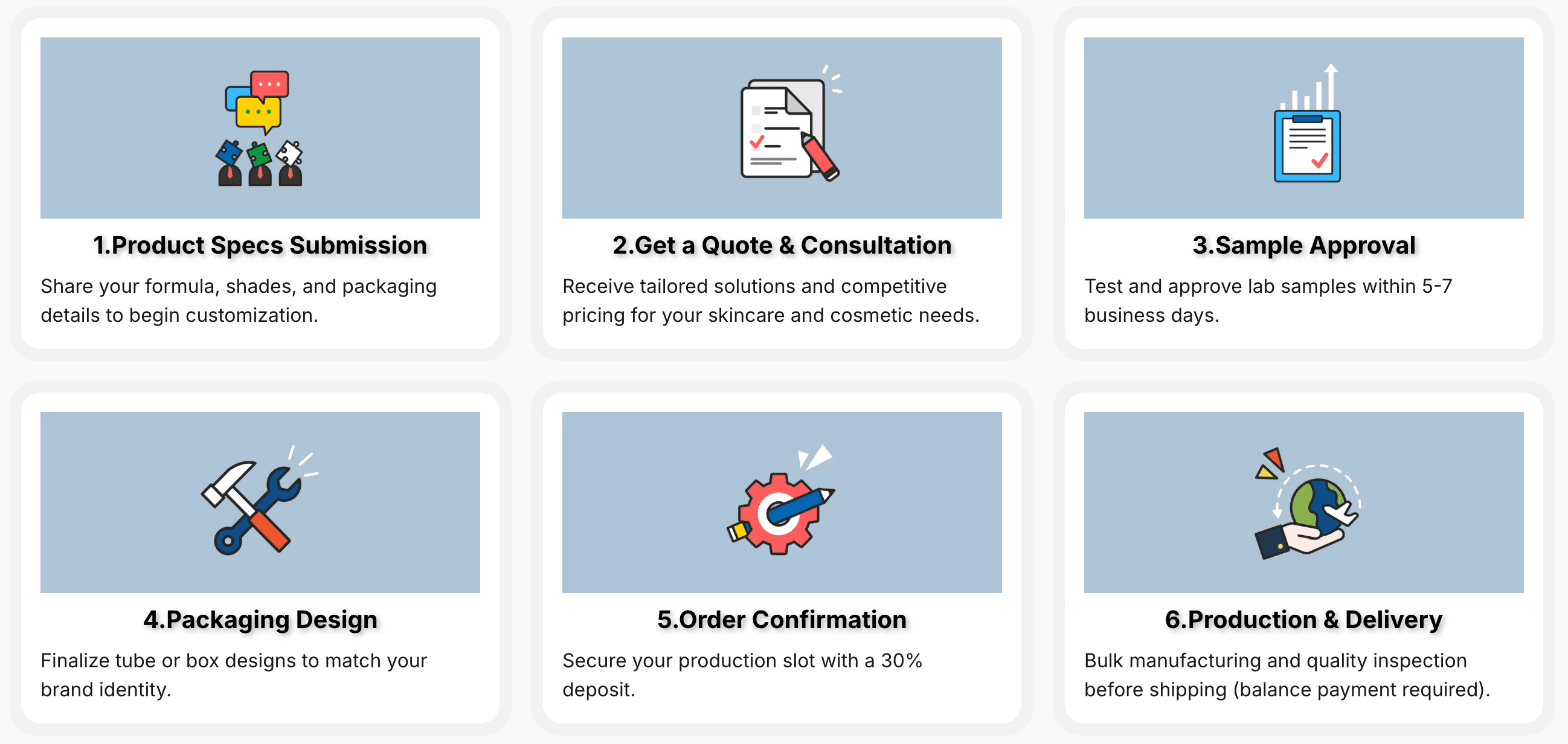 Custom die cutting tools for acne patch shapes. Simple convex outlines like stars and hearts require single-stroke dies; interior cutout shapes need secondary tooling.
Not every die is built the same. The right choice depends on how certain you are about the shape and how many units you plan to run.
Steel die is the production standard. Costs $300–800 per shape, lasts over half a million cuts, and is the right call for any shape going into regular rotation. Lead time is 10–15 business days.
Aluminum die is cheaper ($150–400) and faster (7–10 days), but wears out much sooner — typically 50,000–100,000 cuts. Good for limited editions and seasonal shapes where you're not planning repeat production at high volume.
3D-printed prototype tool costs $50–150 and produces only a few hundred to a couple thousand cuts before it degrades. It's not a production die — it's for getting physical samples in hand before you commit to steel or aluminum. Lead time is 3–5 days.
The sequence that makes sense for a new shape: 3D prototype to confirm the shape works as a physical patch → aluminum die for the first production run → steel die once you've validated the shape sells and plan to reorder.
This one comes up a lot, and the short answer is no — not in any way that matters for standard facial use.
Hydrocolloid absorption depends on contact surface area, not the outline of the patch. A star with the same total area as a 10mm circle will absorb roughly the same amount of fluid in the same time window.
From our lab testing: We ran absorption comparisons across round, star, and heart shapes at matched surface areas using EN 13726 moisture vapor transmission methodology. Variance between shapes was consistently under 5% — within normal batch variation. The shape doesn't change what the patch does; it changes how it looks while doing it.
One practical note: shapes with deep concavities — a pronounced crescent, for example — can lose edge adhesion on curved skin surfaces more easily than smoother outlines. For overnight wear or high-adhesion positioning, simpler shapes with clean edges hold better. For a social media patch worn for a few hours, it doesn't matter.
Custom shapes carry higher minimums than round patches, for two reasons: tooling amortization and production changeover time.
| Shape type | Typical first-order MOQ | Why |
|---|---|---|
| Round / oval | 3,000–5,000 units | Standard run, no setup |
| Simple custom (star, heart) | 10,000–15,000 units | Die amortization |
| Complex custom (logo, animal) | 15,000–20,000 units | Higher tooling + changeover |
| Interior cutout shapes | 20,000+ units | Secondary tooling setup |
Switching from a standard round die to a custom die takes 2–4 hours of setup, testing, and quality validation on the production line. That time is a fixed cost. At 3,000 units, it makes the per-unit cost unworkable. At 10,000, it's manageable.
For repeat orders on an established shape — where the die exists and the setup process is familiar — manufacturers often come down to 5,000–8,000 units. That's worth negotiating at the time of your first order, not after.
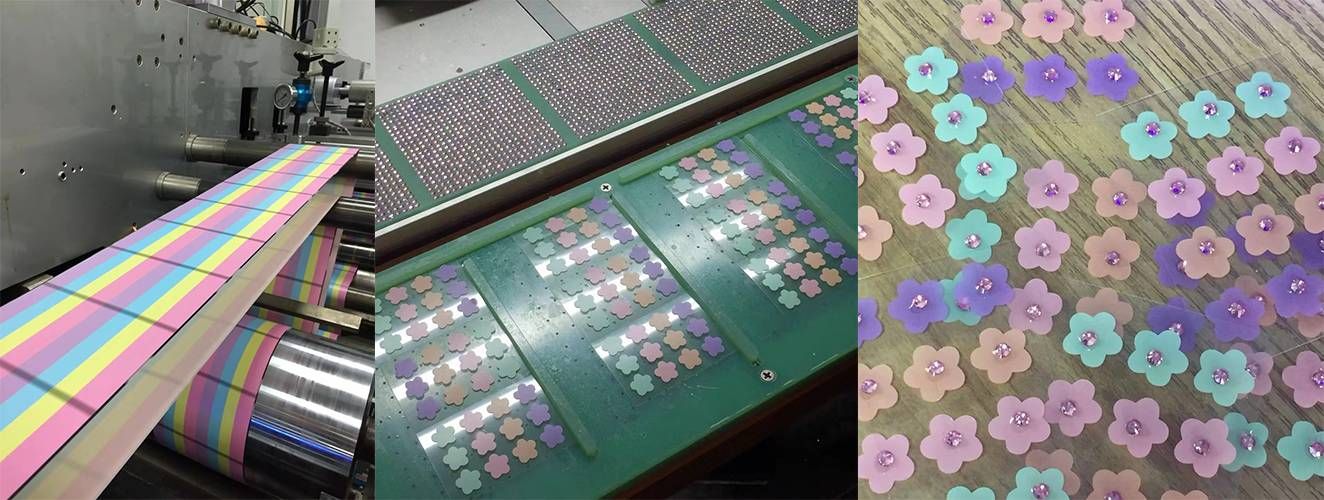 Hydrocolloid patch cutting line. Custom shape changeovers require 2–4 hours of setup time — one of the main reasons custom MOQs are higher than standard.
Not everything that looks good in a design file cuts cleanly in hydrocolloid. Here's where the material imposes real limits.
These shapes manufacture reliably:
These shapes are technically difficult and cost more:
These generally aren't worth attempting:
A custom shape run takes longer than a standard patch order. Here's where the time goes.
| Stage | Duration | What's happening |
|---|---|---|
| Design brief submitted | Day 0 | Vector file (AI or SVG) sent to factory |
| Feasibility review | 2–3 business days | Factory checks cuttability, flags issues |
| Prototype tool made | 3–5 business days | 3D-printed die for first cut samples |
| Prototype samples produced | 2–3 business days | Physical patches sent for client review |
| Revisions if needed | 1–2 rounds, 3–5 days each | Shape adjustments based on sample feedback |
| Production die fabricated | 10–15 business days | Steel or aluminum die to approved spec |
| Production die test cut | 2–3 business days | Quality check at full production speed |
| Client sign-off on test samples | 3–5 business days | Final approval before bulk run |
| Bulk production | 3–5 weeks | Full order |
| Total | 8–12 weeks | Brief to shipped goods |
The revision stage is where most timelines slip. Brands submit shapes that need modification — a point sharpened, a curve simplified, a line width increased. Sending a vector file pre-checked against the constraints above saves 2–3 weeks.
A lot of brands assume seasonal shapes are too expensive for limited runs. The math usually says otherwise.
An aluminum die for a Valentine's heart at $300, spread over 10,000 units, adds $0.03 per unit. The brand value of a seasonal limited edition — and the content it generates — typically exceeds that cost by a wide margin.
Shape brief deadlines for major US/EU holidays (as of 2026):
| Event | Shape ideas | Submit brief by | Launch target |
|---|---|---|---|
| Valentine's Day (Feb 14) | Heart, arrow, letter | October 15 | January 20 |
| Halloween (Oct 31) | Ghost, pumpkin, bat | June 15 | September 15 |
| Christmas (Dec 25) | Star, snowflake, tree | August 1 | November 1 |
| Back to school (Aug–Sep) | Star, pencil, apple | April 1 | July 15 |
| Spring / cherry blossom | Petal, leaf | November 1 | February 15 |
Order conservatively on the first seasonal run. Selling out and creating scarcity is a better outcome than holding leftover pumpkin patches in December. Most brands aim for 60–70% sell-through before the holiday, with full sell-through within four weeks after.
Steel dies for simple shapes (star, heart, cloud): $300–800. Aluminum dies: $150–400. 3D-printed prototype tools for sampling only: $50–150. Interior cutout shapes need secondary tooling and cost more. Tooling is a one-time fee — it doesn't repeat on future orders.
First orders for simple custom shapes (star, heart) typically start at 10,000–15,000 units. Complex shapes and interior cutouts go higher. Repeat orders on established shapes often qualify for 5,000–8,000 units — worth negotiating at the time of your first order.
Not meaningfully. Absorption depends on contact surface area, not outline shape. VEILTA's internal testing across round, star, and heart shapes at matched areas showed under 5% variance — within normal batch variation.
8–12 weeks from design brief to shipped goods for a first custom shape. That covers prototype tooling, sample approval, production die fabrication, test cuts, and bulk production. Avoiding revisions — by submitting clean vector files pre-checked against shape constraints — is the biggest time-saver.
Simple convex outlines — stars, hearts, clouds, moons — use single-stroke dies and are the most cost-effective. Interior cutout shapes and fine-detail designs need secondary tooling and run 2–3x the cost. Lines under 1.5mm and points under 30° aren't recommended for hydrocolloid cutting.
For data on which shapes actually sell best by market and platform, see: Custom Shaped Pimple Patches: Which Shapes Sell Best →
VEILTA handles custom acne patch shape development from design brief through bulk production — including 3D prototype sampling within 5 business days and tooling for hearts, stars, clouds, seasonal shapes, and brand logo formats.