VEILTA
11/21/2025
Bioré launched the pore strip in 1997. Almost thirty years later, the core product is functionally unchanged — a wet-activated adhesive strip that pulls blackheads and debris from pores. That unchanged formula tells you something about the category: the established brands won so thoroughly that nobody seriously challenged the mechanism.
New brands entering nose strips often make the same mistake: they try to compete in the same place the established brands already dominate. That's a slow way to fail. The brands finding room in this market in 2024–2026 aren't competing on who makes the best pore strip. They're competing in segments the legacy brands ignored.
This guide covers where those segments are, how to position for them, and what an entry strategy actually looks like when you're starting from zero.
Quick summary
- The mass-market pore strip segment is dominated by Bioré and Korean alternatives. Competing there on price or distribution as a new brand is a losing strategy.
- Five differentiation routes exist: ingredient upgrading, material upgrading, sustainability positioning, aesthetic/visual, and professional/spa channel.
- The safest MVP approach is a single differentiated SKU tested through one channel before any product line expansion.
- Nose strip + acne patch bundles are commercially strong and often sourceable from the same OEM supplier.
- Amazon is the most competitive channel for nose strips. TikTok Shop and spa/professional channels are significantly less crowded.
The global pore strip market was valued at approximately USD 740 million in 2023, with projections showing steady growth through 2030 according to Grand View Research. That sounds like opportunity. The nuance is in how that market is structured.
Bioré controls the dominant share of mass-market retail globally, backed by decades of distribution and brand recognition. Korean brands — Me-on, Holika Holika, Elizavecca — hold strong positions in the ingredient-forward and aesthetics segments. Private label and white-label strips crowd the lower price tiers on Amazon.
New brands have three realistic positions:
The ingredient play. The legacy brands built their products in an era before BHA exfoliants, niacinamide, and centella asiatica were mainstream skincare actives. A strip formulated with genuinely functional actives — not just "infused with" marketing language — addresses something Bioré never focused on.
The sustainability play. Most pore strips use non-biodegradable synthetic polymers. The eco-conscious skincare buyer has very few options in this category. Compostable or bamboo-fiber strips fill a real gap that the legacy brands haven't moved to address.
The specialist channel play. Mass retail and Amazon are crowded. Spa, esthetician, and professional skincare channels see almost no competition from private label nose strip brands. A product designed for professional application — larger format, stronger formula, professional packaging — can build a defensible position in a channel most brands overlook.
The trap is the middle. A standard charcoal strip in generic packaging, priced between Bioré and the Korean brands, competing on Amazon — that's the position almost every failed nose strip brand has tried.
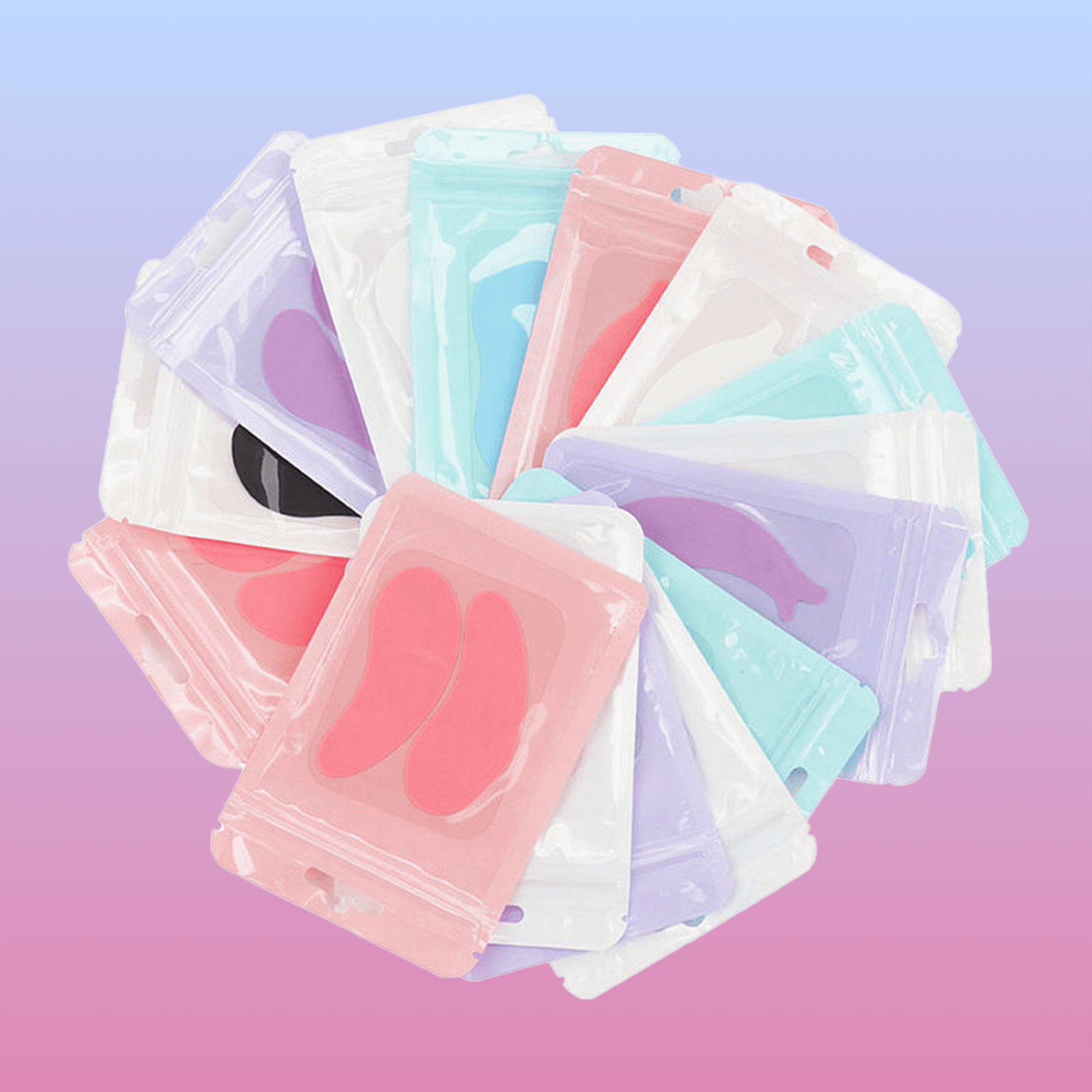
 Private label nose strip manufacturing. The formula and material choice determine which market segment you can credibly occupy.
Before contacting a manufacturer, pick a route. Every other decision — formula, packaging, pricing, channel — flows from this choice.
| Route | Core claim | What's different from standard | Fits brands that... |
|---|---|---|---|
| Ingredient upgrade | Active ingredients that do more than pull | BHA (salicylic acid), niacinamide, centella asiatica, AHA blends added to adhesive matrix | Have an ingredient-first positioning or existing skincare range |
| Material upgrade | Better physical performance | Thicker adhesive layer, wider coverage format, microfiber backing for sensitive skin | Target users who've had adhesion or irritation complaints with standard strips |
| Sustainability | Clean materials and conscience | Compostable strip material, plastic-free packaging, biodegradable adhesive | Have a clean beauty or eco positioning across the product line |
| Aesthetic / visual | Fun, shareable, expressive | Character shapes, printed patterns, color variants, Gen Z-coded packaging | Are building primarily through social content and TikTok |
| Professional / spa | Clinical efficacy, professional use | Larger format, stronger formula, esthetician-grade packaging, professional channel distribution | Want to avoid mass retail competition entirely |
A note on ingredient upgrading: the challenge here is consumer education. "With BHA" means something to a skincare-literate buyer who understands keratolytic exfoliation. It means nothing to someone who just wants to unclog their nose. Your content strategy needs to carry the education load — the formula alone doesn't do it.
A note on sustainability: compostable strip materials are genuinely more expensive to source and manufacture. Budget for a 15–30% higher production cost per unit, and price accordingly. Trying to compete on price with a sustainable product almost always fails.
As of 2026, ingredient upgrading and sustainability are the two routes attracting the most new entrants — which means both are becoming more competitive than they were 18 months ago. Aesthetic differentiation via TikTok remains strong but increasingly requires a sustained content operation rather than a single viral moment. The spa and professional channel remains the least crowded of the five routes.
Amazon nose strip search: Type "nose strip" or "pore strip" on Amazon and the first page is Bioré, Me-on, and Korean brands with 10,000+ reviews. Sponsored placements cost more per click than in almost any other skincare subcategory. A new brand without a differentiated product, without reviews, and without PPC budget has almost no path to page-one visibility.
Mass retail (Target, Walgreens, Boots): Shelf space is controlled by buyer relationships developed over years. New brands without distribution partnerships or broker relationships rarely get meetings.
Standard charcoal strip positioning: "Activated charcoal nose strip" is the most crowded product description on every marketplace. If your primary claim is charcoal and your product otherwise looks like every other private label option, you're competing on price in a race that ends at the bottom.
The traps to avoid specifically:
Launching on Amazon first without differentiation. Building a product line before validating a single SKU. Pricing a sustainability product at commodity price points to compete on Amazon — the math doesn't work and the positioning undermines itself. Adding actives to the marketing copy without formulating them at effective concentrations — informed buyers notice, and negative reviews follow.
The fastest path to learning whether a nose strip brand has legs is a single SKU, one channel, and one differentiation angle. Everything else can come after you've proven demand.
Step 1: Pick one route. Not two, one. Ingredient upgrade or sustainability or aesthetic — the product, packaging, and content need to tell a single coherent story.
Step 2: Source a minimum viable batch. For a first-time private label brand, 3,000–5,000 units is enough to test demand without overcommitting inventory. A stock formula with an added active (BHA, niacinamide) gets you a differentiated product without custom formulation timelines.
Step 3: Choose one channel with a realistic traffic plan. TikTok Shop if you can produce content. DTC with a focused paid social audience if you have budget. A spa or esthetician supply channel if you have professional industry relationships. Don't launch on all three simultaneously.
Step 4: Validate before expanding. The signal you're looking for before adding a second SKU or second channel: repeat purchase rate above 15% and at least 20 organic reviews. One without the other means the product or the positioning still needs work.
From VEILTA's experience with nose strip clients: The brands that struggle most are the ones that try to solve distribution before they've solved differentiation. Getting your product into a channel — even a small one — doesn't help if the product doesn't have a reason for someone to choose it over what's already there. Get the positioning right on a small scale first.
Nose strips are a single-use, low-repeat-interval product — most users apply once or twice a week at most. That purchase frequency limits the lifetime value per customer if the nose strip is the only product you sell. Bundles change this.
The strongest bundle logic pairs the nose strip with a product that addresses the same skin concern at a different step in the routine.
Before the strip:
After the strip:
The acne patch crossover bundle deserves particular attention. Nose strips and acne patches address adjacent concerns — pore congestion and active breakouts — and share an overlapping buyer profile: skincare-aware consumers dealing with oily or combination skin. A "pore + spot" bundle (nose strips + acne patches) requires only one manufacturer relationship if both products are sourced from the same OEM supplier, and creates a category bundle that almost no established brand has packaged together.
From VEILTA's product development perspective: We produce both nose strips and acne patches in the same facility under the same GMP certification. For brands sourcing both products, we handle combined orders with unified compliance documentation — which simplifies the EU CPNP notification process significantly when you're registering two products from one manufacturer.
 Nose strip + acne patch bundles target overlapping buyer profiles — pore-concerned, breakout-prone skincare consumers — and are strongest when both products are sourced from the same OEM facility.
Not all sales channels are equally competitive for nose strips. Choosing where to launch based on your differentiation route — rather than defaulting to Amazon — is one of the most important early decisions a new brand makes.
| Channel | Competition level | Why | Best fit for |
|---|---|---|---|
| Amazon | Very high | Bioré + Korean brands own page one; PPC costs are high | Brands with strong differentiation, reviews, and PPC budget |
| DTC (Shopify) | Low inherent competition | No algorithmic competition — you own traffic acquisition | Brands with content or paid social strategy |
| TikTok Shop | Medium, growing | Aesthetic and Gen Z segments underserved; video content still wins | Aesthetic/visual route; brands with content capability |
| Spa / esthetician supply | Low | Almost no private label nose strip brands target this channel | Professional format products; brands with industry relationships |
| Pharmacy / mass retail | High at shelf | Buyer-controlled, Bioré-dominated | Not recommended for first launch; scale stage only |
| Subscription / beauty box | Low to medium | Discovery channel, not primary revenue | Good for first-time exposure; pairs well with bundle products |
The SPA and professional channel case:
This is consistently the most overlooked channel for nose strip brands. Spa operators — from hotel spas to independent estheticians — buy supplies repeatedly and in quantity, value professional branding and clinical positioning, and are almost entirely served by generic white-label products or Bioré purchased from retail. According to the International SPA Association (ISPA), there are over 21,000 spa locations in the US alone, most of which source skincare supplies through professional distributors rather than retail channels. A professionally positioned nose strip with esthetician-grade packaging, larger-format sizing, and a focused B2B sales approach can build a reliable recurring revenue stream with very little competition.
The barrier is that professional channel sales require direct outreach and relationship-building rather than marketplace listings. It's slower to start. It's also substantially less competitive once you're in.
The mass-market segment is dominated by Bioré and Korean brands — competing there on price or distribution as a new entrant is very difficult. Differentiated sub-niches are more open: ingredient-upgraded strips, sustainable materials, spa and professional channels, and Gen Z aesthetic positioning. The saturated middle is a trap. The edges of the market still have room.
As of 2026, ingredient upgrading (adding BHA, niacinamide, or centella to a standard base) and sustainable materials (compostable or bamboo-fiber strips) address real consumer demand that legacy brands haven't fully served. Both are achievable at private label MOQs. Aesthetic differentiation works well on TikTok but requires a consistent content investment that most new brands underestimate.
Amazon nose strip results are dominated by Bioré, Me-on, and established Korean brands with thousands of reviews — it's expensive for a new undifferentiated brand. DTC gives more control and margin but needs a traffic source. TikTok Shop works if you have content capability. Amazon makes more sense as a second channel once differentiation and reviews are established.
The strongest bundles address the same skin concern at adjacent routine steps: prep toner (before), niacinamide serum or pore toner (after). The acne patch crossover bundle — nose strips + acne patches — targets overlapping buyer profiles and requires only one OEM manufacturer relationship when sourced from the same facility.
Standard charcoal strips with stock formulas start at 3,000–5,000 units for private label. Custom formulations with added actives typically start at 5,000–10,000 units. Sustainable material formats may carry higher minimums depending on material sourcing.
For the complete OEM guide to sourcing private label nose strips — covering manufacturer criteria, formula types, regulatory requirements, and production timelines — see: Custom OEM Nose Strip Manufacturer Guide →
VEILTA manufactures private label nose strips alongside acne patches and facial masks — GMP certified, with compliance documentation for the US, EU, UK, and Southeast Asian markets. We produce both nose strips and acne patches in the same facility, which simplifies compliance and logistics for brands sourcing both products.