VEILTA
12/09/2025
If you are comparing acne patch OEM and ODM, the main difference is straightforward: ODM is usually the easier option for a faster launch, while OEM gives your brand more control over the product and more room to build something distinct.
That choice affects more than product terminology. It changes your sampling process, MOQ, lead time, development cost, and how much say you have in the final result. Brands that choose OEM too early often end up spending more time and money before the market has really been tested. Brands that stay with ODM for too long can run into the opposite problem: the product becomes harder to differentiate.
For many private label skincare brands, the answer is not choosing one model forever. A more practical path is to start with ODM, learn what the market wants, and move to OEM when the sales data and product direction are clearer.
| Factor | OEM | ODM |
|---|---|---|
| Product direction | Brand-led | Supplier-led |
| Customization level | Higher | Lower |
| MOQ | Usually higher | Usually lower |
| Sampling rounds | Usually more | Usually fewer |
| Lead time | Usually longer | Usually faster |
| Development cost | Higher | Lower |
| Product differentiation | Stronger potential | More limited |
| Best for | Growth-stage and established brands | New brands and early market tests |
In acne patch manufacturing, OEM usually means the product is built around the brand's requirements instead of being selected directly from a standard supplier template.
That does not always mean creating a product from zero. In practice, it often means the buyer has more input on the details that shape the final offer, such as:
OEM tends to make more sense when the product itself needs to support the brand position. If your acne patch is supposed to feel more tailored, more premium, or simply less interchangeable with standard private label options, OEM usually gives you more room to do that.
ODM usually means the supplier already has a finished product framework, and the buyer works within that range.
There is still room for customization, but the scope is usually narrower. Most ODM projects focus on things like:
That is one reason ODM usually moves faster. The supplier is adapting an existing product to your brand instead of developing the product around a broader custom brief.
For a startup or a first-time private label buyer, that is often a sensible tradeoff.
The real difference comes down to control versus speed.
OEM gives the brand more influence over the product. ODM gives the brand a faster and simpler route to market because more of the development work is already in place.
That affects almost every part of the project:
If launch speed matters most, ODM usually has the advantage. If product differentiation matters most, OEM usually deserves more attention.
OEM often makes more sense once your brand has moved beyond basic market testing.
You should look more seriously at OEM if:
A simple test is this: if the product itself needs to carry part of your brand value, OEM is probably worth the extra effort.
For example, if your acne patch line needs more specific packaging development, a more defined product direction, or a clearer point of difference, OEM is usually the stronger option.
ODM is often the better choice when speed, simplicity, and lower upfront risk matter more than deeper customization.
It is especially useful for:
For many brands, ODM is not a compromise. It is simply the more practical starting point. It lets you test demand, pricing, messaging, and packaging without taking on unnecessary development work too early.
That matters because the first launch rarely answers everything. More often, it tells you what is actually worth improving next.
| Brand Stage | Usually Better Fit | Why |
|---|---|---|
| First product launch | ODM | Lower risk, faster setup, simpler execution |
| Testing a new market or channel | ODM | Easier to validate demand before deeper development |
| Stable repeat sales | OEM | Better for margin improvement and product distinction |
| Building a signature long-term line | OEM | More control over specifications and future expansion |
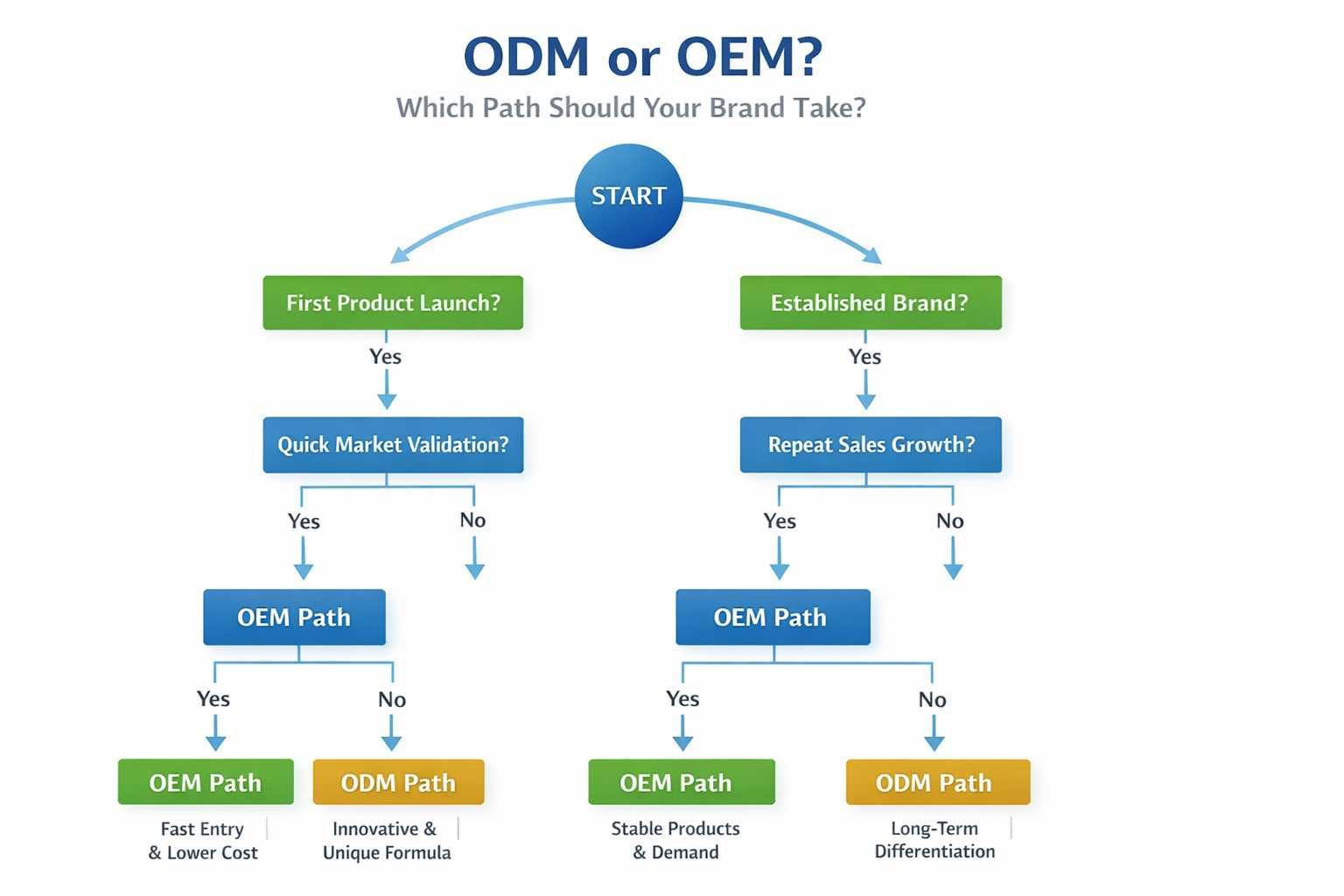
In real sourcing work, many brands do not stay with one model forever.
A common path is to launch with ODM, collect customer feedback, track reorder behavior, and move to OEM once the business case is stronger. That keeps the first launch easier to manage while leaving room for more customization later.
It also helps answer the questions most brands cannot answer before launch:
Early on, speed is often more useful than precision. Once demand is clearer, OEM becomes a more grounded decision.
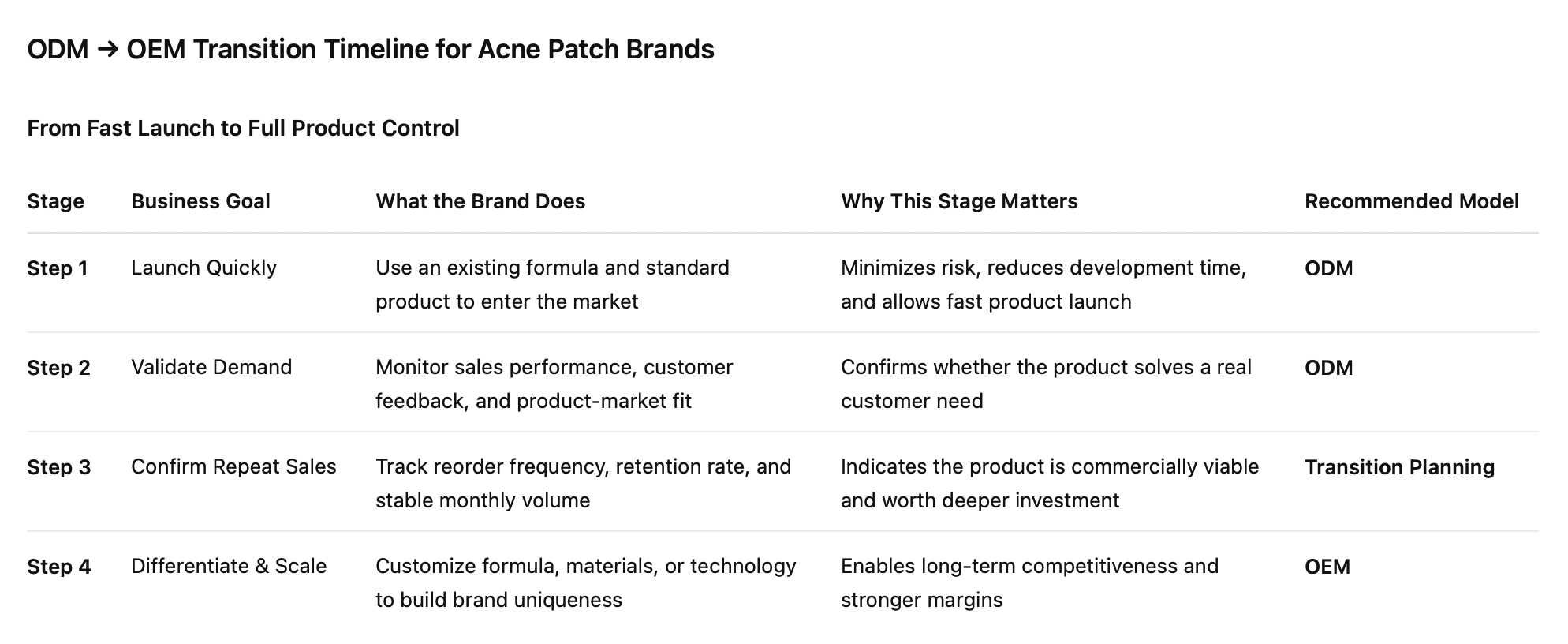
A move from ODM to OEM usually starts to make sense when the product is no longer just a test.
Common signs include:
At that stage, OEM becomes less of a branding idea and more of a practical business decision.
This usually happens when a brand wants full customization before there is enough evidence that the market wants the product. The result is often a slower launch, more sampling rounds, and more development cost than the business can justify at that stage.
This happens when a product starts selling well, but the sourcing model never changes. Over time, that can make it harder to improve differentiation, protect margins, or build a stronger position in the category.
It does not. OEM and ODM describe the way a project is structured. They do not guarantee quality. Quality depends on supplier capability, manufacturing consistency, documentation, materials, testing standards, and production control.
If you want a simple decision filter, ask these four questions:
If most of your answers point to speed, simplicity, and validation, ODM is probably the better fit.
If most of your answers point to control, differentiation, and longer-term product strategy, OEM is probably the better fit.
If your main goal is to launch quickly and test demand, ODM usually makes more sense.
If your brand already has clearer product requirements and wants more control over the final result, OEM is usually the better option.
Many brands do not stay with one model forever. They start with ODM, learn from the market, and move to OEM when the product has enough traction to justify deeper customization.
If you also need help comparing suppliers, MOQ expectations, and sourcing steps, read our OEM Pimple Patches Sourcing Guide.
OEM usually gives the brand more control over product specifications, customization, and long-term differentiation. ODM usually means choosing from a supplier's existing product options with lighter customization, which is often faster and more cost-effective.
In many cases, yes. ODM is often the more practical option for a new brand because it reduces development complexity, shortens launch time, and lowers the amount of upfront investment needed to test demand.
OEM usually makes more sense when a brand has clearer product requirements, wants more differentiation, and is preparing for larger-scale growth. It is a stronger fit when long-term product control matters.
Yes. Many brands begin with ODM to validate the market, then move to OEM once they have better sales data, customer feedback, and a clearer idea of which product features deserve deeper investment.
Not always, but in many cases it does. MOQ depends on the supplier, materials, packaging complexity, and the level of customization involved. OEM projects usually require more development work, so minimums are often higher.
ODM is usually faster because the supplier already has a ready-made production framework. OEM often takes longer because it involves more sampling, specification review, testing, and approval steps.
For many startups, ODM is the more practical starting point because it shortens development time and lowers the operational burden of a first launch. OEM becomes more attractive once the brand has clearer product direction and stronger validation.
Yes. Both models can support private label packaging, but OEM usually gives the brand more room to shape packaging details alongside broader product specifications. ODM packaging options are often faster to execute because they are built around existing supplier systems.