VEILTA
10/23/2025
A collaboration does one thing that advertising can't: it borrows trust.
When a brand whose audience already trusts them says "we made something with this other brand," that introduction carries weight that a paid ad impression never does. The new brand gets introduced by a familiar face, in a context that feels organic. That's the whole commercial logic.
For acne patches specifically, this matters more than for most products. Patches are a repeat-purchase, visual, demonstrable category — meaning they spread naturally through content when the product is interesting enough to photograph. A collaboration gives people something to photograph and a story to attach to it: two brands, one product, limited run.
This guide covers the full range of collaboration types, from a simple creator co-design to formal IP licensing with a recognized character or brand — and the practical steps for each.
Quick summary
- A collaboration borrows audience trust from a partner. Both sides get exposure to the other's community in a context that feels earned.
- Five collaboration types, in ascending complexity: creator co-brand, same-category skincare, lifestyle crossover, formal IP licensing, cultural institution.
- IP licensing requires a formal agreement on territory, duration, royalties, and approved uses. Minimum guarantees are standard for established IPs.
- Collaboration patches support 20–40% price premiums over standard products.
- Start with creator collaborations. They're accessible, require no legal infrastructure, and build the track record larger IP holders need to see.
Think of it as a mutual audience introduction. Brand A's followers don't know Brand B. Brand B's followers don't know Brand A. A co-branded product gives both parties a reason to make the introduction — and crucially, the introduction comes from a source the audience already follows.
The math on reach isn't additive. An acne patch brand with 50,000 Instagram followers partnering with a lifestyle brand at 200,000 doesn't reach 250,000 people — it reaches the lifestyle brand's 200,000 with a warm introduction, which converts at rates far above cold ad traffic.
The second commercial case is pricing. Limited and co-branded products sell at a premium because scarcity and exclusivity are real, not manufactured. According to a 2023 Mintel Report on Limited Edition Cosmetics, limited edition beauty products carry an average 25% price premium over standard SKUs — with patches and sticker-format products at the higher end because they have natural collectibility.
Not all collaborations are the same. The right model depends on where your brand is now, how much legal infrastructure you have in place, and what you're trying to get out of it.
| Type | How it works | Best stage | Complexity | What you get |
|---|---|---|---|---|
| Creator co-brand | Creator co-designs a shape or colorway, gets revenue share | Any stage | Low | Content, audience access |
| Same-category skincare | Two skincare brands make a complementary limited set | Growth stage | Medium | Category credibility, bundling |
| Lifestyle brand crossover | Non-competing brands with aligned audiences make a co-branded product | Growth stage | Medium | Mutual audience access, press |
| Formal IP licensing | You license artwork, characters, or trademarks from a recognized rights holder | Scale stage | High | Premium positioning, cultural relevance |
| Cultural institution | Museum, artist, or cultural brand partnership on a limited artwork series | Any, if relationship exists | Medium-high | Press, editorial coverage, premium price |
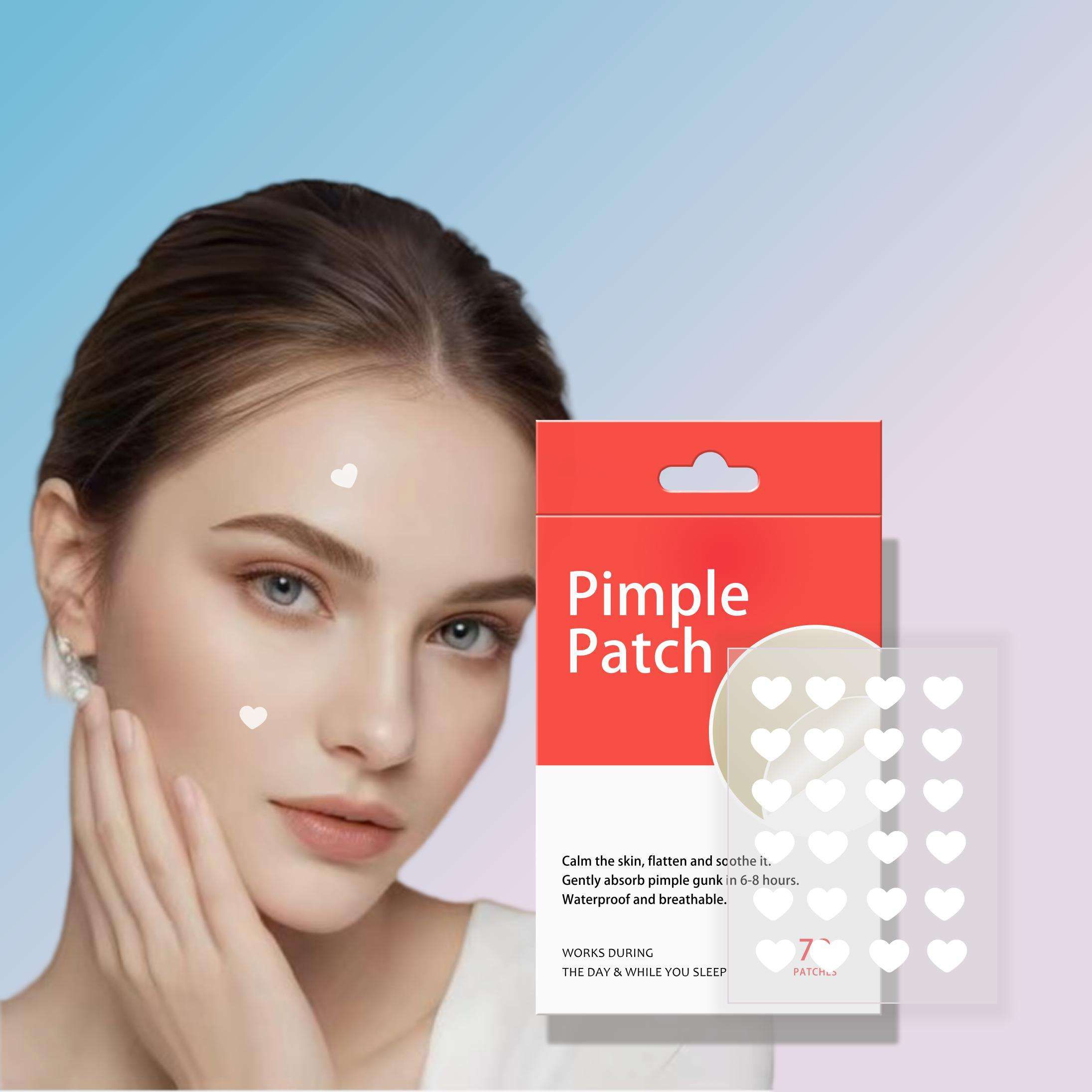
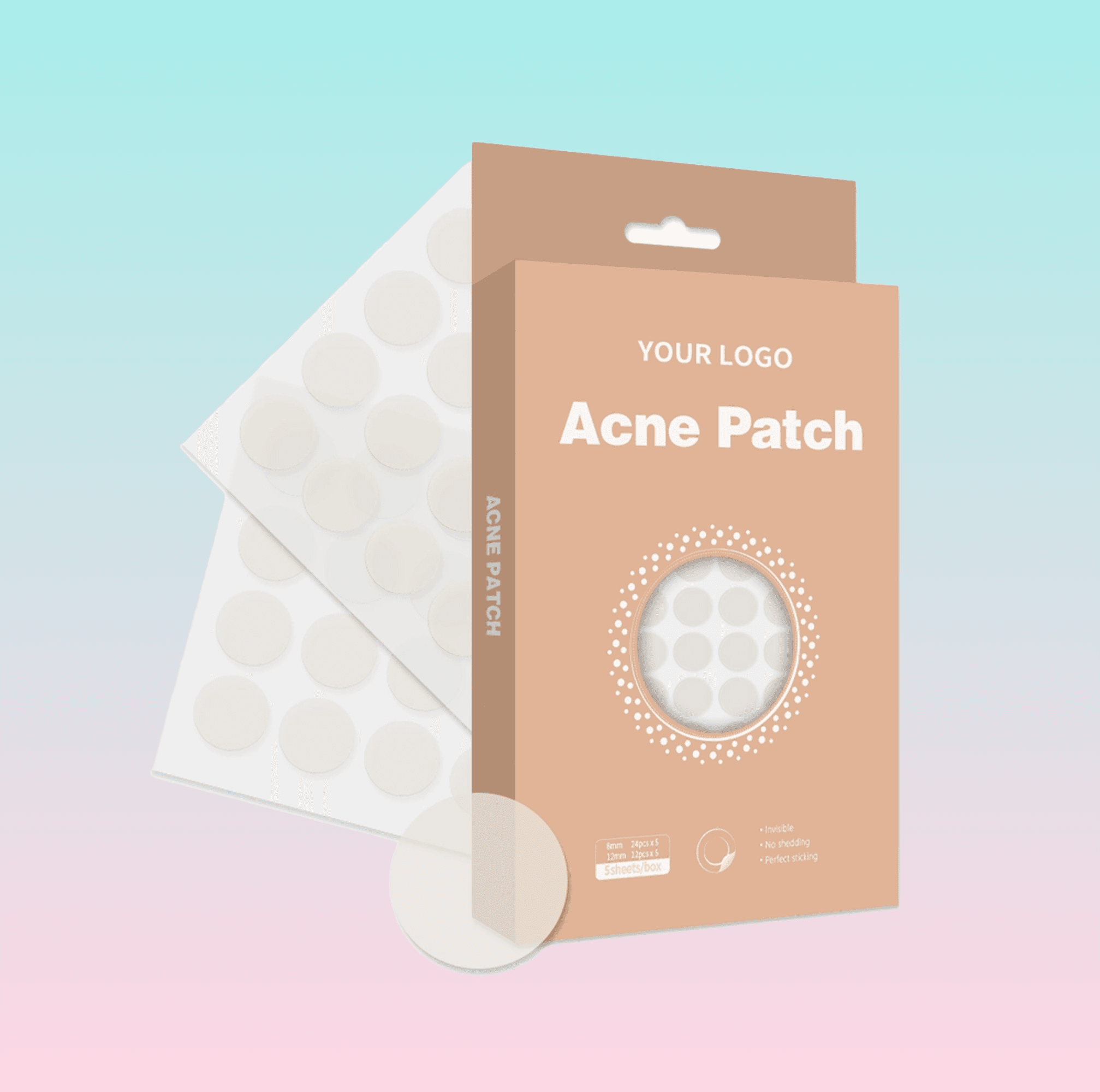
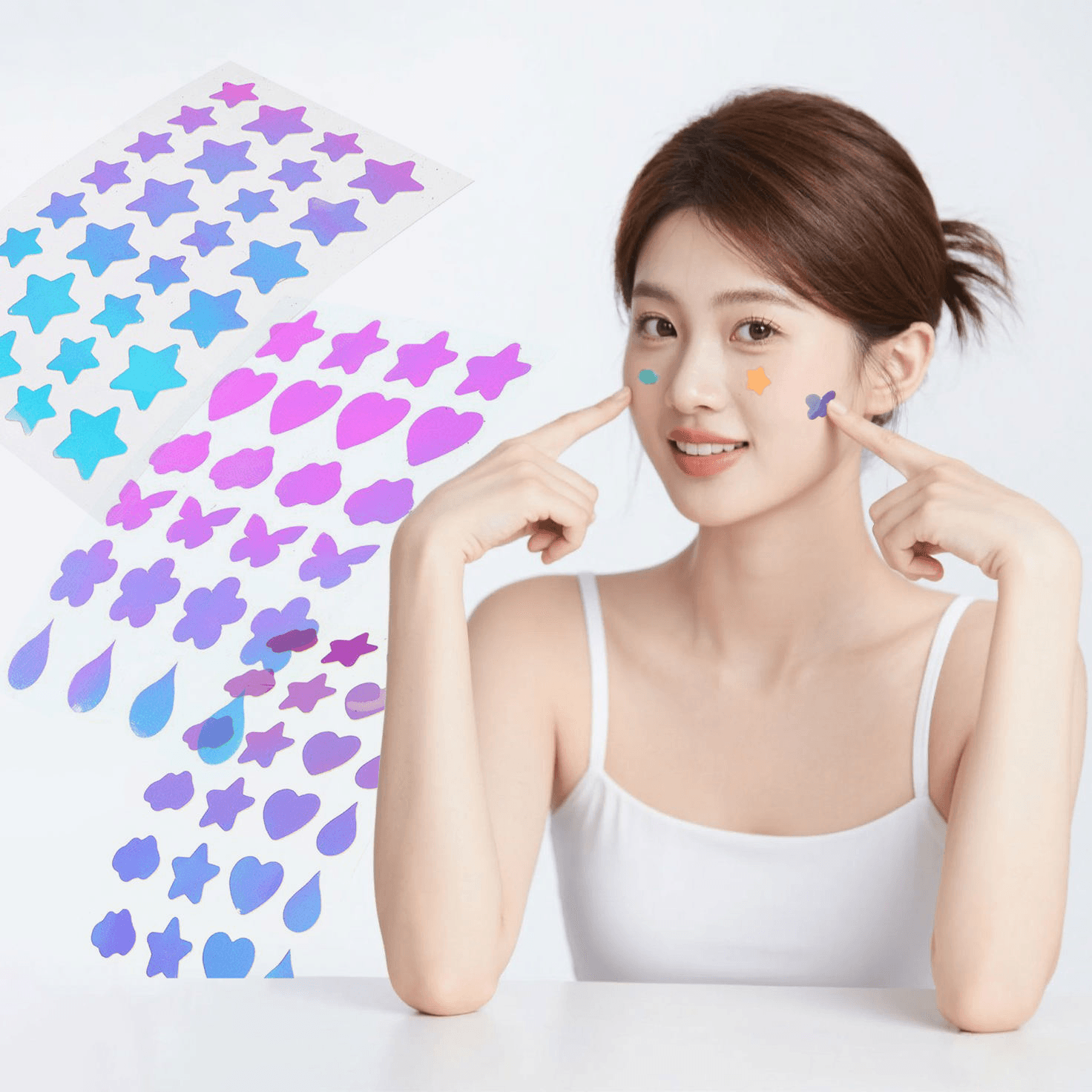
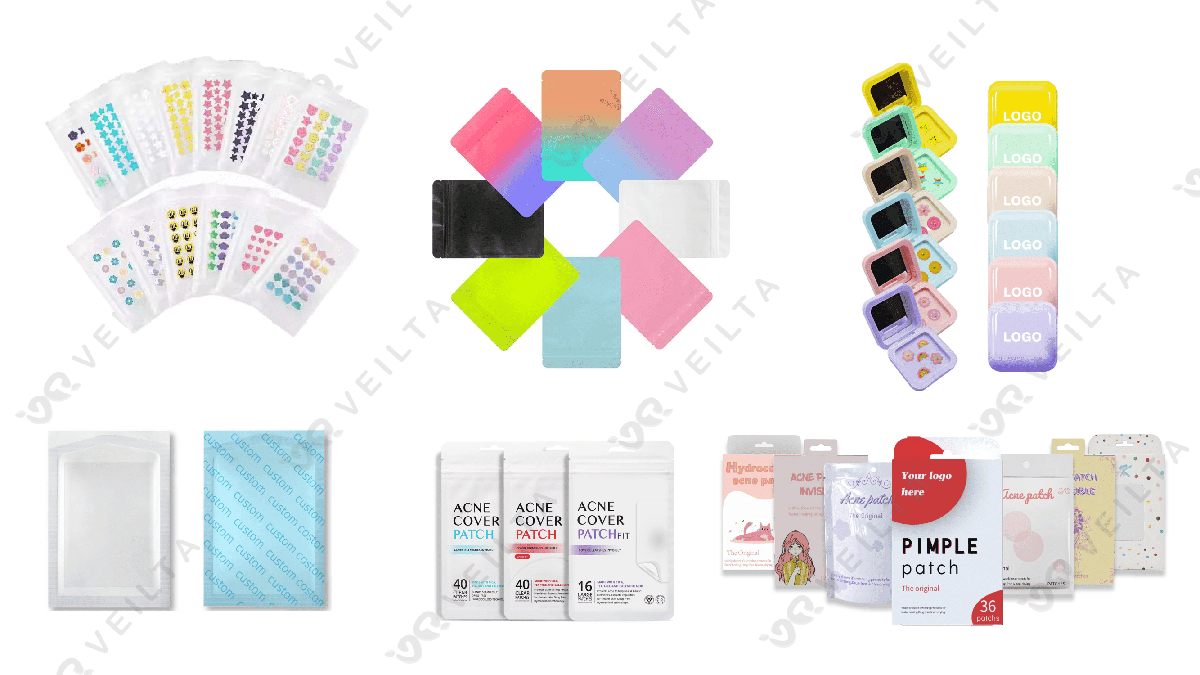 Co-branded and licensed acne patch packaging. Custom shapes and artwork are central to collaboration product differentiation.
Formal IP licensing is where most brands want to end up eventually — a licensed character or recognized brand on your patch immediately signals quality and drives premium pricing. It's also the most complex path. Getting the structure wrong is expensive.
Here's what every IP licensing agreement needs to cover:
Territory. Which countries you're licensed to sell in. Most rights holders license by territory — US e-commerce, EU retail, or specific regions. Selling outside your licensed territory is a breach, full stop.
Duration. How long the license runs. First agreements typically run 1–2 years. Auto-renewal terms vary widely.
Royalty rate. The percentage of net sales going to the licensor. According to the Licensing International Annual Global Survey, consumer goods IP royalty rates typically fall between 8–15%, with beauty accessories at the lower end and entertainment characters higher.
Minimum guarantee. Established IPs usually require a committed minimum royalty regardless of actual sales — often $10,000–50,000+ annually. This is evidence of commercial seriousness. Smaller or newer IPs sometimes waive it for early-stage brands.
Approved uses. Exactly which products, materials, and contexts the IP can appear on. The licensor will review and formally approve all artwork before manufacturing — budget 2–4 weeks for this, sometimes longer.
Audit rights. Rights holders can audit your sales records to verify royalty accuracy. Set up your accounting accordingly before signing.
Approaching an IP holder cold? Expect to provide company registration, manufacturing credentials (GMP certification, factory documentation), a sales history or projection, and a marketing plan. Rights holders are protective of their IP — they need to know you can execute before they grant a license. For a general overview of licensing agreement structure, WIPO's licensing guide is a useful starting point.
The OEM relationship is where collaboration plans either stay on track or quietly fall apart. Most of the problems come from brands locking in a launch date before the IP approval process is actually complete.
What you need to send the factory:
What the factory produces:
Timeline for a licensed collaboration patch:
| Stage | Duration |
|---|---|
| IP agreement signed | Week 0 |
| Artwork submitted to IP holder | Week 1 |
| IP approval, first round | Weeks 2–4 |
| Revisions if needed | Weeks 4–5 |
| Final IP approval | Weeks 5–6 |
| Tooling and pre-production samples | Weeks 6–8 |
| Pre-production approval (IP holder + brand) | Weeks 8–9 |
| Bulk production | Weeks 9–13 |
| Sea freight | Weeks 13–17 |
| Total | ~16–18 weeks |
The most common reason timelines blow up: a brand commits to a launch date — on a retail calendar, in a campaign plan, announced on social media — before IP approval is confirmed. The approval process takes as long as the licensor decides it takes. Build in at least 4 weeks of buffer.
Collaboration products should cost more than standard products. If the collab price equals the standard price, the exclusivity angle doesn't hold — and buyers notice.
| Collaboration type | Price premium | Why it works |
|---|---|---|
| Creator co-brand | 15–25% | Creator association + limited run |
| Lifestyle brand crossover | 20–35% | Dual brand equity, cross-audience signal |
| Formal IP licensing | 30–50% | Collectible positioning, IP recognition premium |
| Cultural institution / artist | 25–45% | Limited edition art object framing |
Two tactics that make the premium feel justified rather than arbitrary:
Price anchoring. Show the comparison explicitly on the product page: "Limited edition × [Partner]: $18 / Standard: $14." The reference point makes the premium make sense.
Run size transparency. State the production quantity clearly on the page and on packaging: "Limited to 5,000 units." For most first-run collaborations, this is accurate — and it creates the urgency that drives faster sell-through.
Formal IP licensing isn't where most brands should start. The minimum guarantees, the legal overhead, and the documentation requirements create real barriers for early-stage brands. The accessible starting point is a creator co-brand.
How it works:
Why this works as a starting point:
From our production experience: In 2025, one of our US clients — a private label brand with under 100,000 social followers — ran a creator co-brand producing 12,000 heart-shaped patches with a skincare creator at 180,000 TikTok followers. The batch sold out in 11 days at a 28% premium over their standard round patch. Six months later, they used that sell-through data to open a conversation with a lifestyle brand about a formal co-branding deal. The creator collaboration made the larger deal possible.
After 2–3 collaborations with documented sell-through, the pitch to lifestyle brands and IP holders shifts from "trust us" to "here's what we built and here's what it sold."
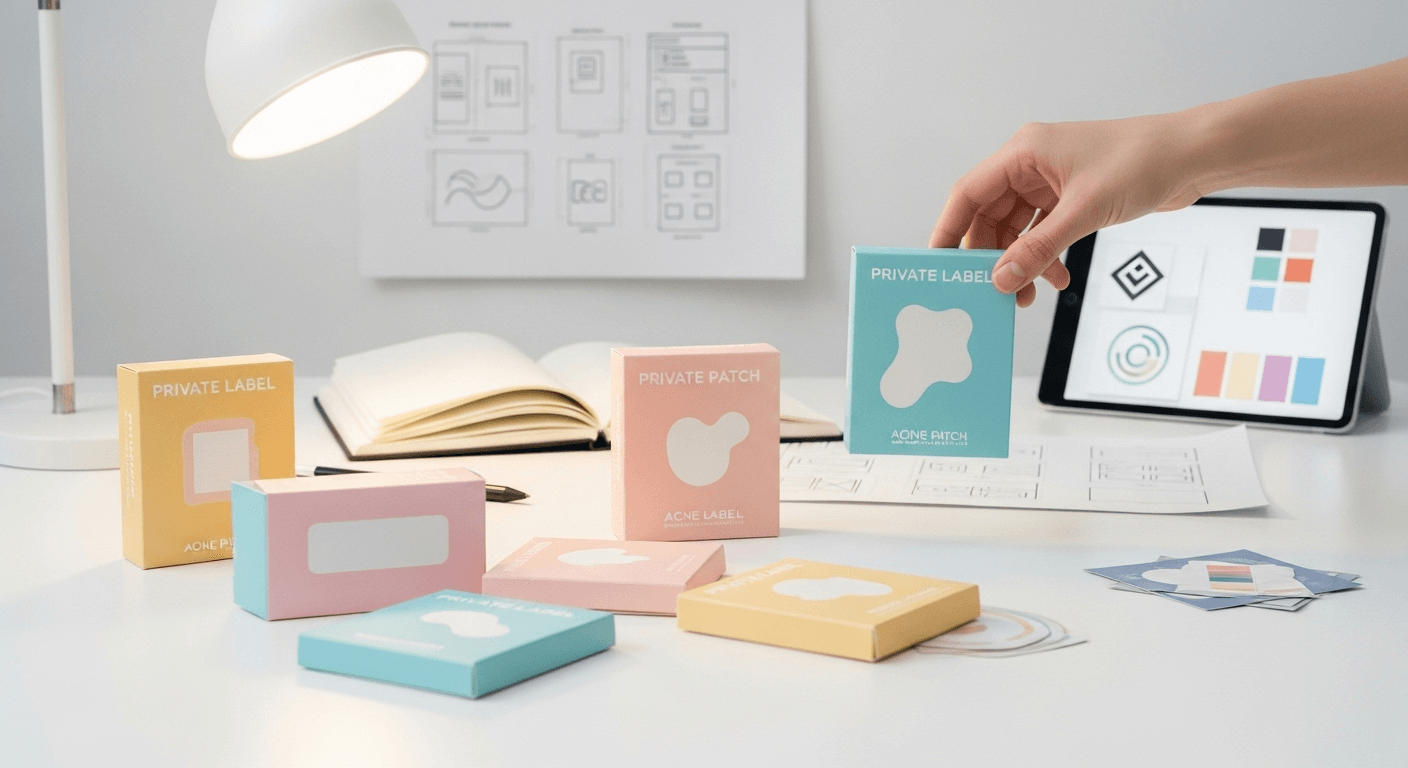 Creator and brand collaborations on custom shaped patches generate both content and sell-through data — the two things larger IP holders want to see before agreeing to a formal license.
You pay a rights holder to use their artwork, characters, or trademarks on your product — typically 8–15% of net sales as a royalty, often with a minimum guarantee. You handle manufacturing, compliance, and sales. The licensor receives royalties without operational involvement. Territory, duration, and approved uses are all defined in the agreement.
10,000–20,000 units per design is typical for first runs on collaboration or licensed patches. Some IP holders impose their own minimum quantities as a condition. Creator collaborations follow standard custom shape MOQs of 10,000–15,000 units.
Yes — creator co-brands are the entry point. A co-design with a micro-creator needs no formal IP licensing, no legal infrastructure, and can be structured as a revenue share agreement. It's also where you build the co-production track record that opens doors to more formal collaborations later.
Creator co-brands typically support 15–25% premiums over your standard product. Formal IP licensing with a recognized brand or character supports 30–50%. The ceiling is set by how much consumers value the IP or collaborator — and by whether you present the product as genuinely limited.
16–18 weeks from signed agreement to shipped goods for a formal IP collaboration. The artwork approval process is the most variable part — plan for 2–4 weeks minimum, sometimes more. Creator collaborations without formal IP approval requirements can move faster: 10–14 weeks.
For OEM production specifics on custom shapes used in collaborations — tooling costs, MOQs, shape constraints: Custom Acne Patch Shapes: OEM Cost and Production Guide →
For data on which shapes drive the best commercial performance: Custom Shaped Pimple Patches: Which Shapes Sell Best →
VEILTA has produced collaboration and licensed patches for brands across the US, EU, and Southeast Asia — including custom shapes, artwork-printed patches, and co-branded packaging. We provide pre-production samples for licensor sign-off.