VEILTA
10/06/2025
In hydrogel eye patches, the formula does more than support the product. It defines the product.
That is because hydrogel eye patches are often sold through a combination of feel, visible experience, and ingredient story. The active system affects not only efficacy positioning, but also retail price, target customer, market fit, and how premium the final SKU feels.
For brands planning a hydrogel eye patch OEM project, choosing ingredients is one of the most important early decisions. The right formula can help the product feel clear, focused, and commercially workable. The wrong formula can create a crowded brief, weaker differentiation, and more development friction.
This guide explains how hydrogel eye patch formulation works, how to match actives to the right claims direction, and how brands can build a cleaner path from entry-level to premium formulas.
A hydrogel eye patch is usually judged very quickly by the customer.
The user notices:
This is why hydrogel eye patch formulation ingredients OEM strategy matters more than many brands expect. The patch format itself is familiar, so a large part of differentiation comes from formula direction.
For many brands, the formula is what decides whether the product feels entry-level, mid-market, or premium. In commercial terms, the clearest formula usually performs better than the most crowded formula.
Hydrogel is not just a carrier. It creates the delivery environment and user experience around the actives.
That means ingredient choice has to make sense in three ways:
A good formula for a hydrogel eye patch is usually one that is:
This is one reason the best private label hydrogel eye patch formula is usually not the one with the longest ingredient list. It is the one with the clearest commercial logic.
| Product Claim | Key Active Ingredients | Supporting Ingredients | Formulation Strategy | Development Complexity |
|---|---|---|---|---|
| Hydration | Hyaluronic acid | Glycerin / Panthenol | Focus on moisture retention | Low |
| Anti-puffiness | Caffeine | Niacinamide / Peptides | Improve circulation perception | Medium |
| Dark circle brightening | Niacinamide | Vitamin C derivative | Target tone improvement | Medium |
| Anti-aging | Peptides / Collagen | Hyaluronic acid | Premium positioning | Medium–High |
| Sensitive skin | Panthenol / Allantoin | Low-irritation base | Minimize irritation risk | Medium |
| Repair / soothing | Centella asiatica extract | Ceramide | Barrier support positioning | Medium |
| Cooling / refreshing | Menthol | Aloe extract | Enhance sensory effect | Low |
| Premium spa treatment | Peptides + HA | Bioactive complex | High perceived value | High |
Hydrogel eye patch formulation logic for OEM product development
Different eye patch benefits usually call for different ingredient directions.
The table below is a practical starting point for hydrogel eye patch formulation guide planning.
| Benefit Goal | Recommended Ingredient Direction | Formula Tier Tendency | Best Fit for Market or Positioning |
|---|---|---|---|
| Hydration | Hyaluronic acid, sodium hyaluronate, glycerin, panthenol | Entry to premium | Broad-market, entry to premium |
| Depuffing | Caffeine, cooling-support blends, botanical support ingredients | Entry to mid-premium | Mass to mid-premium |
| Dark circle care | Niacinamide, brightening-support blends, antioxidant support | Mid to premium | Mid-market to premium |
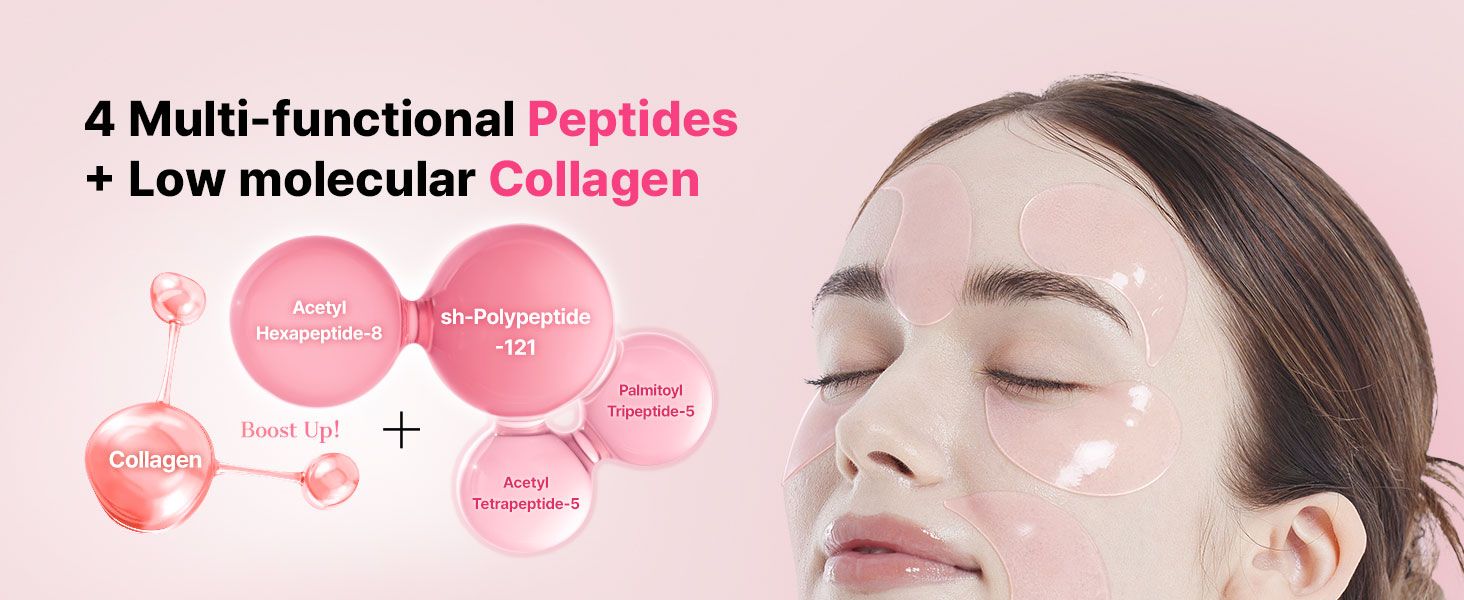
| Anti-aging | Peptides, collagen-support ingredients, adenosine, HA blends | Mid-premium to premium | Mid-premium to premium |
| Soothing | Centella asiatica, allantoin, panthenol, aloe support | Entry to premium | Broad-market to premium |
This kind of benefit mapping helps brands avoid starting with ingredient names and instead start with commercial intent.
Instead of treating every formula as either simple or premium, it is often more useful to think in tiers.
| Formula Tier | Typical Ingredient Style | Commercial Use |
|---|---|---|
| Entry-level | Familiar, broad-market hydration or soothing ingredients | Easier first launch, wider consumer fit |
| Mid-level | More targeted depuffing or brightening support | Better differentiation without excessive complexity |
| Premium | Anti-aging or elevated multi-benefit systems | Higher-value SKU with stronger packaging and storytelling support |
This tier logic helps brands choose ingredients based on product role rather than trend pressure alone.
Hydration is one of the broadest and easiest entry points in hydrogel eye patches.
For many brands, hydration is the most commercially forgiving first formula direction.
Depuffing products usually need to feel refreshing and practical.
This type often works well for brands targeting routine-based eye care rather than luxury ritual positioning.
Dark-circle-focused products usually need a clearer benefit story and a more careful positioning approach.
This type often fits brands that want a more targeted eye-care SKU rather than a general refresh product.
Anti-aging hydrogel eye patches are often positioned higher in the market.
This direction is often more suitable when the brand already has some premium identity.
Soothing eye patches are useful for brands that want a gentler or more universal positioning.
For many brands, soothing support works well as either a primary benefit or a supporting layer in a broader formula.
Not every formula should try to do everything at once.
For many OEM briefs, the real challenge is not choosing one active. It is choosing a combination that feels coherent.
A good ingredient pairing strategy usually has:
For example:
These pairings are often easier to position and develop than overly crowded formulas.
Multiple ingredients can strengthen a product story, but they can also weaken it if the formula becomes unfocused.
Common risks include:
For many brands, the better formula is the one that is easier to explain in one sentence.
In practical OEM work, some of the most common formulation brief mistakes are:
These mistakes often create more revision cycles without improving the product.
A more advanced formula does not always create more commercial upside.
In many hydrogel eye patch OEM projects, brands gain more by:
A formula only creates value if the customer can understand why it matters.
Ingredient selection should not be made only on trend value. It should also be made with market fit in mind.
Different markets may respond differently to:
This is why many brands review hydrogel eye patch active ingredients with both marketing and market-entry logic in mind.
Broad-market formulas usually work best when they are simple, familiar, and easy to explain.
More premium formulas usually need stronger differentiation.
For export projects, brands should also think about whether the ingredient story is easy to position consistently across markets.
A formula that is easy to launch in one market may need a different story or stronger documentation support in another.
A useful way to think about formulation is as a progression.
Often built around:
Often adds:
Often includes:
This step-up approach helps brands build a line that feels coherent instead of random.
For many brands, a smart progression may look like this:
This usually creates a more stable product line than launching multiple formula directions at the same time.
A stronger formula brief usually includes more than just ingredient names.
When briefing a hydrogel eye patch OEM manufacturer, brands should ideally define:
A brief like this gives the manufacturer enough context to recommend a more commercially realistic formula direction.
| Brief Item | Example |
|---|---|
| Target customer | Women 25-40 with tired-eye concerns |
| Main benefit | Depuffing and hydration |
| Hero ingredient | Caffeine |
| Support ingredients | Hyaluronic acid and panthenol |
| Market level | Mid-market |
| Sales channel | DTC and marketplace |
| Formula tier | Mid-level |
| Packaging style | Premium single-use sachet pack |
For hydrogel eye patch OEM projects, Veilta can support brands not only with manufacturing, but also with formula-direction planning.
That may include support for:
For many brands, the right formula is not the one with the most ingredients. It is the one that is easiest to position, package, and scale.
In hydrogel eye patches, the formula is often the product story.
That is why the best hydrogel eye patch formulation ingredients OEM strategy is not about adding as many actives as possible. It is about choosing the ingredient direction that best fits your customer, channel, pricing, and brand stage.
If you want the broader hydrogel eye patch OEM overview behind customization, product options, and manufacturer capability, read our Hydrogel Eye Patch OEM Guide.
The best ingredients depend on the intended benefit. Hydration formulas often use hyaluronic acid and glycerin, depuffing formulas often use caffeine, brightening formulas may use niacinamide, anti-aging formulas often use peptides, and soothing formulas may use centella or panthenol.
The choice should be based on the product's main benefit, target customer, price position, target market, and how complex the brand wants the formula story to be.
No. A more complex formula does not automatically create more value. Many brands benefit more from a clear hero ingredient and one or two supporting ingredients than from an overloaded formula.
For many brands, hydration or soothing is the easiest starting point because it is broadly understandable, commercially flexible, and easier to position across channels.
A common path is to start with hydration or soothing, then expand into depuffing or brightening, and later introduce more premium anti-aging or advanced ingredient concepts.