Custom PDRN Mask Manufacturer: OEM & Private Label
VEILTA
04/30/2026
Launching a custom PDRN face mask brand is no longer limited to large cosmetic companies.
In the past three years, demand has shifted quickly from aesthetic clinics to retail skincare brands, Amazon sellers, and spa distributors.
What Is PDRN and Why It's Driving Premium Mask Sales Right Now
PDRN (Polydeoxyribonucleotide) is a DNA-derived ingredient originally used in medical and aesthetic applications.
Most commercial PDRN used in cosmetics comes from:
- Salmon-derived PDRN
- Recombinant or fermentation-derived PDRN
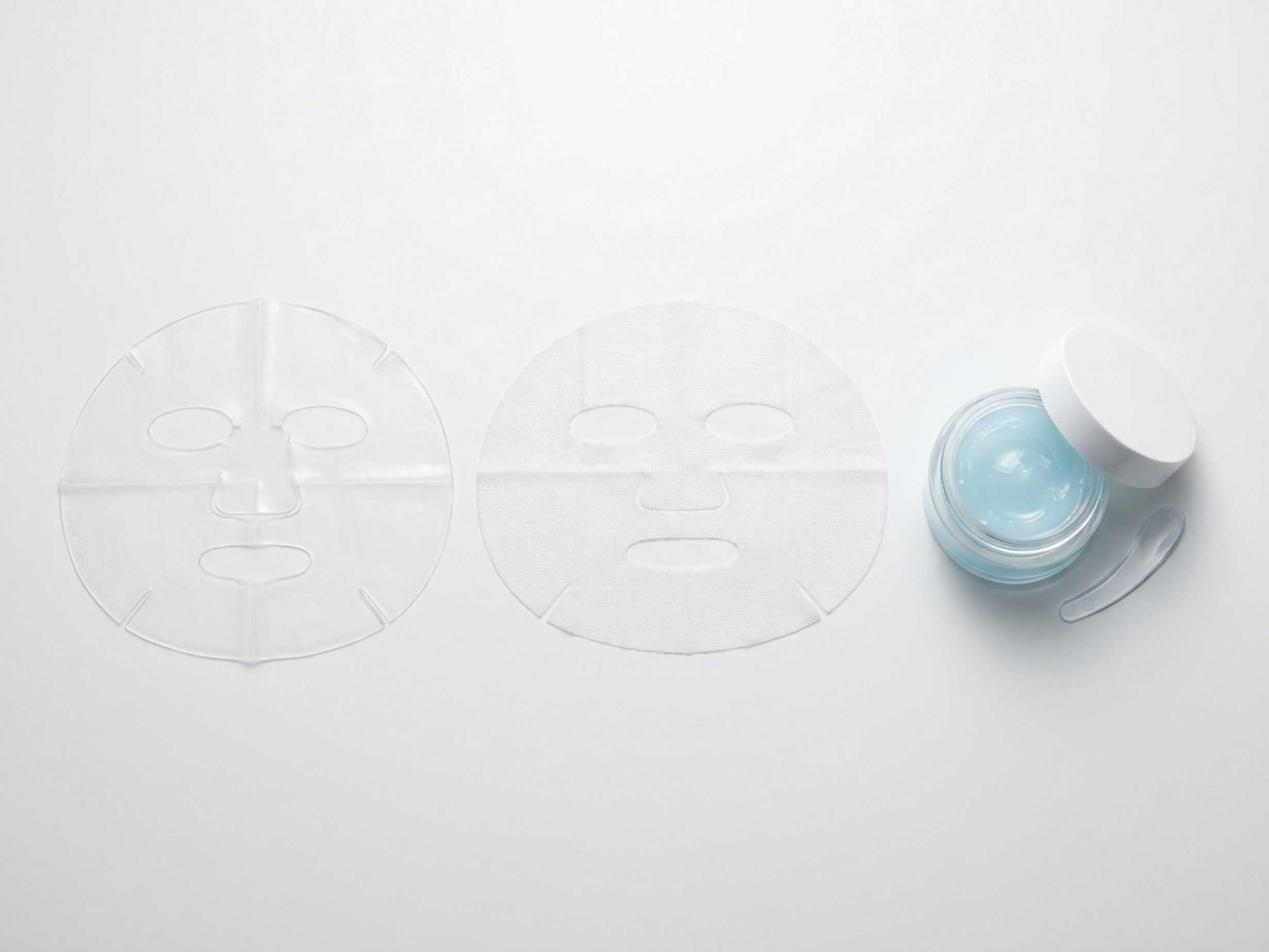
Three Types of PDRN Masks You Can Customize
| Mask Type | Best For | Channel Fit | Typical MOQ | Price Level |
|---|---|---|---|---|
| Hydrogel Sheet Mask | Retail and e-commerce | Amazon / DTC | 10,000 pcs | Medium-High |
| Bio-cellulose Sheet Mask | Clinics and premium spas | Professional channel | 10,000 pcs | High |
| Jelly Gel Sleeping Mask | Premium skincare brands | Retail / Subscription | 10,000 pcs | High |
Custom Formulation: What You Can Actually Change
Many brand owners assume they can customize everything freely. In reality, some parameters directly affect formula stability — here's what's genuinely adjustable versus what carries real reformulation risk.
Generally flexible:
- PDRN source — salmon-derived vs. recombinant/fermentation-derived (affects vegan/Halal positioning, see below)
- PDRN concentration — within manufacturer-validated ranges; higher concentrations require additional stability testing before approval
- Co-active ingredients — niacinamide, hyaluronic acid, peptides, and centella are commonly paired with PDRN without destabilizing the base formula
- Fragrance — light, low-irritation fragrance profiles can usually be added without affecting PDRN performance
- Sheet material — hydrogel, bio-cellulose, or jelly gel base, each with different cost and positioning implications
More constrained:
- pH range — PDRN stability is sensitive to pH drift; brands requesting unusual pH targets (e.g., to pair with strongly acidic actives) should expect additional stability testing cycles
- High-concentration acid actives in the same formula — combining PDRN with high-percentage AHA/BHA in a single sheet typically requires reformulation work rather than simple addition, due to potential degradation interactions
The practical takeaway: ingredient and material choices are flexible, but anything that shifts the formula's pH or introduces a second highly reactive active should be flagged early, since it changes the testing timeline rather than just the recipe.
Packaging and Branding: Building a Premium Shelf Presence
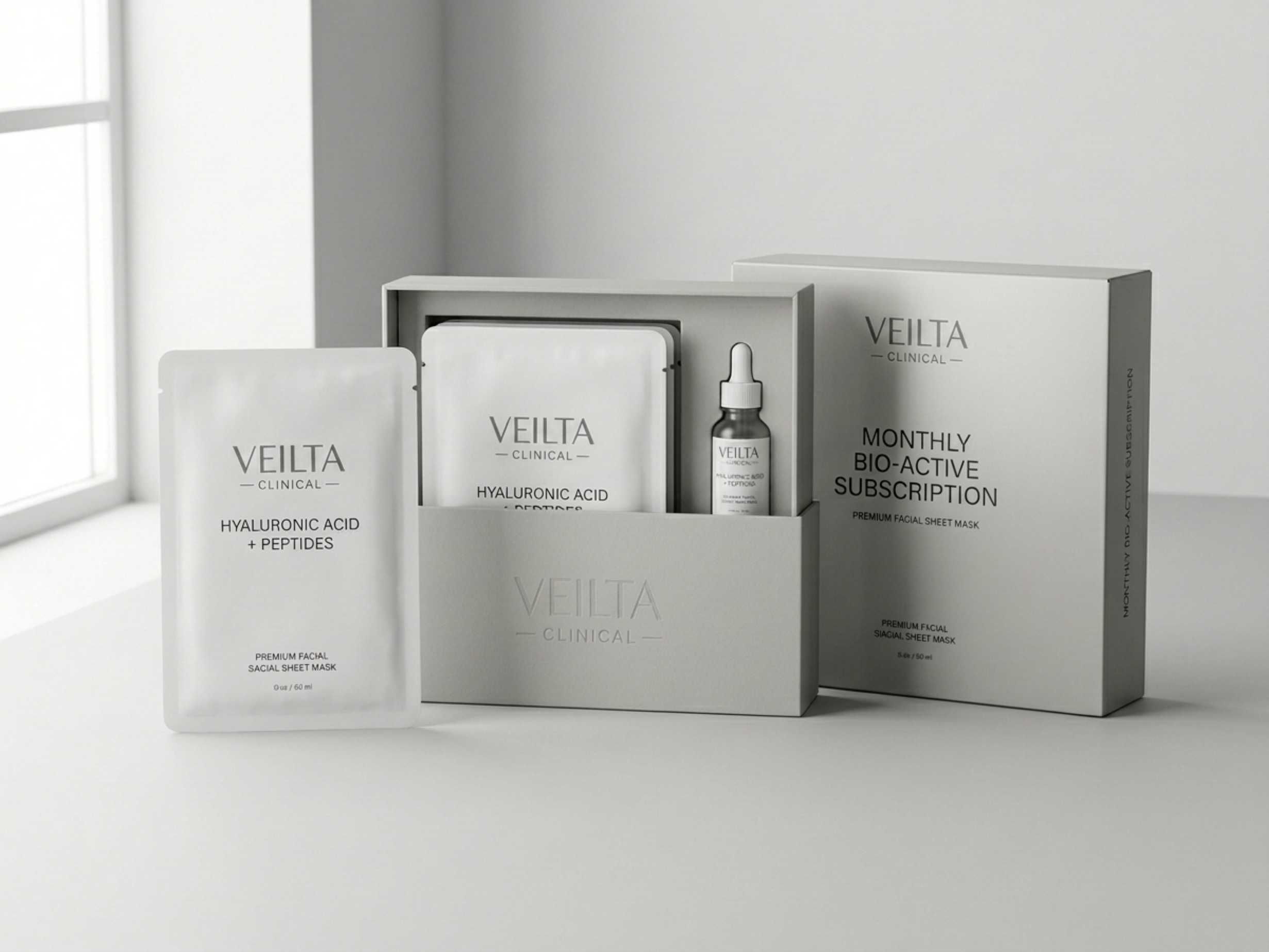
PDRN masks are typically positioned in the premium-to-luxury tier, which means packaging needs to support a higher price point than a standard sheet mask. The three common formats serve different commercial purposes:
Single pouch — the most flexible starting format, lowest packaging MOQ, and the easiest format to test multiple variants (e.g., different PDRN sources or co-actives) without committing to a full kit. Best suited for brands still validating which SKU will become their hero product.
Gift set — bundles 3-5 single masks into a branded box, often timed for holiday or gifting seasons. This format supports a higher effective price point per unit and works well for brands targeting corporate gifting or seasonal retail pushes, similar to the gifting strategy used for premium eye masks.
Subscription pack — multi-month supply in a single shipment, suited for brands with a DTC subscription model and a customer base already committed to a routine. This format depends more on retention marketing than on the packaging itself, so it's usually a second-stage format rather than a launch SKU.
For all three formats, brands sourcing PDRN masks for premium positioning should prioritize matte or soft-touch finishes and minimal, clinical-feeling typography over glossy, mass-market packaging cues — the packaging should visually signal the same "science-backed" positioning the ingredient story is built on.
Compliance and Claims: What You Can and Cannot Say
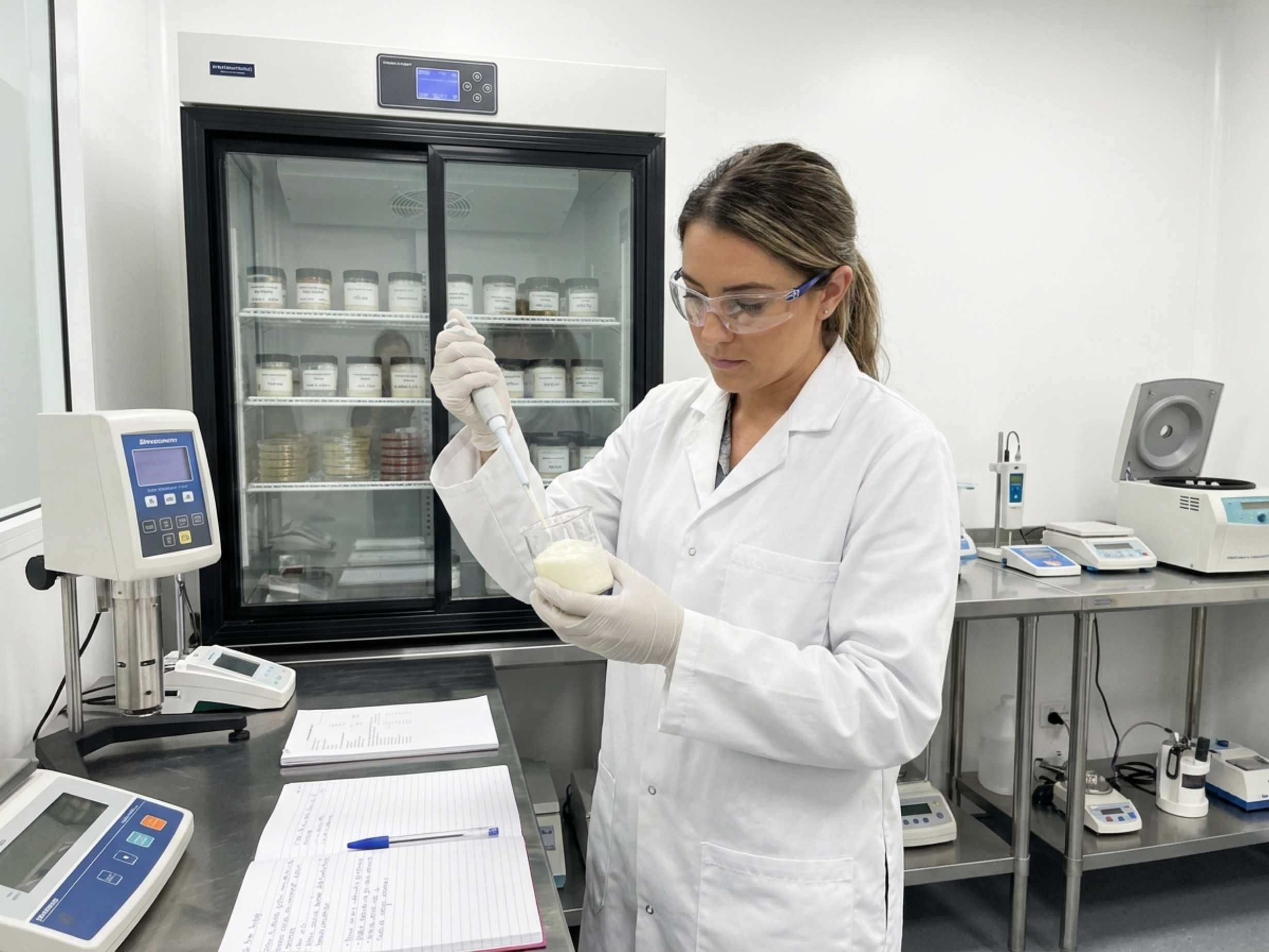 PDRN's origin in medical and aesthetic injectable applications creates a specific claims risk that brands need to manage carefully in cosmetic positioning.
Generally acceptable cosmetic claims:
- Hydration and moisture retention
- Skin texture and radiance improvement
- Soothing or calming effect
- Supports the skin's appearance of firmness
Claims that risk reclassification or regulatory challenge:
- "Regenerates" or "repairs" skin at a cellular level
- "Wound healing" or "tissue repair" language carried over from PDRN's medical/injectable use
- Direct comparisons to injectable PDRN treatments or implied equivalence to clinical procedures
- Any claim implying the product penetrates beyond the skin's outer layers in the way an injectable does
The core risk is that PDRN's medical-aesthetic reputation makes it tempting to borrow language from that context — but a topical cosmetic product works through fundamentally different mechanisms than an injectable, and claims should reflect that distinction. Regulators in the EU (under Regulation 1223/2009) and the US (FDA cosmetic vs. drug classification) evaluate claims language specifically for this kind of medical-adjacent overreach.
We recommend reviewing final packaging and marketing copy against your target market's cosmetic claims guidelines before finalizing artwork, since claims revisions after printing are far more costly than catching them at the copy stage.
MOQ, Lead Time, and Sampling: What to Expect
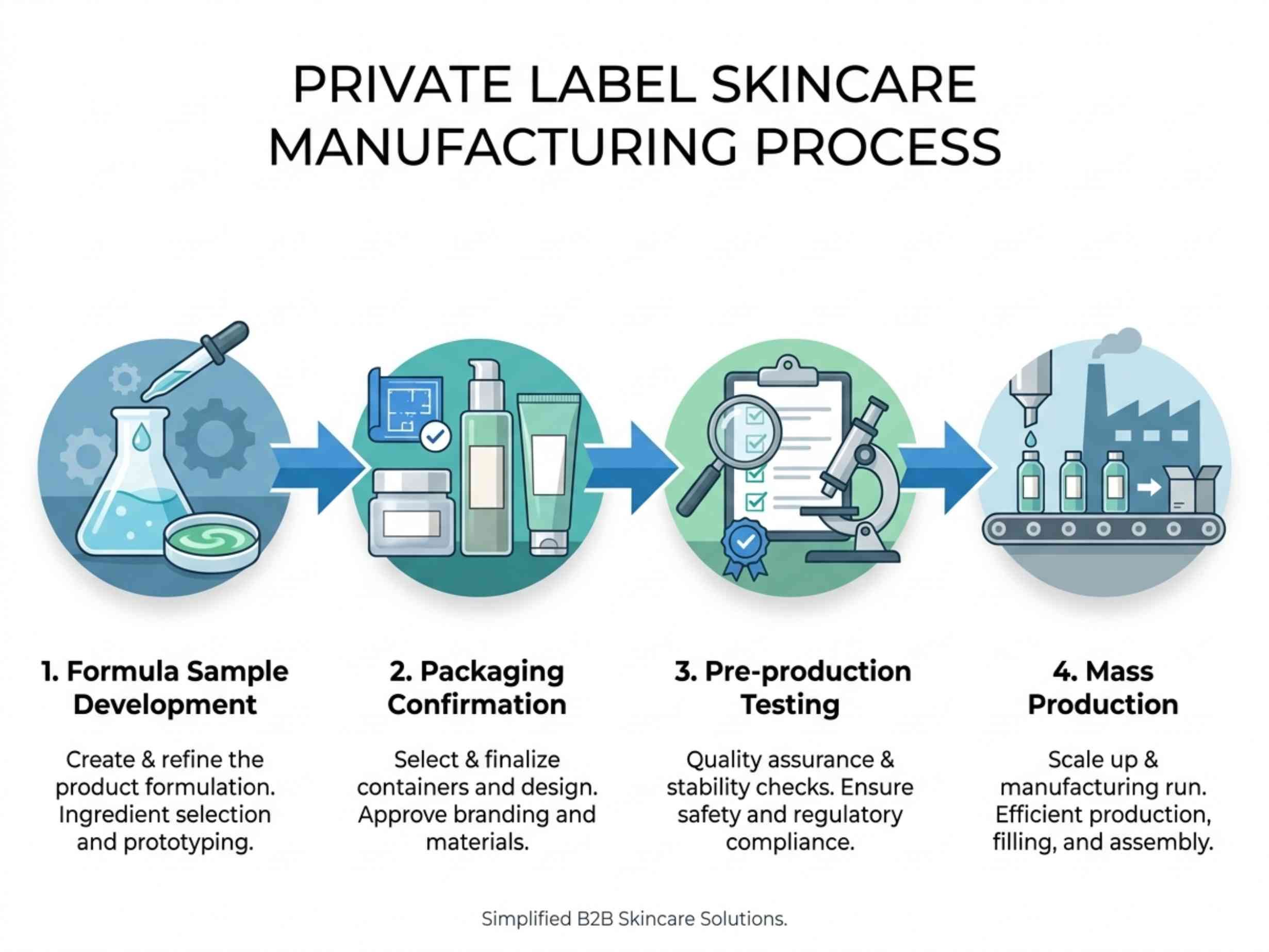 A typical PDRN face mask project moves through four stages:
1. Initial sampling (7-10 days) — base formula samples using standard PDRN concentration and your selected sheet material, before any custom co-actives or fragrance are added.
2. Formula refinement (1-2 additional rounds, ~5-7 days each) — adjustments based on sample feedback: co-active additions, fragrance tuning, or concentration changes within stable ranges.
3. Stability testing (varies by formula complexity) — required before mass production, particularly if the formula sits outside standard pH or concentration ranges. Standard formulas move through this faster than highly customized ones.
4. Mass production — once formula and packaging are both finalized.
Featured Answer
What is the typical MOQ for a custom PDRN face mask?
Most manufacturers require a minimum order quantity of 10,000 pieces.
Logistics and Export
 PDRN face masks generally ship under the same conditions as other sealed sheet/jelly masks — they don't require cold-chain logistics, but a few export-specific factors matter more for this category than for basic hydrating masks:
- Temperature cycling during sea freight — long ocean routes through tropical climates can stress packaging seals over weeks of transit; this is evaluated during the stability testing phase referenced above, not left to chance at the shipping stage
- Destination market documentation — PDRN's medical-aesthetic association means some markets request additional ingredient origin documentation beyond standard COA/SDS, particularly for salmon-derived sources
- Standard timeline — once mass production is complete, export logistics typically follow standard sea freight timelines (4-6 weeks for most major destination ports), with air freight available for smaller, time-sensitive launch batches
Brands planning a hard launch date should build in buffer time at the stability-testing stage rather than the shipping stage, since formula validation is the more variable part of the timeline.
Go-to-Market Strategy
Most brands start with one hero SKU, not multiple products — and for PDRN specifically, this matters more than for simpler ingredient categories.
PDRN's premium positioning and higher unit cost mean a multi-SKU launch (e.g., three PDRN variants at once) splits both marketing budget and customer education effort across products that all require the same explanation of what PDRN is and why it costs more than a standard sheet mask. A single hero SKU lets a brand concentrate that education effort and build a clearer before-you-buy story.
Channel fit by format (referencing the mask-type table above):
- Hydrogel sheet format performs well on Amazon and DTC, where customers are already comparison-shopping premium hydrating masks
- Bio-cellulose format fits the professional/spa channel better than mass retail, given its higher price point and clinical positioning
- Jelly gel sleeping mask format suits subscription models, since it's positioned as a routine product rather than an occasional treatment
Once the hero SKU has established repeat purchase behavior, expanding into a second format (e.g., adding a gift-set version of the same formula) is generally a safer second move than launching an entirely new PDRN variant.
FAQ
What is the typical MOQ for a custom PDRN face mask?
Most OEM manufacturers require a minimum order quantity of around 10,000 pieces for a custom PDRN face mask. This ensures stable production efficiency, consistent formulation performance, and cost-effective packaging sourcing.
How long does it take to manufacture a private label PDRN face mask?
Most private label PDRN face mask projects take approximately 45 to 60 days after packaging artwork confirmation, depending on formula complexity and packaging customization.
Can I customize the formula of a PDRN face mask?
Yes. Manufacturers typically allow customization of PDRN source, concentration, sheet material, co-active ingredients, fragrance, and packaging. However, full stability testing is required before mass production.
Is salmon-derived PDRN suitable for vegan or Halal markets?
Salmon-derived PDRN is not suitable for vegan positioning. For Halal or vegan markets, recombinant or fermentation-derived PDRN is typically used to meet certification requirements.
What documents should a reliable PDRN face mask manufacturer provide?
A professional manufacturer should provide:
- Certificate of Analysis (COA)
- Safety Data Sheet (SDS)
- GMP certification
- Stability testing reports
- Ingredient list
- Batch traceability documentation