How to Launch a Private Label Acne Patch Brand: Step-by-Step Guide
VEILTA
09/09/2025
Acne patches are one of the most accessible entry points into the skincare industry. The product is simple to manufacture, widely understood by consumers, and carries relatively low regulatory complexity compared with most skincare formulations. The category has also grown rapidly — according to Grand View Research, the global acne patch market was valued at USD 1.2 billion in 2023 and is projected to grow at over 7% CAGR through 2030.
Private label is the fastest route in: you work with an existing manufacturer formula, apply your branding, and launch without the cost or time of custom development. This guide covers every step from brand positioning to first sale.
TL;DR
- Private label means using an existing manufacturer formula with your own branding — lower cost and faster than custom formulation.
- Most new brands start with standard hydrocolloid patches: widest consumer recognition, lowest MOQ, simplest manufacturing.
- The full launch timeline is 14–22 weeks from manufacturer selection to first shipment.
- Compliance work must run in parallel with production — not after goods arrive.
- Packaging design and channel strategy are where brand differentiation actually happens.
What Is Private Label for Acne Patches?
Private label means selecting an existing formula developed by a manufacturer and applying your own brand name, logo, and packaging. The manufacturer handles production; you handle branding, marketing, and sales.
| Model | What It Means | Best For |
|---|---|---|
| Private label | Use manufacturer's existing formula + your branding | New brands, fast launch, lower cost |
| OEM | Manufacturer produces to your specifications | Custom actives, unique formats |
| ODM | Manufacturer handles design and development | Fully custom product concept |
For a first launch, private label is almost always the right choice. The formula has been tested, stability data exists, and MOQs are lower because the manufacturer produces the same formula for multiple clients. Custom development makes sense at scale — not at launch.
From VEILTA's manufacturing experience: The brands that launch fastest and most successfully are not the ones with the most unique formula. They are the ones with the clearest positioning, the strongest packaging, and the most focused channel strategy. The hydrocolloid material is not where you win.
Step 1: Define Your Brand Positioning
Before you contact a single manufacturer, answer these questions. Your answers determine which patch format to choose, what your packaging should communicate, and where you will sell.
Who is your target customer? Gen Z (16–24) responds to aesthetic, expressive patches — colorful, shaped, shareable. Millennial buyers (25–35) often want clinical-looking packaging that signals efficacy. Pharmacy-channel buyers expect medical-adjacent design with ingredient transparency.
What problem are you solving? Surface whiteheads (hydrocolloid), cystic or deep breakouts (microneedle), daytime use under makeup (invisible ultra-thin), or a multi-format acne care brand?
What is your price positioning? Mass market ($8–$15/pack) competes on price and distribution. Premium ($18–$35) competes on ingredient quality, sustainable packaging, or aesthetic differentiation. Luxury ($35+) requires exceptional brand storytelling and typically only works in DTC or specialty retail.
Where will you sell first? Amazon requires specific image formats and early review strategy. EU requires CPNP notification before sale. Retail buyers typically require 10,000+ units for a first PO. Channel choice shapes everything downstream. For a full breakdown, see our channel strategy guide for new acne patch brands →
Step 2: Choose Your Patch Format
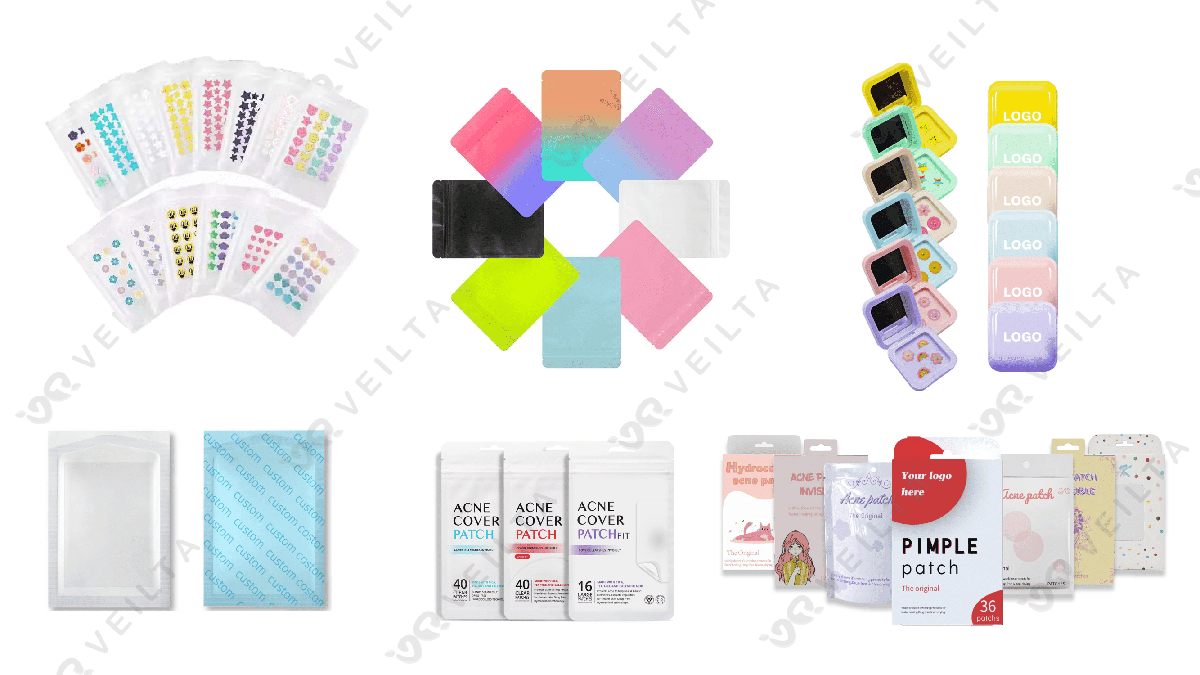 The most common private label formats: hydrocolloid, medicated, microneedle, and ultra-thin invisible.
| Format | Mechanism | MOQ Range | Best Fit |
|---|---|---|---|
| Hydrocolloid | Absorbs fluid from surface pimples | 3,000–5,000 units | Mass market, first launch |
| Medicated (SA) | Salicylic acid exfoliates and unclogs pores | 3,000–5,000 units | Pharmacy, functional positioning |
| Microneedle | Dissolving needles deliver actives into skin | 5,000–10,000 units | Premium, cystic acne targeting |
| Invisible (ultra-thin) | Transparent protective film for daytime | 3,000–5,000 units | Gen Z, under-makeup use |
Most new brands start with hydrocolloid. It has the broadest consumer recognition, the most established supply chain, and the lowest manufacturing complexity. As of 2026, colorful and shaped hydrocolloid patches (stars, hearts) continue to outperform generic round patches on TikTok and Instagram, even with identical formulas — so format differentiation within hydrocolloid is still available.
Step 3: How to Find a Private Label Acne Patch Manufacturer
Manufacturer selection is the most consequential decision in the process. A poor supplier creates compounding problems — quality issues at launch, documentation gaps that block compliance, slow communication that delays production.
Non-negotiable criteria:
- ISO 22716 GMP certification
- FDA facility registration (required for US market under MoCRA 2022)
- Willingness to provide full INCI lists and COAs before sampling
- English-language responses within 24 hours
Evaluation approach: Contact 3–5 manufacturers simultaneously — not sequentially. Parallel evaluation saves 4–6 weeks. Request itemized pricing (patch, packaging, carton, freight separately) and lead times in writing. The quality of a manufacturer's communication at the inquiry stage is a reliable indicator of how they perform throughout the project.
Step 4: Request and Evaluate Samples
Never proceed to production without testing samples against your brief.
Sampling sequence:
- Request stock samples (dispatched within 3–5 business days, received within 1–2 weeks)
- Select your preferred manufacturer based on stock sample quality and documentation
- Submit your custom sample brief (patch size, any formula modifications, packaging specifications)
- Receive custom sample (10–15 business days)
- Evaluate, revise if needed (each revision round: 7–10 business days)
- Sign off golden sample — the physical, agreed production standard
What to evaluate:
- Adhesion: does it stay on through movement and light moisture?
- Saturation: does the patch feel well-loaded with serum, or light and dry?
- Color change: does a translucent-to-white transition occur within 6–8 hours on skin?
- Packaging integrity: does the foil sachet seal and open cleanly?
- Scent: any off-notes suggesting ingredient quality issues?
The golden sample is non-negotiable. It is the reference against which your bulk order will be inspected. Never approve production without a signed-off golden sample retained by both parties.
Step 5: Regulatory Compliance by Market
Start compliance work when you finalize your formula — not after production. Waiting until goods arrive is the most common cause of launch delays. As of 2026, regulatory frameworks across all major markets have tightened — MoCRA in the US, updated CPNP requirements in the EU — making early compliance preparation more critical than it was even two years ago.
United States: Standard hydrocolloid patches are cosmetics. Under MoCRA 2022, all cosmetic products must be listed via the FDA Cosmetics Direct portal before marketing. This requires your INCI list and responsible party details — information you have once sampling is finalized. Patches with salicylic acid as an active drug ingredient require a Drug Facts panel under the FDA OTC acne monograph.
European Union: Appoint an EU Responsible Person and complete CPNP notification before sale. You will also need a Cosmetic Product Safety Report (CPSR) from a qualified EU safety assessor — budget €500–1,500 and 4–6 weeks. Start this in parallel with production.
UK: Separate from EU post-Brexit. Register via the SCPN system and appoint a UK Responsible Person.
Southeast Asia: Indonesia (BPOM): 3–6 months pre-market registration. Philippines (FDA): 6–12 months. If these markets are in year-one plans, start registration immediately after formula finalization.
Step 6: Packaging and Label Design
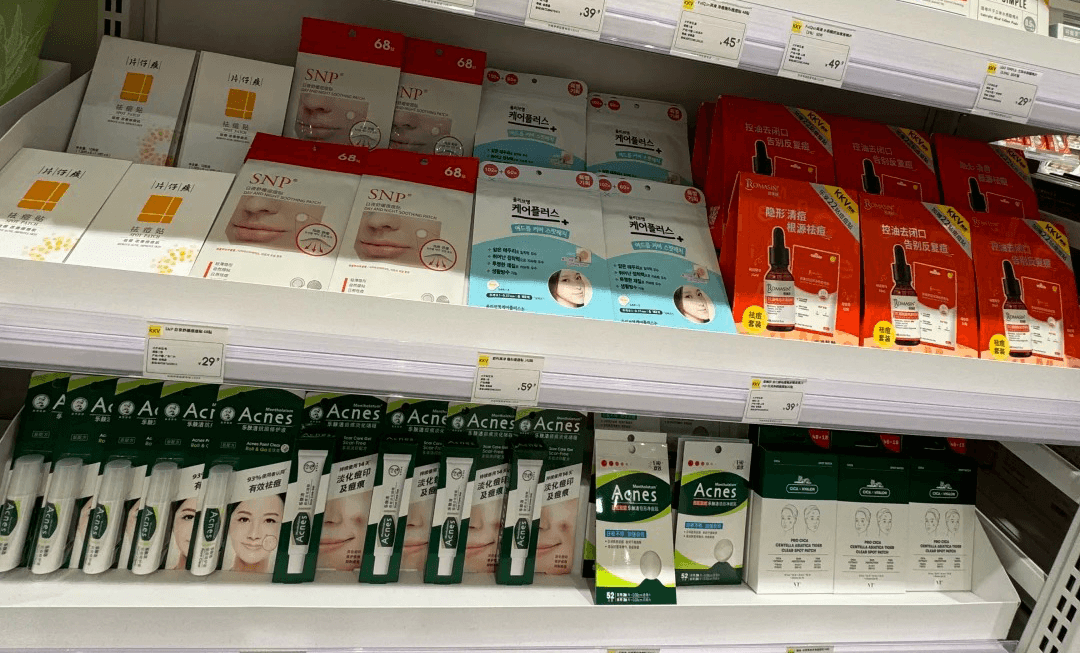 Packaging is the primary brand differentiator when the formula is shared across private label brands.
When the formula is not proprietary, packaging is where your brand lives. Two brands can source the same hydrocolloid material from the same factory and sell at completely different price points based on packaging and positioning alone.
Mandatory label elements (US and EU):
- Full INCI ingredient list
- Net content (number of patches)
- Responsible party name and address
- Country of origin
- Batch number space
- Directions for use and applicable warnings
The four visual positioning routes for acne patch brands:
| Route | Visual Characteristics | Target Audience |
|---|---|---|
| Clinical / medical | White space, minimal color, ingredient-forward | Millennials, pharmacy channel |
| Gen Z aesthetic | Color-heavy, illustrated, shaped patches | 16–24, TikTok-native |
| Premium minimalist | Muted palette, high-quality materials | DTC premium, 25–38 |
| Natural / clean beauty | Kraft materials, botanical illustration, earthy tones | Clean beauty segment |
For a detailed breakdown of packaging decisions and brand visual strategy, see our packaging design guide for private label acne patch brands →
Step 7: Production and Pre-Shipment Inspection
Production order: Place with 30% deposit once the golden sample is signed off and final artwork is approved. Confirm in writing: production start date, expected completion date, and pre-shipment inspection arrangements.
Pre-shipment inspection: For first orders with a new manufacturer, a third-party inspection (SGS, Bureau Veritas, or equivalent) is strongly recommended. Cost is typically $200–400. The inspection should cover: patch appearance vs. golden sample, packaging print quality, foil sachet sealing integrity, and carton labeling accuracy. If the inspection fails, negotiate rework before goods leave the factory.
Shipping: Sea freight from China: 14–40 days port-to-port depending on destination. Air freight: 5–8 days at 3–5x the cost. For most first orders, sea freight with adequate buffer time is the right choice unless you have a firm launch deadline.
Full Launch Timeline
| Stage | Duration |
|---|---|
| Manufacturer research and shortlisting | 1–2 weeks |
| Stock sample evaluation | 1–2 weeks |
| Custom sampling and revision | 2–4 weeks |
| Packaging design | 3–4 weeks |
| Golden sample sign-off | 1 week |
| Compliance preparation (run in parallel) | 4–6 weeks |
| Production | 3–5 weeks |
| Sea freight | 4–6 weeks |
| Total | 14–22 weeks |
Frequently Asked Questions
How do I start a private label acne patch brand?
Starting a private label acne patch brand involves seven steps: define your positioning, choose a patch format, shortlist GMP-certified manufacturers, evaluate samples, design packaging and complete compliance, place a production order with pre-shipment inspection, and launch on your chosen sales channel. The full process takes 14–22 weeks from manufacturer selection to first sale.
What is the minimum order quantity for private label acne patches?
MOQ typically ranges from 3,000–10,000 units depending on patch format and packaging customization. Standard hydrocolloid with stock formulas starts at 3,000–5,000 units. Microneedle or custom-formula formats start at 5,000–10,000 units. Using stock packaging rather than fully custom packaging can reduce MOQ for a first order.
How long does it take to launch private label acne patches?
A typical launch takes 14–22 weeks from manufacturer selection to first shipment — covering research, sampling, packaging, compliance, production, and freight. Using a stock formula rather than custom development removes 4–8 weeks from the process.
Do private label acne patches need FDA approval?
Standard hydrocolloid patches without drug claims are cosmetics in the US and do not require pre-market FDA approval. Under MoCRA 2022, all cosmetic products must be listed via the FDA Cosmetics Direct portal before marketing. Patches with salicylic acid as an active drug ingredient must comply with the FDA OTC acne monograph and carry a Drug Facts panel.
What certifications does my manufacturer need?
At minimum: ISO 22716 GMP certification and FDA facility registration for the US market. For EU sales, the manufacturer must also provide full formulation documentation to support CPNP notification. Avoid manufacturers who cannot provide certification or refuse factory audits.
Launch Your Acne Patch Brand with VEILTA
VEILTA is a GMP-certified acne patch manufacturer based in Zhongshan, China, specializing in hydrocolloid, medicated, microneedle, and ultra-thin formats. We provide private label and OEM services with full compliance documentation for the US, EU, UK, and Southeast Asian markets.