Where to Sell Your Private Label Acne Patches: Channel Strategy for New Brands
VEILTA
03/11/2026
Most new private label brands spend months getting their product right — formula, packaging, sampling, production. Then the shipment arrives and a question surfaces that should have been answered much earlier: where do we actually sell this?
Channel strategy is the decision most brands defer until inventory is in hand. That is the wrong order. Your channel choice shapes pricing, packaging requirements, content strategy, and cash flow timeline. Getting it wrong at launch doesn't mean recovery is impossible — but it costs time that early-stage brands cannot afford.
This guide maps the main sales channels available to a new private label acne patch brand, helps you choose your first channel based on your real situation, and gives you the indicators to know when to expand.
TL;DR
- Amazon FBA is the highest-intent channel for acne patches but requires listing investment and an early review strategy.
- TikTok Shop is the highest-growth channel right now if you can produce short-form video consistently.
- DTC (Shopify) is worth building early for brand ownership but rarely drives revenue in the first 90 days without paid traffic.
- Pick one channel first. Expand when repeat purchase rate exceeds 15% and revenue covers COGS plus channel fees.
- Spreading across three channels at launch with no channel performing well enough to learn from is the most common early mistake.
1. Channel Overview: What Your Options Actually Look Like
Before choosing a channel, understand what each one demands — not just in startup cost, but in ongoing attention and capability.
| Channel | Startup Cost | Price Control | Customer Data | Best Stage |
|---|---|---|---|---|
| Amazon FBA | Medium (PPC + listing) | Low | None — Amazon owns it | Early traction, high-intent buyers |
| DTC (Shopify) | Low (platform fee) | Full | Full | Brand building, year 1+ |
| TikTok Shop | Low | Medium | Partial | Content-led launch, Gen Z |
| Retail / pharmacy | High (samples, slotting) | Low | None | Scale stage, established brand |
| Social direct (IG/FB) | Low | Full | Full | Micro-brand, loyal existing audience |
| B2B / wholesale | Low per unit | Very low | None | High volume, low margin |
The time cost is what this table doesn't show. Amazon requires constant PPC management and review strategy. TikTok Shop requires weekly content output. Retail requires months of relationship-building before a first purchase order. Factor your team's real bandwidth into channel selection — not just the dollar costs.
2. How to Choose Your First Channel for Private Label Acne Patches
The right first channel depends on two variables: what you have (content capability vs. paid budget) and who you are targeting (Gen Z vs. millennial vs. broader demographics).
If you have video content capability but limited paid ad budget → TikTok Shop first. Acne patches are among the most naturally demonstrable products on short-form video. The patch turning white is a visual hook that drives organic reach. TikTok Shop's affiliate creator program means you can generate sales without a paid media budget if you can recruit creators to demo the product.
If you have paid ad budget and want immediate purchase-intent traffic → Amazon FBA first. "Acne patches" and "pimple patches" are high-volume, high-intent search terms on Amazon. A well-optimized listing with strong imagery, a competitive price point, and an early review acquisition strategy can generate consistent revenue within 60–90 days.
If you have an existing audience or community → DTC (Shopify) first. If you are a creator, an existing brand expanding into acne care, or have a built-in email list, a DTC store captures full margin and full customer data from day one.
If none of the above → Amazon FBA as default. Amazon remains the lowest-friction path from "product ready" to "first sale" for a brand with no existing audience and limited content infrastructure.
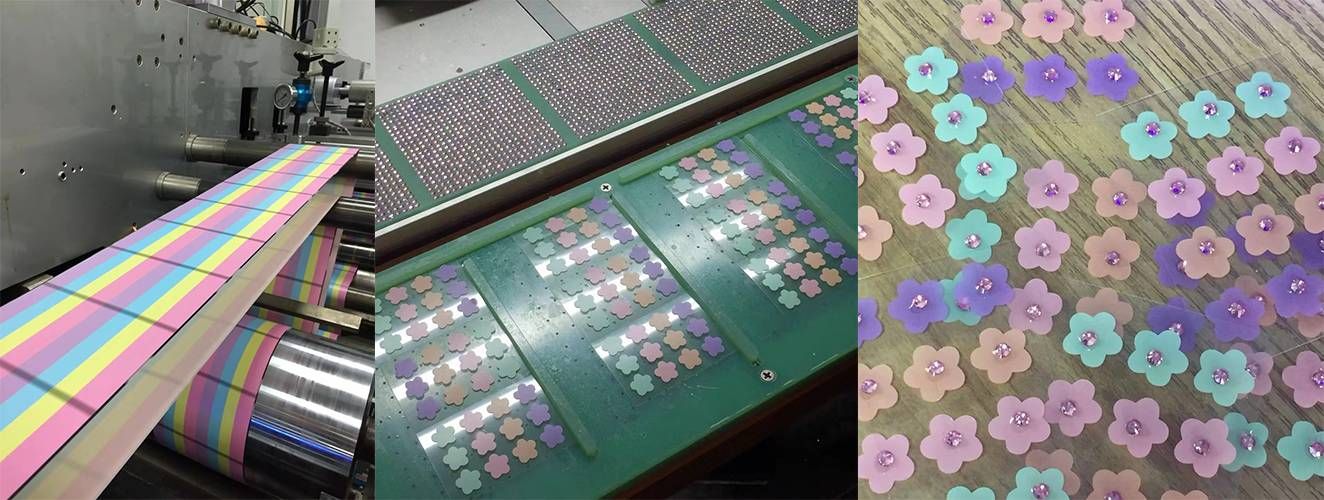 Channel choice at launch shapes pricing, packaging requirements, and content strategy — decide before your shipment arrives.
3. Amazon: Competitive Reality and Entry Strategy for Acne Patches
The acne patch category on Amazon is competitive at the top but fragmented in sub-niches — and sub-niches are where a new brand belongs. According to Jungle Scout's 2024 State of the Amazon Seller report, beauty and personal care remains one of the top five categories for new private label sellers, with skincare consumables like patches generating strong repeat purchase rates.
The competitive reality: Search "acne patch" or "pimple patch" and the top results are COSRX, Hero Cosmetics, Mighty Patch, and established Korean-origin brands with thousands of reviews. Competing on those terms with a new listing in 2026 is very difficult.
Where to enter instead:
- Format differentiation: Star-shaped, heart-shaped, colorful patches occupy sub-categories where established brands have less presence. These searches have lower volume but significantly lower PPC costs.
- Ingredient positioning: Patches with niacinamide, centella asiatica, or tea tree oil as named actives attract buyers looking beyond plain hydrocolloid.
- Bundle differentiation: A starter kit combining day patches, night patches, and a targeted serum creates a listing that does not directly compete with single-SKU leaders.
Listing fundamentals:
- Main image must show the patch on skin — not just the box
- Get at least 5 reviews before meaningful PPC spend (use Amazon Vine or early reviewer programs)
- A+ content with a wear-time diagram significantly reduces returns from misuse
- Backend keywords should capture both "acne patch" and "pimple patch" — distinct search terms with overlapping intent
4. TikTok Shop: Content Strategy for Acne Patches
TikTok Shop is the fastest-growing channel for skincare consumables in 2025–2026, and acne patches are one of the category's top-performing products. According to TikTok for Business, beauty and personal care is consistently the top-selling category on TikTok Shop in the US, with skincare consumables — including patches — among the most repurchased product types. The reason acne patches specifically perform well is structural: the product is visually demonstrable, results appear within hours, and the core buying audience (16–28 year olds) is already on the platform.
Content formats that convert:
- Before/after wear time: Apply patch, cut to 8 hours later, show the white patch at removal. Highest-converting format — demonstrates mechanism and normalizes wear time simultaneously.
- GRWM integration: Applying a patch as part of a morning or nighttime routine — low production value, high authenticity.
- "Does it actually work?" testing: Skeptical-to-convinced narrative arc, effective for new brands without established trust.
- Aesthetic content: Colorful or shaped patches photograph well for content that drives saves and follows before converting to sales.
Affiliate creator program: Set a commission rate (typically 15–20%) and recruit 10–20 micro-creators (10k–100k followers) in the skincare niche via TikTok Shop's affiliate marketplace. For a new brand with limited content budget, this is more cost-effective than paid ads in most cases.
5. DTC (Shopify): Traffic Acquisition for a New Acne Patch Brand
A Shopify store gives full price control, full customer data, and complete brand expression. It is also, for most new brands, the slowest path to a first sale — because unlike Amazon or TikTok Shop, it provides no built-in traffic.
Realistic traffic paths for year one:
- Organic social → DTC: TikTok or Instagram content drives profile visits; bio link converts to Shopify. Conversion rate from social profile to purchase is typically 1–3%.
- Email list from day one: Capture emails via a waitlist or giveaway pre-launch. A list of 500–1,000 subscribers converts at 3–8% on a launch email — better than most cold paid channels at early stage.
- SEO content: Blog posts targeting queries like "how long to wear an acne patch" or "best patch for cystic acne" build organic traffic over 6–12 months.
- Meta/Google paid ads: Viable once you have product-market fit evidence from another channel. Launching cold, before social proof exists, is expensive and rarely profitable in early months.
The most common DTC mistake: spending six weeks building the Shopify store before the product has any sales. Build the store early, but get your first 100 sales from wherever is fastest — then invest in DTC.
6. When to Expand to a Second Channel
Expanding too early is as damaging as waiting too long. Splitting attention and inventory before the first channel reaches profitability results in two underperforming channels rather than one growing one.
Expand when your first channel shows all three of these signals:
| Signal | What It Means | Action |
|---|---|---|
| Repeat purchase rate >15% | Product-market fit confirmed | Consider second channel |
| Monthly revenue covers COGS + fees | Unit economics work | Safe to invest in channel two |
| Inventory confidence to split stock | No stockout risk on primary channel | Proceed with expansion |
| Return rate >10% | Product or expectation problem | Fix before expanding |
| No organic reviews after 60 days | Listing or product issue | Investigate before adding channels |
Frequently Asked Questions
What is the best channel to launch a private label acne patch brand?
For most first-time brands, Amazon FBA or TikTok Shop offers the lowest barrier to a first sale. Amazon provides built-in search intent traffic; TikTok Shop works well if you can produce short-form video consistently. A DTC store is worth building early but rarely generates meaningful revenue without paid traffic in the first 90 days.
How competitive is the acne patch category on Amazon?
Competitive at the top, but fragmented in sub-niches. Established brands dominate broad searches. Differentiated formats — shaped patches, ingredient-forward positioning, bundle listings — occupy sub-categories with significantly less competition and lower PPC costs.
When should a new acne patch brand expand to a second sales channel?
Expand when your first channel shows: repeat purchase rate above 15%, monthly revenue covering COGS plus fees, and inventory confidence to split stock without stockout risk. Expanding too early dilutes focus and typically results in two underperforming channels.
Can I sell private label acne patches on TikTok Shop?
Yes — acne patches perform exceptionally well on TikTok Shop due to their visual, demonstrable mechanism. You need a registered business, compliant listings, and a content strategy built around demonstration video. TikTok Shop's affiliate program can drive significant volume without paid media spend.
Do I need a website to sell private label acne patches?
Not immediately. Validating demand on Amazon or TikTok Shop first, then building a Shopify store, is a common and sensible sequence. Skipping a website entirely creates platform dependency — a long-term vulnerability as marketplace policies and algorithms change.
For the complete step-by-step guide to launching a private label acne patch brand — from manufacturer selection through production and compliance — see our Private Label Acne Patch Brand Guide →
Source Your Acne Patches with VEILTA
VEILTA manufactures private label acne patches in hydrocolloid, medicated, microneedle, and ultra-thin formats — GMP certified, with compliance documentation for the US, EU, UK, and Southeast Asian markets.