Acne Patch Packaging Design for Private Label Brands
VEILTA
09/12/2025
The acne patch market is crowded — and functionally, much of it looks the same. Most private label hydrocolloid patches use similar formulas from similar factories. What separates brands in consumer perception is not what is inside the sachet. It is everything outside it.
Packaging design and brand visual identity are the primary competitive levers for a new private label acne patch brand. A brand with undifferentiated packaging competing on price against established mass-market patch brands has a very difficult road. A brand with a distinct visual identity, a coherent aesthetic across social and packaging, and a story that resonates with a specific audience has a genuine path to building something durable.
This guide covers the four visual positioning routes for acne patch brands, the packaging decisions you need to make before briefing a designer, and how to build a recognizable brand identity on a realistic first-launch budget.
TL;DR
- Four main visual positioning routes: clinical/medical, Gen Z aesthetic, premium minimalist, natural/clean. Pick one and commit — trying to appeal to everyone produces a brand that resonates with no one.
- Packaging is your most important brand investment before launch. It affects Amazon conversion, TikTok aesthetics, and retail first impressions.
- Product photography is the single biggest variable in online conversion rate.
- Small-budget options (Canva, Fiverr, 99designs) are viable for a first launch. Plan a brand evolution once you have revenue to invest.
1. The Four Visual Positioning Routes for Acne Patch Brands
Before briefing a designer or opening a template tool, choose your visual positioning route. Every design decision — color, typography, material, patch shape — should follow from this choice. Brands that try to occupy two routes simultaneously end up looking inconsistent.
| Route | Visual Characteristics | Target Audience | Tone |
|---|---|---|---|
| Clinical / medical | White space, minimal color, ingredient-forward, precise typography | Millennials, pharmacy channel, efficacy-seekers | Dermatologist-adjacent, trustworthy |
| Gen Z aesthetic | Color-heavy, illustrated, shaped patches, playful typography | 16–24, TikTok-native, aesthetic-driven | Fun, expressive, shareable |
| Premium minimalist | Muted palette, high-quality materials, restrained design | 25–38, DTC premium | Considered, elevated, quiet luxury |
| Natural / clean beauty | Kraft or recycled materials, botanical illustration, earthy tones | Clean beauty buyers, sustainability-conscious | Transparent, ethical, ingredient-honest |
Choosing based on your channel:
- Amazon health/pharmacy category → Clinical or Premium minimalist
- TikTok Shop, Gen Z audience → Gen Z aesthetic
- DTC premium brand → Premium minimalist or Natural/clean
- Specialty wellness retail → Natural/clean or Premium minimalist
The Gen Z aesthetic route has strong momentum in 2026, driven by the performance of colorful star and heart-shaped patches on TikTok. However, it is also the most imitated — differentiation within this route requires a distinctive color palette, a memorable illustrated motif, or a strongly recognizable brand name. Entering this space with generic pastel colors and a round logo is not differentiation.
2. Packaging Design Decisions for Private Label Acne Patch Brands
Once your visual positioning route is clear, work through these decisions with your designer — or before using a template tool.
Material and Format
- Individual foil sachet: Standard format, good barrier protection, widely expected
- Blister card (multiple patches visible): Higher retail shelf appeal, more expensive to produce
- Backing sheet pack: Cost-effective, common in mass market
- Jar or tube (multi-use): Unusual for patches, creates differentiated shelf presence for premium positioning
Color System
Pick a primary color and one or two secondaries — not a full rainbow. Consistent color application across all packaging formats (retail box, foil sachet, backing sheet) is what makes a brand look cohesive at a glance. Color associations matter: blue reads as clinical; pink reads as Gen Z and playful; green reads as natural; black reads as premium.
Typography
Two typefaces maximum: a display font for the brand name and a clean sans-serif for ingredient lists and body copy. Avoid decorative fonts for required label copy — they reduce legibility and can cause compliance issues if text renders too small at print size.
Patch Shape and Surface Design
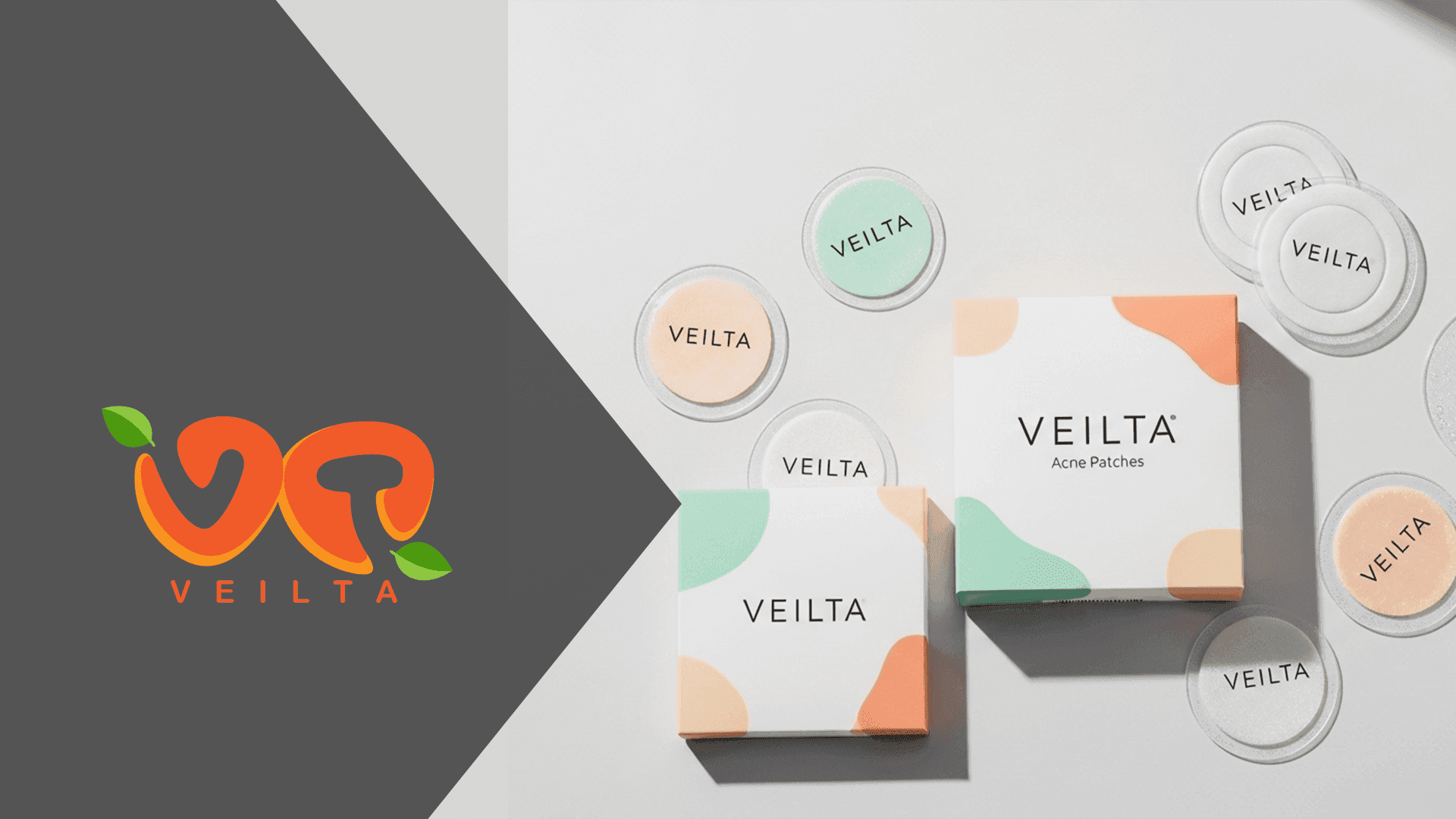
For standard round patches, the patch itself is a design surface: color (skin-tone, transparent, solid color), printed patterns, or branded motifs. Shaped patches (stars, hearts, clouds) require custom cutting tools and higher MOQ but are strong visual differentiators on social media — their distinctive silhouette is easier to recognize at a glance in feed and story formats, which tends to support stronger organic shareability. VEILTA supports custom shapes with minimum orders from 10,000 units per shape.
Compliance Checklist Before Artwork Sign-Off
- Full INCI ingredient list included and legible at print size
- Net content stated (number of patches)
- Responsible party name and address on label
- Country of origin stated
- Batch number / lot code space allocated
- Directions for use included
- Warnings included (Drug Facts panel required for SA patches)
- Test with a physical printed mockup — colors and font size look different on paper than screen
3. From Factory to Branded: Steps After Receiving Product
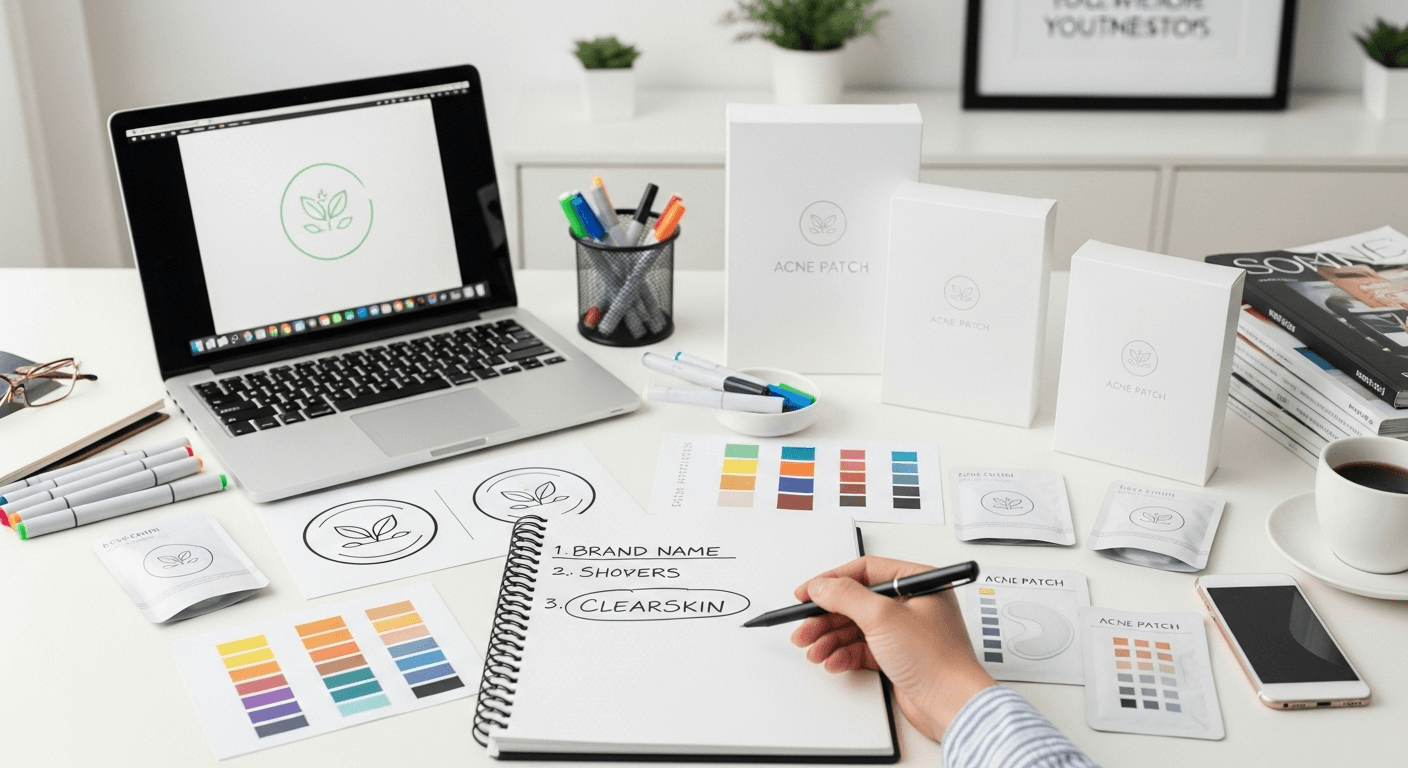 Brand identity development for private label acne patches — from factory product to retail-ready packaging.
Step 1 — Artwork application: If using custom printed packaging, artwork is finalized and submitted to the manufacturer before production. If using stock packaging with labels applied post-production, arrange label printing and application before sale.
Step 2 — Compliance check on received goods: Before listing for sale, verify printed packaging matches approved artwork exactly — especially ingredient list, batch number format, and responsible party details.
Step 3 — Product photography: Do not skip for launch. Photography is the highest-leverage pre-launch investment for an online brand. See Section 4.
Step 4 — Channel-specific asset preparation: Amazon requires a white-background main image. TikTok Shop accepts lifestyle shots. Shopify allows editorial-style imagery. Prepare channel-specific assets from a single shoot rather than using the same image everywhere.
4. Social Media Visual Consistency: Photography and UGC
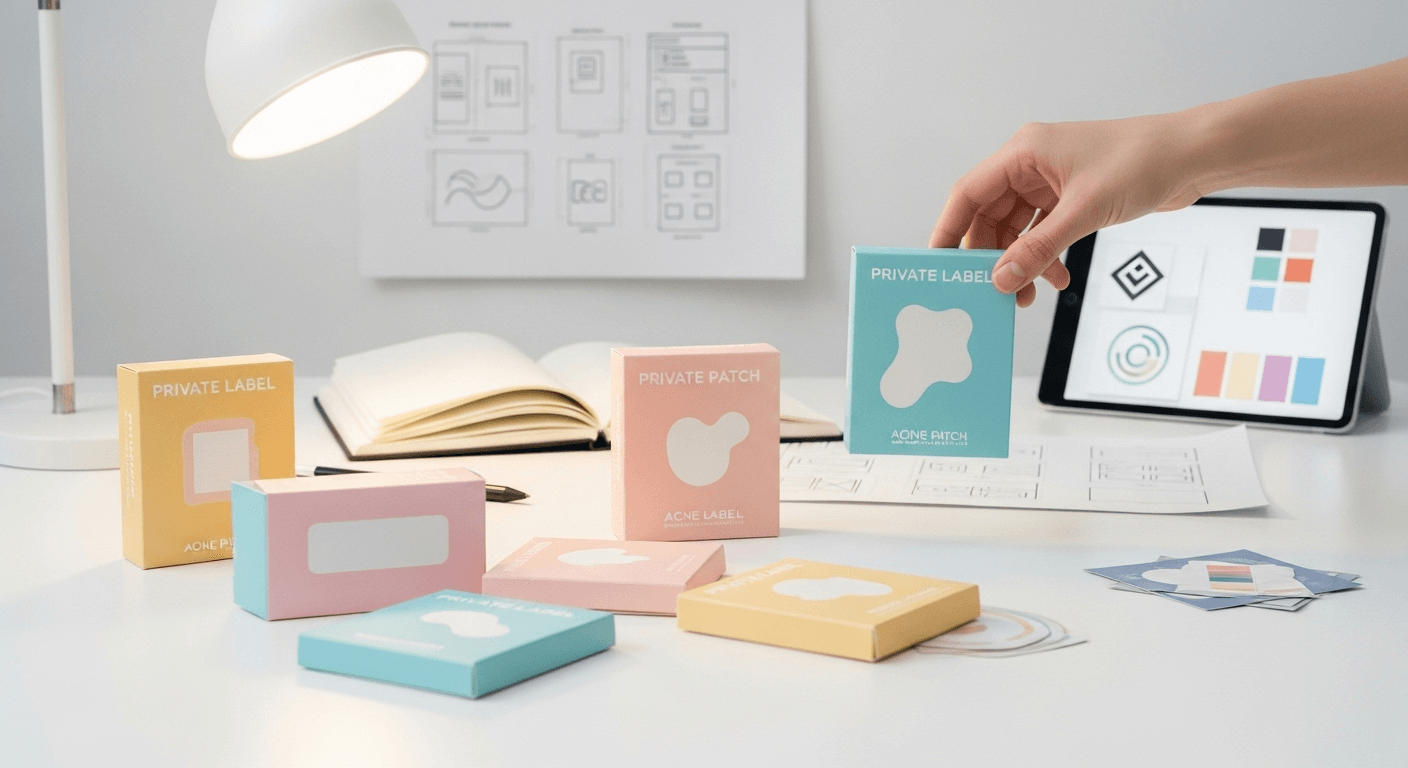 Consistent visual identity across packaging and social content builds the brand recognition that drives repeat purchase.
Product Photography Fundamentals
For Amazon and DTC:
- Main image: patch on skin (not just the box) — neutral or white background
- Lifestyle image: patch being applied as part of a skincare routine
- Infographic: wear time, mechanism of action, before/after color change diagram
- Comparison: format differentiation vs. category standard (keep tasteful — focus on your strengths)
For TikTok and Instagram:
- Natural light outperforms studio light for Gen Z audiences
- Real skin texture performs better than heavily retouched skin
- Before/after wear time content — patch at application vs. 8 hours later showing color change — is the highest-converting format for acne patches specifically
UGC (User-Generated Content) Strategy
For a new brand with limited content budget, UGC often outperforms polished brand content because it provides social proof alongside the visual. Strategies to generate early UGC:
- Include a card in packaging inviting customers to share their patch photo with a branded hashtag
- Offer a discount code in exchange for a tagged post
- Send product to 10–20 micro-creators in the acne/skincare niche before launch as gifting, no posting obligation — let organic content develop
5. Building Your Brand Story
For a private label product where the formula is not proprietary, brand story is one of the few genuine differentiators at launch. Consumers increasingly buy from brands whose story resonates — not just from products that perform.
What makes a credible brand story for an acne patch brand:
- Founder's personal experience with acne — the most authentic and widely shared narrative in this category
- A specific underserved audience ("for darker skin tones," "for people who refuse to stop touching their face")
- A manufacturing commitment ("made in GMP-certified facilities," "medical-grade hydrocolloid only")
- A visual aesthetic that represents a community or subculture the target consumer identifies with
What to avoid:
- Generic claims ("we care about your skin") without specificity — every brand says this
- Overstated efficacy claims that create regulatory risk and disappointed customers
- Brand story that contradicts visual positioning — a "clinical, science-backed" narrative with Gen Z illustrated packaging creates cognitive dissonance that buyers notice
Your brand story should be expressible in two sentences. If it takes a paragraph to explain, it is not clear enough yet.
6. Design Resources for Small-Budget Brands
| Budget | Tool / Resource | Best For |
|---|---|---|
| $0–50 | Canva (Pro plan) | Logo, social templates, basic packaging mockup |
| $50–200 | Fiverr (skincare design niche) | Logo design, label layout, packaging dieline |
| $200–500 | Upwork (mid-tier freelancer) | Brand identity package, packaging system |
| $500–1,500 | 99designs (contest or direct) | Full brand identity with multiple concepts |
| $2,000+ | Boutique branding agency | Complete brand development, style guide |
Practical notes:
- When briefing any designer: provide your visual positioning route, 3–5 reference brands you admire (and why), your target audience description, and your mandatory label elements list
- Always request source files (AI, PSD, or equivalent) at project completion — you will need them for print production and future edits
- Get a physical printed mockup before approving final artwork — colors and text legibility look different on paper than on screen
- Canva's Brand Kit feature allows you to lock your brand colors and fonts across all templates, which prevents visual drift as you produce more content
Frequently Asked Questions
What packaging design style works best for acne patch brands?
There is no single best style — it depends on your target market. Clinical/minimalist works for pharmacy and millennial audiences. Colorful illustrated designs perform better for Gen Z on TikTok and Instagram. Natural/clean aesthetics appeal to the clean beauty segment. The key is consistency: every visual touchpoint should look like it came from the same brand.
How much does it cost to design packaging for a private label acne patch brand?
Canva or Fiverr: $50–200 for a functional first iteration. Mid-range freelancer on 99designs or Upwork: $300–800. A branding agency: $2,000–8,000+. For a first launch, a skilled Fiverr or Upwork designer with a skincare portfolio can produce professional results at $300–500.
What information is required on acne patch packaging?
Required label elements include: product name, full INCI ingredient list, net content, responsible party name and address, country of origin, batch number space, directions for use, and applicable warnings. For medicated patches with salicylic acid, the FDA requires a Drug Facts panel. Your manufacturer should provide a compliance-checked label template.
Can I create an acne patch brand identity without a graphic designer?
Yes — Canva offers skincare-specific templates for a credible first iteration. The limitations are originality (templates are widely used) and print-readiness (files need conversion for professional printing). Canva is a reasonable starting point for a first launch; custom design becomes necessary as you scale.
How important is brand photography for selling acne patches online?
Extremely important, especially on Amazon and DTC. The main product image is the primary conversion driver; a professional photograph of the patch on skin consistently outperforms flat lays or box-only shots. For TikTok and Instagram, authentic photography with natural light tends to outperform studio-polished imagery with Gen Z audiences.
For the complete step-by-step guide to launching a private label acne patch brand — manufacturer sourcing, compliance, production, and channel strategy — see our Private Label Acne Patch Brand Guide →
Work with VEILTA on Your Acne Patch Packaging
VEILTA provides private label acne patches with full packaging customization — custom shapes, printed foil sachets, retail box design support, and compliance documentation for the US, EU, and UK markets.