China Skincare Manufacturer Audit: 12 Questions B2B Buyers Always Forget
VEILTA
04/14/2026
Most brand buyers walk into a manufacturer audit with a checklist that covers the obvious: GMP certificate, production capacity, MOQ, lead time. Those questions matter. But every manufacturer is completely prepared for them. The answers are rehearsed, the documents are pre-staged, and the facility tour is optimized for first impressions.
The questions that reveal actual production risk are the ones buyers forget to ask — or feel awkward asking. This guide covers 12 of them, drawn from what comes up in real sourcing relationships once brands get past the early months.

The standard audit checklist covers what factories are prepared to show. The 12 questions in this guide probe what they're not.
Before the questions: what a standard audit covers
A standard factory audit for a Chinese skincare manufacturer will typically cover facility overview and production capacity, GMP certification status and scope, quality control lab capabilities, key personnel and team structure, sample products and existing client references, and MOQ, lead time, and pricing structure.
These are necessary but insufficient. They tell you what the factory wants you to know. The 12 questions below dig into the operational realities that affect whether a manufacturing relationship actually works long-term.
The 12 questions
1. What happens when a key raw material is out of stock?
Almost no one asks this, which is why it often causes the most problems.
Raw material supply chains for cosmetics are not perfectly reliable. Hydrocolloid suppliers run short. Active ingredient batches fail incoming QC. A port delay holds up packaging materials for three weeks. What you need to know is whether the factory has a documented substitution policy — and whether they notify clients before making a swap, or after.
A factory that substitutes raw materials without telling you is a compliance risk even when the replacement material is technically equivalent. The Certificate of Analysis for your batch may reference ingredients your customers' regulatory team hasn't reviewed or approved.
2. Can I see a batch record from a recent production run?
A batch record is the document that proves GMP is practiced, not just documented. It shows which raw materials went into the batch including lot numbers, every in-process check performed and who performed it, any deviations from the standard operating procedure, and the QC release signoff.
A factory confident in its processes will share a sample batch record with sensitive client information redacted. Hesitation here is a signal worth noting. For more on what a batch record should contain and why it matters more than the GMP certificate itself, see our GMP Cosmetics Manufacturing guide.
3. What is your out-of-spec process, and how many batches failed in the last 12 months?
Every factory has occasional production failures. That's not a disqualifier — it's reality. What matters is whether the factory has a defined process for handling them.
Ask specifically: What happens when a finished batch fails release testing? Who is notified? Is the batch reprocessed, reworked, or rejected outright? What triggers a full deviation investigation versus a corrective action note?
The second half of the question — how many batches failed in the last 12 months — tends to get either a candid answer with documentation, or visible discomfort. Either way, you've learned something.
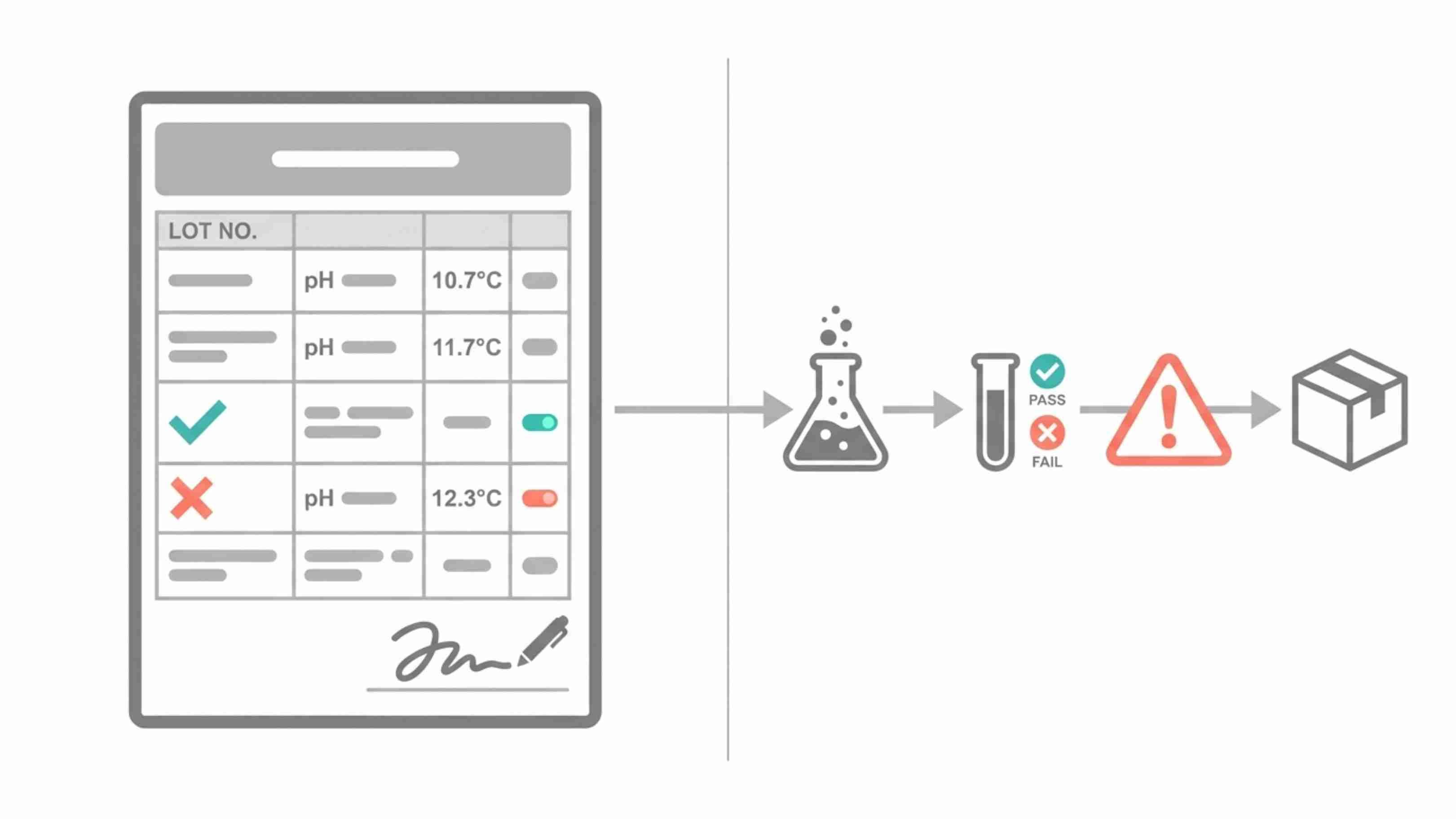
Questions 2 and 3 together reveal more about a factory's real quality discipline than any certificate on the wall.
4. Who are your top three raw material suppliers, and how long have you worked with them?
Supplier stability is a proxy for production stability. A factory with a six-year relationship with its hydrocolloid supplier is a different risk profile from one that re-tenders every season for the lowest price.
Follow up: Are those suppliers audited? Is there a qualified backup for any critical material? This question also opens a conversation about ingredient traceability — EU and US buyers are asking for it more often, and some markets now require documented supply chain visibility behind finished cosmetics.
5. What is your actual production capacity in units per month for this product type?
Not the theoretical maximum. Not the output if they run three shifts seven days a week. The actual current output, net of existing client commitments.
Growing factories in China frequently overcommit. They take your order, take a large order from another client two weeks later, and quietly resolve the conflict by pushing the smaller job back. Asking for current utilization — not nameplate capacity — gives a more honest picture of where your order sits in the queue.
6. How do you handle packaging customization — internally or through a third party?
Many contract manufacturers produce the product in-house but source packaging from external suppliers: box printers, foil sachet vendors, outer carton suppliers. There's nothing wrong with that arrangement, but it has real implications. Your lead time is partly hostage to a supply chain you can't audit. Packaging defects may get less scrutiny than production defects. And packaging markups — charged by the factory on top of their supplier's price — can be significant without appearing itemized on a quote.
Ask which parts of your finished product are made in-house and which are sourced out. Then ask what the incoming QC process looks like for externally supplied components.
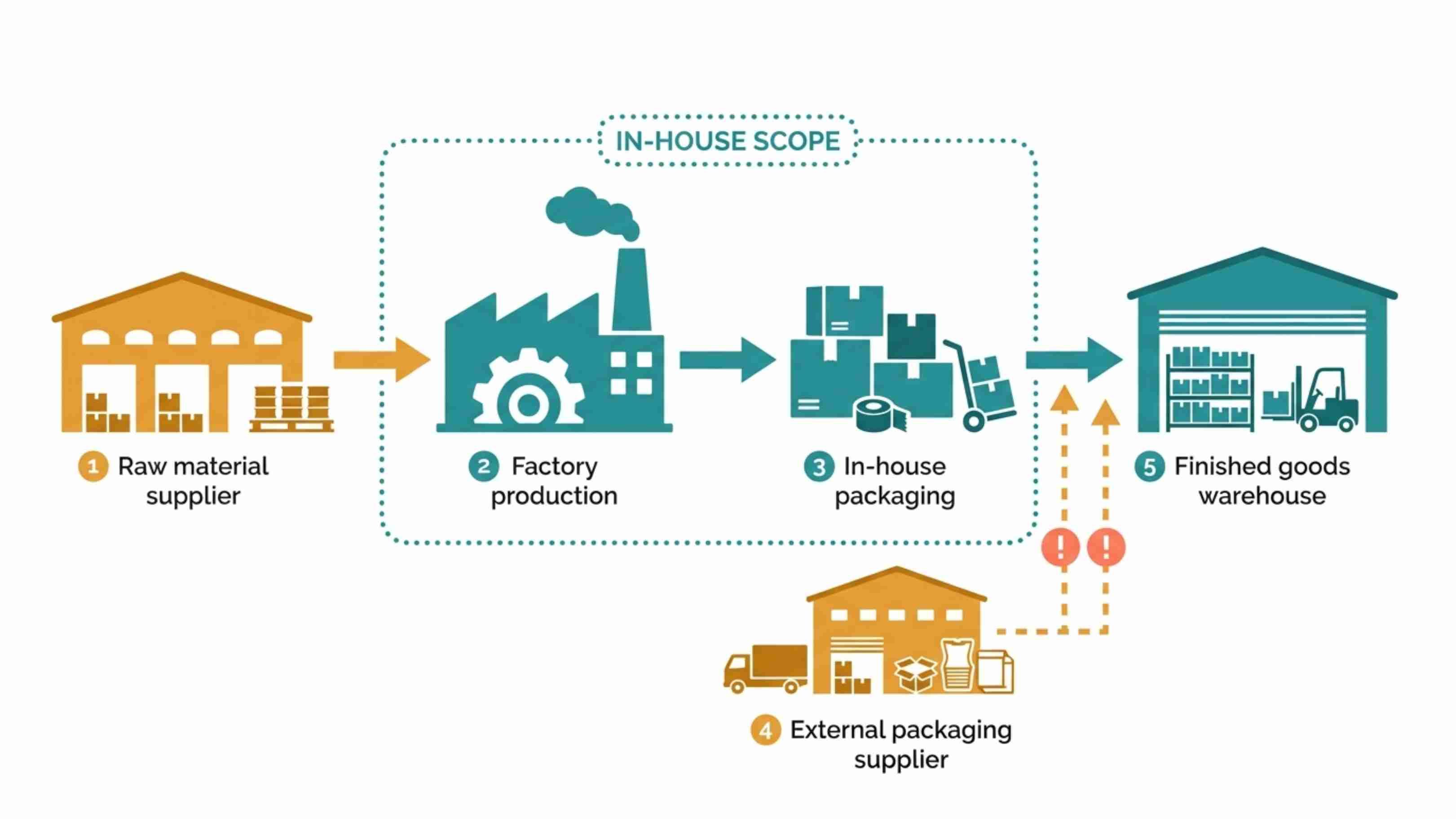
Questions 6 and 7 map the boundaries of what you're actually auditing — and where visibility ends.*
7. What export markets do you have active clients in, and can you provide a reference?
Claimed regulatory experience and actual regulatory experience are different things. A manufacturer that has shipped to the EU, the US, or Australia has dealt with real import requirements — labeling compliance, customs holds, Responsible Person arrangements, FDA registration. One that claims familiarity without active clients in those markets is working from theory.
Ask for a reference from a client in your target market. A manufacturer with legitimate export history will have clients who can take a verification call. If that request gets deflected, note it.
Also worth asking directly: Have any of your shipments been held or rejected by customs in any market in the last two years? That answer tells you more than any certificate on the wall.
8. What is your minimum stability testing requirement before a product ships?
Stability testing verifies that a product holds its intended quality — appearance, pH, viscosity, microbiological safety — over time under defined storage conditions. For a hydrogel patch, that means accelerated stability at 45°C / 75% RH for three months (used to project an 18-month shelf life), freeze-thaw cycling, and microbiological challenge testing.
Factories vary significantly on this. Some complete a full stability program before shipping the first batch. Others ship on early-stage data and run the full program in parallel. Some do the minimum their own internal standards require, which may not match what the EU Cosmetics Regulation or FDA guidance expects for your product category.
Ask to see a stability report from a recent product launch. Check the methods against what your target market actually requires — not what the factory assumes is sufficient.
9. How do you manage allergen cross-contamination between production runs?
For EU market brands, this is a compliance question, not just a quality concern. The regulation requires labeling of 26 identified fragrance allergens above defined concentration thresholds — and cross-contamination from a previous production run can put trace quantities into a product that isn't supposed to contain them at all.
The risk is highest at multi-product factories running fragranced and fragrance-free formulas on the same equipment. Ask specifically about cleaning validation between runs and whether finished products are allergen-tested. The labeling thresholds are laid out in EU Cosmetics Regulation (EC) No 1223/2009 — worth reviewing before you finalize your compliance brief with the factory.
10. What happens to the formula documentation if we end the relationship?
This is uncomfortable to ask. Ask it anyway.
In an OEM arrangement, you own the formula — but the factory holds the documentation: R&D records, the validated manufacturing process, the supplier relationships behind the raw materials. If you change manufacturers, how much of that transfers?
You should walk away with at minimum: the full formula specification including ingredient names, INCI names, CAS numbers, and percentages; the manufacturing process description; all stability and safety testing records; and the batch record template. Get this written into the contract before development begins, not after you've decided to leave and are suddenly negotiating from a weak position.
For more on how IP ownership works across OEM, ODM, and private label arrangements, see OEM vs ODM vs Private Label: A Clear Definition for Skincare Brands.
11. Do you have a minimum reorder quantity different from the initial MOQ?
Some factories have tiered MOQ structures — the first order requires a higher quantity to justify setup costs, but reorders can be smaller because the production line is already configured. Others hold the same MOQ regardless of order history.
If you're running a product with variable demand — seasonal SKUs, limited editions, or products you're still building volume on — this has direct cash flow implications. Knowing the reorder MOQ before launch avoids the situation where you're forced to overstock just to hit the factory's minimum. If your category is acne patches specifically, OEM Pimple Patches: Sourcing Guide for Brand Owners covers MOQ negotiation alongside other patch-specific sourcing considerations.
12. How do you communicate production status to clients, and how quickly do you respond to problems?
This question, more than almost any other, predicts what the relationship will actually feel like once orders are in production.
Ask whether there's a dedicated project manager or coordinator per client — or whether all communication runs through a single sales rep covering twenty accounts. Ask what channel they use (email, WhatsApp, WeChat) and what the expected response window is during production. Ask how they handle delays: do clients get proactive notification, or do they find out when they follow up?
A factory with clear, consistent answers to these questions is a genuinely different partner from one that goes quiet between order placement and shipping notification.
VEILTA's practice: Each client order has an assigned production coordinator responsible for daily status updates during production, with a 4-hour response commitment during business hours (GMT+8). Clients who request it get access to a shared production tracker that updates in real time as each stage completes — raw material receipt, mixing, forming, filling, QC hold, QC release, packaging, and dispatch.
Using these questions in an audit
A remote audit via video call covers most of these questions well enough for initial qualification. Send the list in advance so the factory has time to pull documentation — how prepared they are when you show up tells you something on its own. During the call, ask for raw material storage, the QC lab, and a live production line. Not a cleaned-up demo area. Ask for documents shared on screen and sent afterward. Anything that gets a vague answer during the call, follow up in writing so there's a record.
For orders above USD 50,000, it's worth commissioning a third-party in-person audit through Bureau Veritas, SGS, Intertek, or QIMA. These firms have auditors based in Guangdong and other manufacturing hubs who can visit factories on your behalf and produce standardized reports. Based on 2024–2025 pricing published by QIMA, a standard one-day quality management audit in Guangdong province runs approximately USD 800–1,500 depending on scope. At that order size, it's cheap insurance.
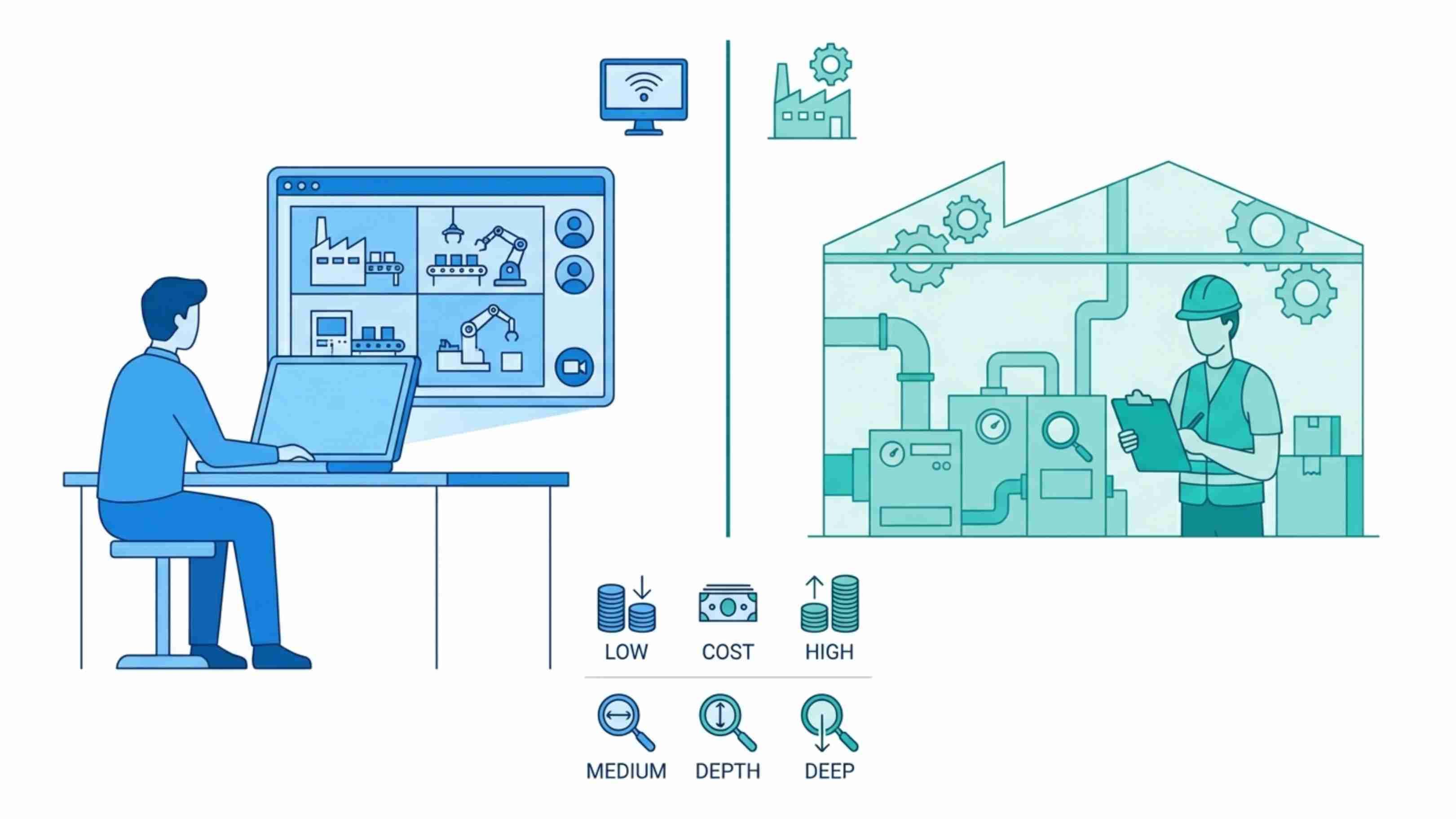
Remote audits work for initial qualification. For orders above USD 50,000, an in-person third-party audit typically pays for itself once.
Red flags to watch for
Some answers are informative. Others are disqualifying.
Refusing to share a batch record — even a redacted one — is the clearest signal that a factory's GMP documentation is either incomplete or embarrassing. We've heard from brands that discovered this only after placing their first order: the factory produced a single-page summary labeled "batch record" with no lot-level data, no in-process measurements, no deviations section. When pressed for the full document, the factory called it confidential. That's not how GMP works, and it's not a negotiating position worth accepting.
Vague answers about raw material substitution — "we follow standard procedure" with nothing behind it — usually means there is no documented procedure. Ask to see the substitution policy in writing. If it doesn't exist, you now know how this factory handles supply chain problems: quietly, and after the fact.
Capacity numbers that don't hold up to arithmetic — a claim of 500,000 units per month from two filling lines is implausible for most patch formats. Run the math yourself: ask how many units per hour each line produces at rated speed, how many shifts per day, how many days per week. The numbers either work out or they don't.
Formula documentation described as proprietary in an OEM arrangement — if a factory says "we can't share that, it's our IP" about a formula you commissioned and paid to develop, that's not a negotiating position. It's a serious problem that only gets harder to resolve the longer you wait.
All communication running through one sales contact, with no operations or QC person available during the audit, suggests the people who actually run production haven't been briefed on your project. That gap tends to widen once orders are in motion.
None of these are automatic deal-breakers. Context matters, and some factories have reasonable explanations. But each one warrants a direct follow-up before any order is placed — and two or three in the same audit should give you serious pause.
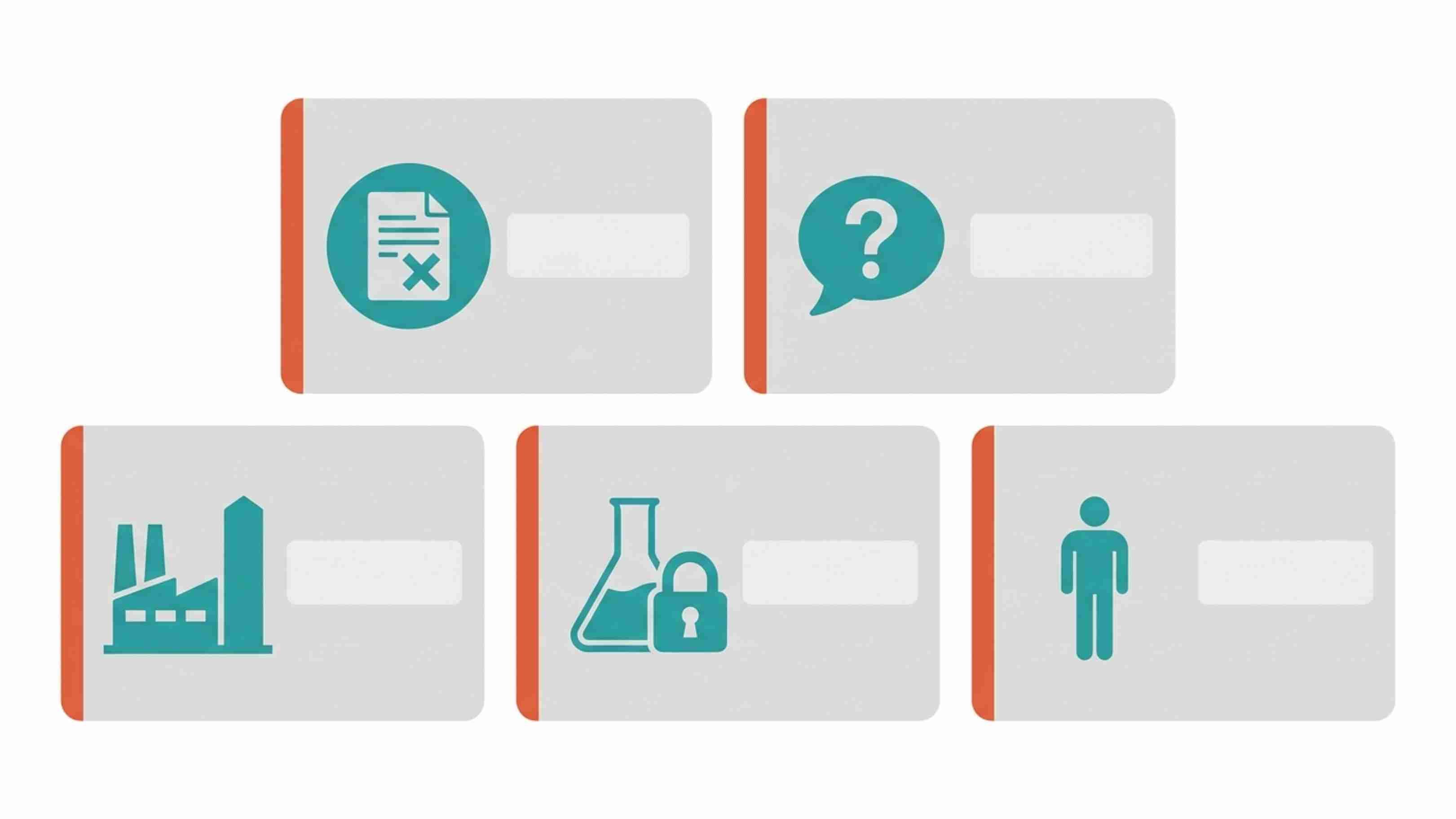
Any single red flag warrants a follow-up question. Multiple flags in the same audit warrant a serious conversation before committing.
FAQ
How do I audit a skincare manufacturer in China remotely?
Set up a structured video call and send your question list in advance — a factory that prepares documentation ahead of time is already showing you something about its process discipline. During the call, ask to see raw material storage, the QC lab, and an active production line rather than a cleaned-up demonstration area. Request documents be shared on screen during the call and sent to you afterward. Third-party audit firms like QIMA, Bureau Veritas, or SGS have auditors based in China who can conduct in-person visits if you can't travel. Remote audits are a reasonable starting point; an in-person visit should come before any large order commitment.
What certifications should a Chinese skincare manufacturer have for export?
ISO 22716 is the baseline for any factory supplying the EU market — it's referenced directly in EU Cosmetics Regulation (EC) No 1223/2009 and is what European Responsible Persons will ask for. For the Middle East, Halal certification matters. For brands making organic or natural claims, COSMOS or Ecocert certification from the factory supports those claims at market entry. US-bound factories should have completed FDA MoCRA facility registration. ISO 9001 is useful context but less specific than ISO 22716 for cosmetics. The certification matters less than the audit report behind it — always ask for the most recent audit report, not just the certificate.
What is a realistic lead time for OEM skincare patches from China?
For products where the formula exists and raw materials are stocked, production lead time after sample approval and order confirmation runs 20–35 days for most patch formats. New OEM formula development adds 60–90 days — R&D, stability testing, sample iteration, and regulatory review don't compress easily. Custom-printed packaging, if not already in production, adds another 15–25 days. The realistic total from first inquiry to first shipment on a new OEM product is 4–6 months. Brands that plan for that timeline before they need it make better sourcing decisions than those who start the clock when they're already under pressure.
How do I verify that a Chinese manufacturer's test reports are authentic?
Check that the report includes the testing laboratory's full name, accreditation number, report date, specific sample description, and test method references — generic reports without method citations are a warning sign. Cross-check the accreditation status of the testing lab through CNAS (China National Accreditation Service) or through the IAF directory. For safety-critical tests, commission your own independent testing using a lab you select, with samples drawn from production batches — not samples provided by the factory. The cost of one independent test is trivial relative to the cost of a product recall or market rejection.
What is the MOQ for private label skincare patches in China?
Private label SKUs typically start at 3,000–10,000 units because the formula and materials are already in production. ODM with some customization usually requires 10,000–30,000 units. Full OEM with custom formula development starts at 50,000 units at most factories — the minimum viable batch size is set by production economics, not negotiating room. Microneedle patches have higher minimums than standard hydrocolloid patches across all three models due to more specialized equipment and longer per-unit production cycles. If a factory quotes you significantly lower MOQs than these ranges, ask specifically how they're achieving that — the answer is informative either way.
What should I look for during a factory video walkthrough?
Four areas matter most. Raw material storage: look for clear labeling, physical segregation between different materials, temperature controls where relevant, and a visible quarantine area for incoming materials pending QC testing. The lab: equipment should show signs of active use — a spotlessly clean, untouched lab is a red flag, not a good sign. The production line: ask to see one running, not a stopped or freshly cleaned line staged for the visit. Finished goods warehouse: check for lot segregation and how rejected goods are stored separately from releasable inventory. Ask the contact to move the camera slowly rather than cutting between pre-selected angles — the transitions are where things get hidden.
How much does a third-party factory audit in China cost?
Based on 2024–2025 pricing from major providers, a standard one-day quality management or GMP audit in Guangdong province runs approximately USD 800–1,500 depending on scope and firm. QIMA publishes indicative pricing on their website for common audit types. Bureau Veritas and SGS quote on request. More comprehensive audits — those requiring a technical specialist or covering multiple factory locations — cost more. Travel surcharges apply for factories outside major manufacturing hubs. For orders above USD 50,000, the audit cost represents less than 3% of the order value and eliminates a significant category of sourcing risk.
What contract clauses matter most with a Chinese skincare manufacturer?
The clauses that cause the most trouble when absent: formula ownership and data transfer rights, specifying that all formula documentation transfers to you on request regardless of how the relationship ends; raw material substitution approval, requiring written sign-off before any material change; NDA obligations covering both the formula and your identity as a client; defined defect rate thresholds with agreed remedies; and dispute resolution jurisdiction. That last one matters more than people expect — agreeing on jurisdiction before a dispute arises is a different conversation from arguing about it after one has already started. Chinese contract law is enforceable, but both parties need to have signed something that specifies how and where disputes get resolved.