
How to Verify an Acne Patch Manufacturer: A Due Diligence Checklist
VEILTA
11/30/2025
If you are sourcing acne patches, finding a supplier is only the first step. The harder part is confirming whether that manufacturer is actually reliable.
Many factories look similar on sourcing platforms. The photos are polished, the documents look familiar, and the sales pitch sounds reassuring. That is exactly why buyers need a verification process. A serious review does not stop at a quotation sheet. It checks documents, samples, production capability, contract terms, and small-order execution before real volume is put at risk.
This acne patch manufacturer verification checklist covers the five checks that matter most before you move forward.
Quick Takeaways
- A supplier profile is not a verification process.
- Certificate claims should be checked against the issuing source wherever possible.
- Sample approval should follow defined performance criteria, not just appearance.
- A remote factory audit can still reveal major risk if the questions are specific enough.
- Weak contract language often shows up before weak execution.
- A small trial order is one of the safest ways to test whether a factory can actually deliver.
Acne Patch Manufacturer Verification Checklist at a Glance
| Check Area | What to Review | Main Risk if Skipped |
|---|---|---|
| Certificates | ISO, business registration, claimed compliance records | Working with a supplier that misrepresents capability or legal identity |
| Samples | Adhesion, wear stability, absorption, pouch quality, repeatability | Approving a product that fails in actual use |
| Factory audit | QC flow, traceability, packaging, batch control, line visibility | Choosing a factory that cannot control production consistently |
| Contract terms | Specifications, defect standards, claims, lead time responsibility | Ending up with weak protection when problems appear |
| Trial order | Small-batch execution, communication, defect handling | Discovering production problems only after a larger PO |
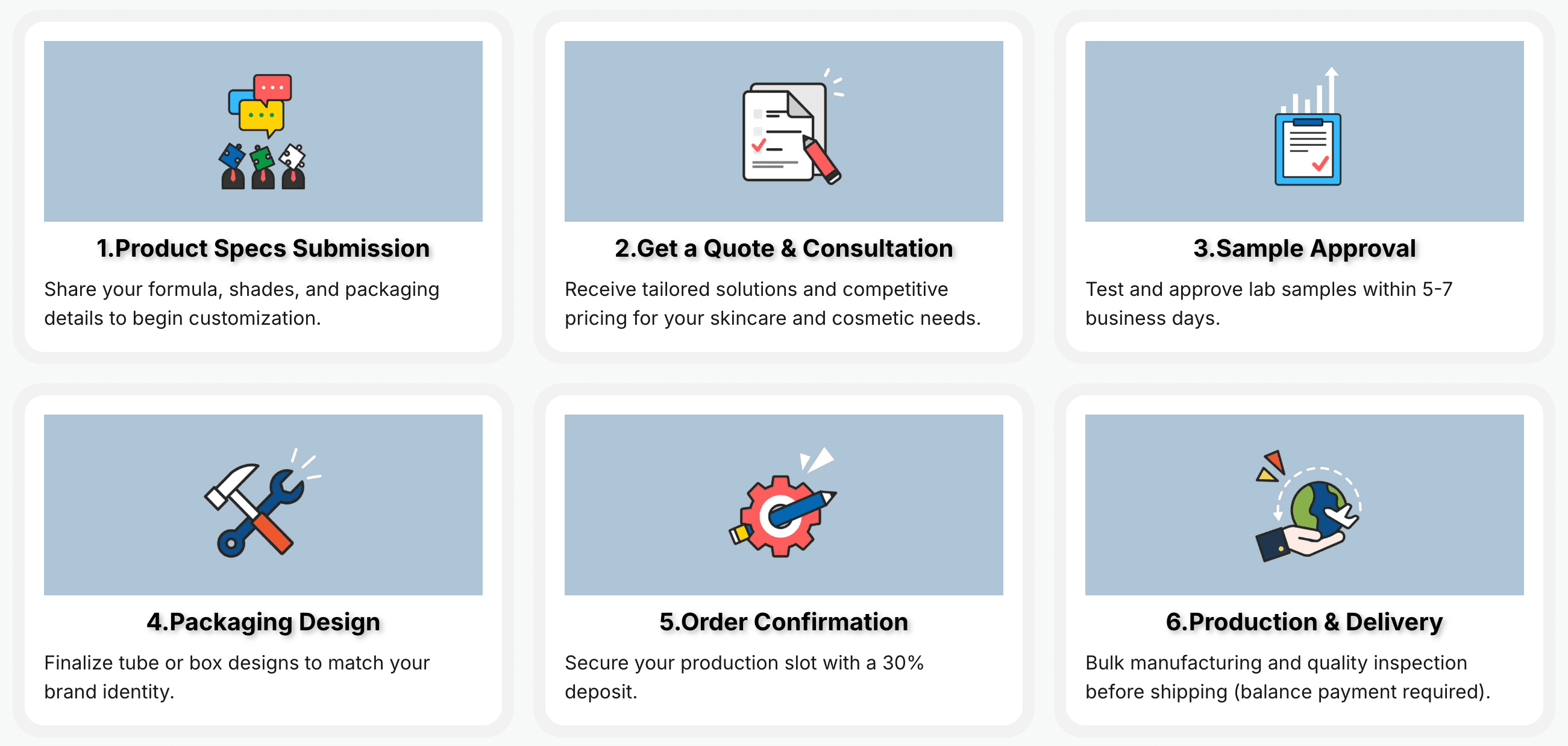
Step 1: Verify Certificates and Registration Claims
The first step is simple: do not treat a compliance claim as proof.
A supplier may show certificates on a website, catalog, quotation, or marketplace profile. That tells you what the supplier wants to communicate. It does not tell you whether the document is current, real, or tied to the factory that will actually make your order.
Start by checking:
- ISO 22716 or other claimed GMP-related documentation
- Business license or company registration details
- Factory legal name and address
- Claimed FDA registration status or related documentation where applicable
- Product testing or safety documents if the supplier says they are available
Then compare the details across every file you receive.
What to Review in Each Document
Do not stop at the logo, stamp, or issue date. Review:
- Exact legal entity name
- Site address
- Scope of certification
- Effective date and expiry date
- Issuing organization
- Certificate or registration number
- Whether the documents point to the same manufacturing entity
A common sourcing mistake is treating a stack of PDFs as verification. It is not. The real check is whether the files point to the same business, the same address, and the same operating site.
Common Certificate Red Flags
Watch for these issues:
- The company name changes across documents
- The address on the certificate does not match the production address
- The supplier sends a certificate for a trading company instead of the factory
- Expiry dates are missing or already passed
- The file is cropped, incomplete, or low resolution
- The supplier cannot explain what the document actually covers
- The sales contact avoids sharing the issuing body or verification number
A reliable supplier does not need to be perfect, but it should be able to explain its documents clearly and send readable files without hesitation.
Step 2: Test the Samples Against Clear Performance Standards
This is where many buyers get into trouble. They approve a sample because the pouch looks neat or the patch feels acceptable in hand. That is too loose for a product decision.
For acne patches, sample approval should be tied to performance checks. At minimum, your review should cover:
- Adhesion performance
- Wear stability over time
- Fluid absorption behavior
- Patch edge lifting during use
- Peel-off consistency
- Pouch seal quality
- Repeatability across more than one sample round
If the sample changes too much from round to round, that is already useful information.
Use a Golden Sample Process
A golden sample helps keep later production discussions grounded.
A practical process usually looks like this:
- Review the initial sample and list changes clearly.
- Request a revised sample if needed.
- Approve the final version in writing.
- Save that approved version as the golden sample reference.
- Tie production approval and inspection standards back to that sample.
Without a golden sample, quality disputes often turn into opinion. With one, both sides have a shared reference point.
What to Check During Acne Patch Sample Testing
Your review does not need to be overcomplicated, but it should be repeatable.
Check questions like these:
- Does the patch stay in place long enough under normal wear?
- Does the patch absorb fluid the way it should?
- Does edge lifting happen too early?
- Is removal consistent, or does the patch tear or distort?
- Does the release liner work cleanly?
- Is the pouch sealed properly and consistently?
- If you receive multiple sample rounds, do they feel materially different?
What matters is not whether the sample is "good enough" at a glance. What matters is whether it can hold up under the same criteria every time.

Step 3: Run a Factory Audit, Even If It Is Remote
An on-site audit is ideal, but a remote audit is still worth doing.
A live video call can reveal a lot if the supplier is willing to show the production floor, material storage, packaging areas, QC checkpoints, and document flow in a straightforward way. You are not trying to replace a formal third-party audit. You are trying to spot inconsistency, weak process control, and unclear communication before a purchase order is placed.
Ten Questions to Ask During a Remote Factory Audit
- What products are run on this line besides acne patches?
- How are raw materials separated by batch?
- How are work-in-progress and finished goods identified?
- What is the in-process quality control procedure?
- How are rejected or defective units handled during production?
- Can you show the packaging area and sealing process?
- How are production specifications approved for each order?
- What traceability records are kept?
- Who signs off before shipment?
- Which parts of production are done in-house and which are outsourced?
These questions matter because they test whether the supplier actually understands its own process.
Remote Audit Red Flags
Watch carefully if:
- The camera avoids key areas
- Materials and finished goods are not clearly separated
- The team gives different answers to the same question
- The packaging area looks disorganized
- QC checkpoints are described vaguely
- The supplier avoids discussing defect handling
- No one can explain who approves shipment release
- The team cannot clearly say what is outsourced
One weak answer is not always decisive. A pattern of unclear answers usually is.
Step 4: Review Contract Terms for Red Flags
A factory can look strong during sales discussions and still become risky once paperwork starts.
Many sourcing problems are not caused by one obvious failure. They come from vague documents, missing standards, and unclear responsibility when something goes wrong. That is why contract review matters just as much as sample review.
Contract Red Flags to Watch For
Be careful if the contract, PI, or purchase terms leave these points vague:
- No exact product specification reference
- No packaging specification reference
- No mention of the approved or golden sample
- No written defect standard
- No claim period after delivery
- No defined response for quality failure
- No clear lead time responsibility
- No packaging error responsibility
- Language that allows material substitution without approval
- Payment terms that shift too much risk to the buyer too early
If the sales discussion sounds precise but the paperwork sounds vague, trust the paperwork.
What a Safer First Contract Should Include
At minimum, the first contract should connect these points clearly:
- Approved product specification
- Approved packaging specification
- Golden sample reference
- Production timeline
- Inspection or acceptance standard
- Defect claim process
- Replacement, credit, or rework mechanism where applicable
This does not remove risk, but it makes the risk easier to manage.
Step 5: Use a Small Trial Order Before Scaling
Even after documents, samples, and audits look acceptable, there is still one thing left to prove: whether the supplier can execute consistently.
That is why a small trial order matters. It tests whether the manufacturer can turn process claims into real production performance. A first order does not need to be large to be useful. In fact, smaller is often smarter.
A trial order helps you evaluate:
- Production consistency
- Communication during execution
- Packaging accuracy
- Lead time reliability
- Defect handling
- Shipping coordination
- Response quality when something changes
How to Structure a Lower-Risk First Order
A safer first order often includes:
- A manageable quantity
- A locked golden sample reference
- A clear packaging checklist
- A written inspection standard
- A pre-shipment review step
- A documented claim window after receipt
The goal is not just to "start small." The goal is to make the first order measurable.
If the supplier performs well on a trial order, you have a better basis for scaling. If problems show up, you learn that before the commercial exposure gets bigger.
Final Thoughts
A reliable acne patch manufacturer is not the one with the nicest product page or the lowest quote. It is the one that stays consistent across documents, samples, production control, and communication.
If you need a broader guide to supplier selection, OEM planning, and sourcing steps, read our OEM Pimple Patches Sourcing Guide.
FAQs About Verifying an Acne Patch Manufacturer
How do I verify an acne patch manufacturer before placing an order?
Start with document checks, then move to sample testing, a factory audit, contract review, and a small trial order. The goal is to confirm that the supplier is consistent across compliance claims, product quality, production capability, and commercial terms.
What certificates should I check for an acne patch manufacturer?
Review the exact certificates or registrations the supplier claims to hold, such as ISO-related documentation, business registration details, and facility information. The important point is whether the document is current, readable, and tied to the actual manufacturing entity.
How do I verify acne patch factory certificates?
Check the legal entity name, site address, certificate scope, effective dates, and issuing organization. Then compare those details across all documents and verify the certificate number or issuing source wherever possible.
What is a golden sample in acne patch manufacturing?
A golden sample is the final approved sample that both sides use as the reference for production. It helps reduce disputes because quality discussions can be tied back to an agreed sample instead of general expectations.
Can I audit an acne patch factory remotely?
Yes. A remote factory audit is not a perfect substitute for an on-site audit, but it can still reveal important signals about production flow, quality control, traceability, packaging conditions, and how openly the supplier answers operational questions.
What contract terms are red flags when working with a manufacturer?
Common red flags include vague product specifications, no reference to an approved sample, no defect standard, unclear claim timing, weak delay responsibility, and language that allows material substitution without clear approval.
Why should I place a small trial order before scaling up?
A small trial order helps confirm whether the supplier can execute consistently in real production. It gives you a lower-risk way to check communication, lead time, packaging accuracy, and defect handling before you place a larger order.
What should I ask before a first order with an acne patch supplier?
Ask about document validity, production control, batch traceability, sample approval standards, packaging accuracy, defect handling, and who is responsible if the delivered product does not match the approved sample.