Silicone vs Hydrogel Eye Patches: OEM Sourcing Guide
VEILTA
04/21/2026
Silicone eye patches and hydrogel eye patches are not competing products. They solve different problems for different buyers — and sourcing the wrong one for your market is one of the more expensive mistakes a new skincare brand can make.
This guide breaks down how the two formats differ, where each one wins, and what OEM buyers need to know before placing a first order.
What each product is
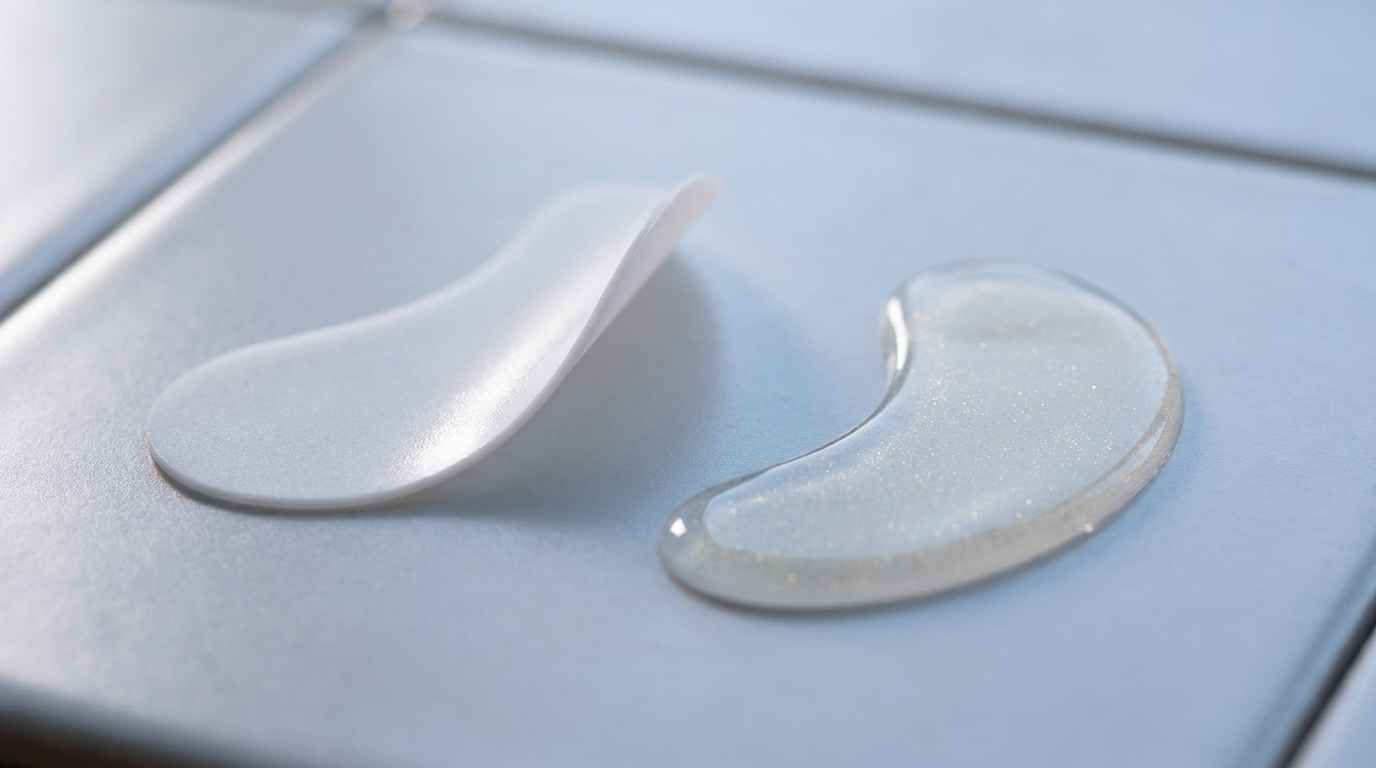
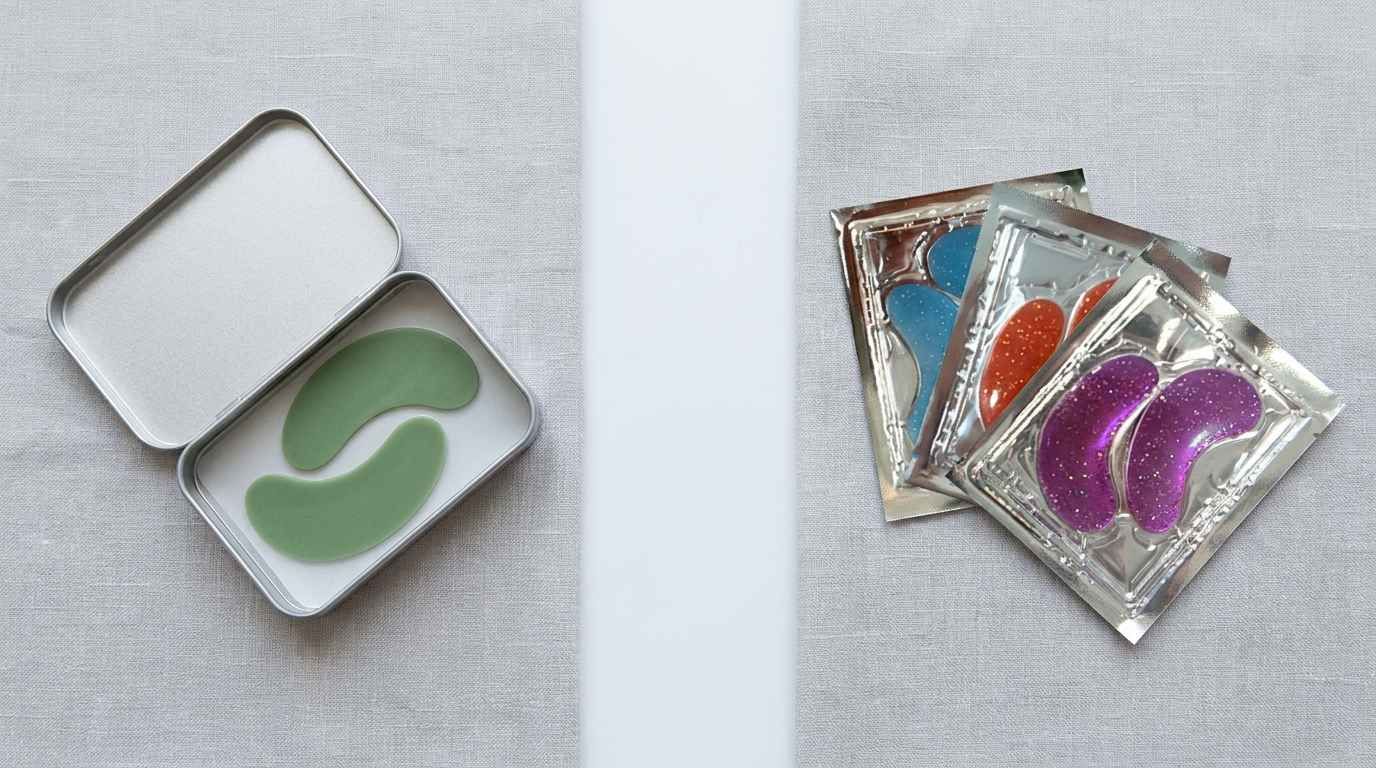
Silicone eye patches are reusable tools made from medical-grade silicone. They work through occlusion: the silicone creates a sealed microclimate against the skin, slowing moisture loss and increasing the absorption rate of whatever serum or eye cream the consumer applies underneath. The patch itself contains no active ingredients. It is a delivery mechanism, not a formula.
Hydrogel eye patches are single-use consumables. The hydrogel matrix — a water-swollen polymer network — carries active ingredients such as hyaluronic acid, caffeine, niacinamide, or peptides. When applied to skin, the patch releases those ingredients over 15 to 30 minutes through direct contact. The patch is then discarded.
One product is a tool. The other is a dose. That distinction drives almost every downstream decision about pricing, packaging, compliance, and channel strategy.
Head-to-head comparison
| Silicone eye patches | Hydrogel eye patches | |
|---|---|---|
| Use per unit | 20–30 times | Once |
| Active ingredients | None (pairs with serum) | Yes, embedded in gel |
| Consumer perceived value | High (premium tool) | Medium (consumable) |
| Retail price range | $18–$28 per pair | $3–$15 per pair |
| OEM MOQ at Veilta | 1,000 units | 3,000 units |
| Packaging cost | Higher (storage case, box set) | Lower (foil sachet, tray) |
| Sustainability appeal | Strong (90%+ less waste) | Weak |
| Customization type | Shape, logo emboss, color | Formula, ingredient, scent |
| Compliance complexity | Low (no formula = no stability test) | Medium (formula requires stability + safety assessment) |
| Best channels | DTC, spa, premium retail, gift | Mass retail, e-commerce, subscription |
Where silicone wins
Reusable skincare tools have grown steadily across North American and European markets since 2020, driven by consumer interest in reducing packaging waste and shifting toward fewer, better products. According to Mintel's 2024 Global Beauty Trends report, 38% of US skincare consumers say product reusability influences their purchase decision. Silicone eye patches fit that shift well.
For brands, the business case is straightforward. A single pair with standard shape and basic packaging can be manufactured for $0.15 to $0.30 FOB at 5,000-unit volume. The margin profile at a $22 retail price is strong. The repeat purchase driver shifts from the patch itself to the serum or eye cream paired with it — which is where brands can build recurring revenue if they sell both.
Silicone also works well for gift sets and product bundles. A silicone eye patch paired with a branded eye serum creates a higher average order value than either product alone, and the perceived value is significantly above the cost of goods.
The weakness is channel fit. Silicone patches do not move well in convenience retail or mid-market e-commerce without brand context. A consumer who does not understand occlusion therapy is unlikely to pay $30 for what looks like two small curved pieces of plastic. The product requires education, and that means it needs a brand that can deliver that education through packaging, content, or a salesperson.
Where hydrogel wins
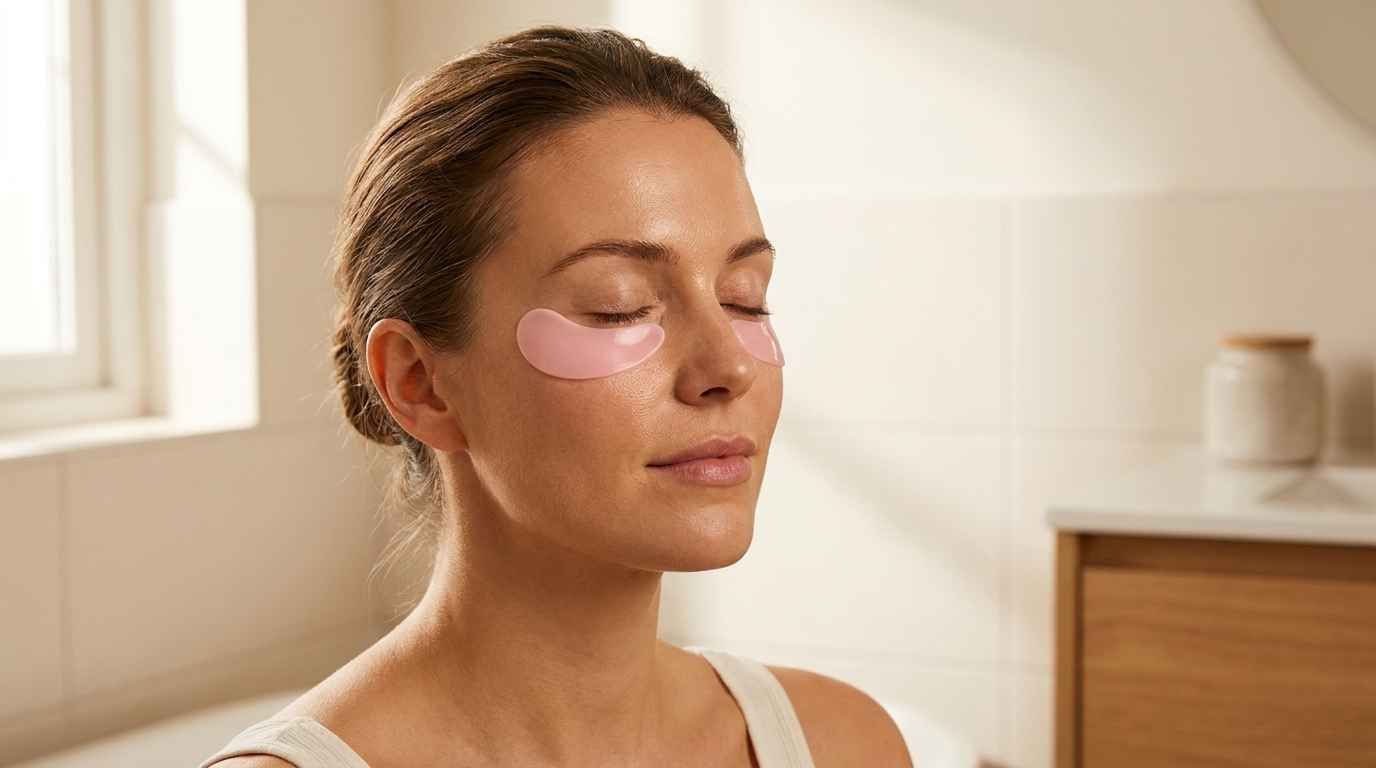
Hydrogel eye patches are the dominant format in high-volume retail for a reason. The single-use experience is immediately intuitive — apply, wait, remove — and the ingredient story is easy to communicate on a foil sachet. Hyaluronic acid, collagen, gold: these sell themselves on shelf without explanation.
From an OEM perspective, hydrogel also offers more formulation flexibility. A brand can differentiate by ingredient (caffeine for puffiness, retinol for fine lines, vitamin C for brightening), by texture (gel, bio-cellulose, cotton blend), or by format (single sachet, jar of 60, advent calendar). The roadmap for a hydrogel-based eye care line is wide open.
The weaker points: margins thin out at retail price points below $4 per pair, and the category is saturated. If your brand cannot articulate a clear reason why your hydrogel patch is different from the 40 other options on the shelf, price becomes the only differentiator. That is a difficult position to defend.
Hydrogel also generates more regulatory work. Any formula with active concentrations above cosmetic thresholds — particularly in the EU — needs a Cosmetic Product Safety Report (CPSR) before it can go to market. Stability testing adds 4 to 8 weeks to the development timeline. These are manageable requirements, but they need to be planned for.
The case for doing both
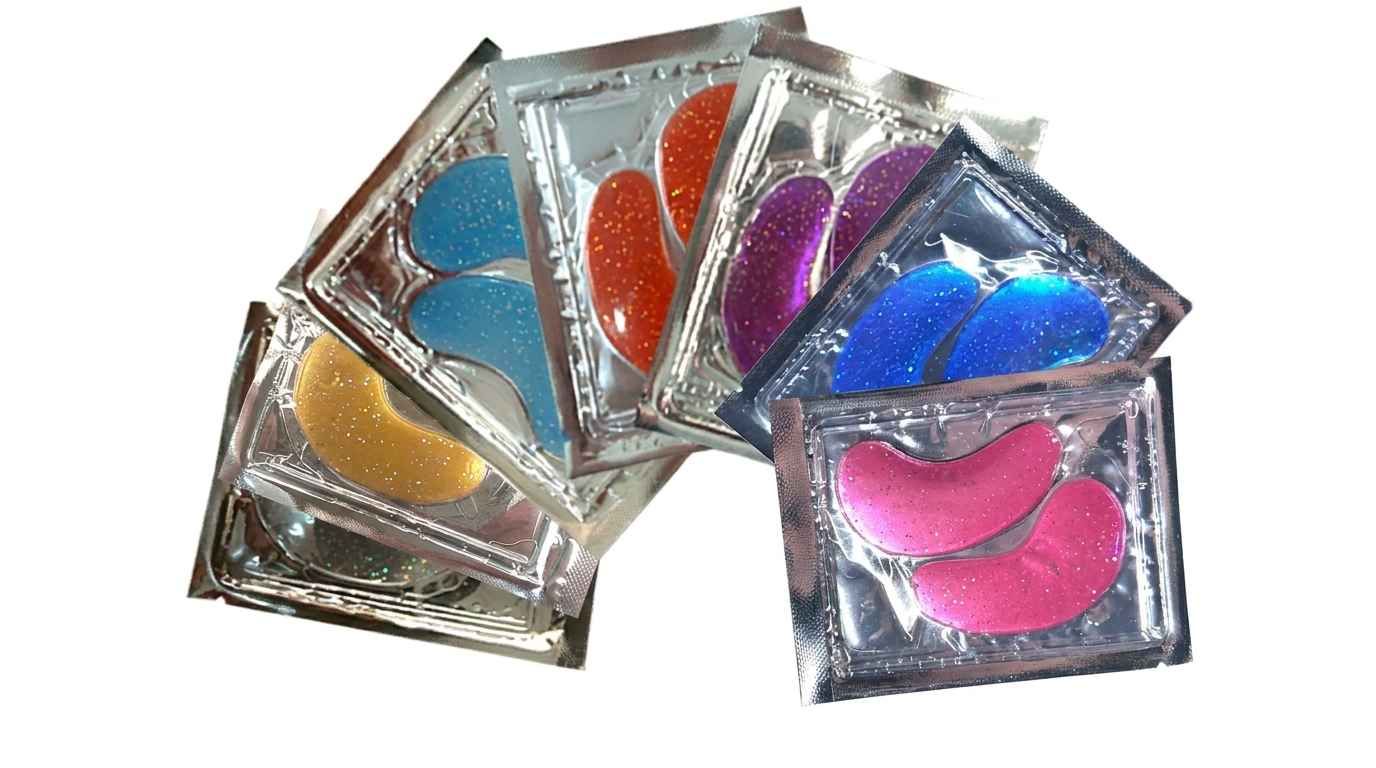
Some brands do not have to choose. A silicone patch positioned as the hero product — premium, giftable, reusable — can anchor a line that also includes a hydrogel patch for everyday use or retail distribution. The two products serve different occasions for the same consumer.
This approach works best when the brand already has distribution reach or a DTC audience large enough to explain the silicone product without relying on retail shelf space. Launching silicone first and hydrogel second, once the brand has traction, is a common pattern we see from clients building out a multi-SKU eye care range.
OEM sourcing differences
Tooling and lead time. Silicone patches require a mold. Standard shapes — crescent, heart, butterfly — are available off the shelf and add no tooling cost. A fully custom shape requires mold development at $800 to $2,500 depending on complexity, with a 10 to 14-day sampling cycle. Hydrogel patches do not require a mold but need formula development and stability testing, which extends the timeline by 3 to 6 weeks for a new formula.
Certifications. Both formats are classified as cosmetics in the EU and most export markets. Both require CPNP registration and a CPSR. Silicone patches using medical-grade raw material should come with ISO 10993 biocompatibility documentation from the material supplier — ask for it. For the US market, neither format triggers OTC drug requirements unless active pharmaceutical ingredients are included at therapeutic concentrations.
Packaging cost. Silicone patches need a storage case, a cleaning instruction, and typically a box. The packaging cost per unit is higher than hydrogel, which ships in individual foil sachets. This matters when calculating landed cost and retail margin.
Quality control. Silicone patches are inspected for mold consistency, surface finish, logo registration, and adhesion comfort. Hydrogel patches are tested for pH, viscosity, microbial count, active ingredient concentration, and packaging seal integrity. The QC process for hydrogel is more complex, which is worth accounting for in production timelines.
Pricing expectations
Buyers often arrive with a target retail price and work backward to a cost-of-goods budget. It helps to work from actual FOB numbers first.
Silicone eye patches at Veilta are priced between $0.09 and $0.49 per unit FOB, depending on shape, surface finish, and volume. At 5,000 units with standard packaging, most orders land in the $0.15 to $0.30 range. Adding freight, duties, and packaging to a US destination typically brings landed cost to $0.25 to $0.60 per unit. A retail price of $18 to $28 per pair at that cost base leaves workable margin for DTC and specialty retail.
Hydrogel eye patches follow a different cost structure. FOB pricing for a standard hydrogel formula with foil sachet packaging runs $0.09 to $0.35 per pair depending on ingredient load and sachet spec. Landed cost in the US sits around $0.20 to $0.55. At a mass market retail price of $3 to $5 per pair, margins are tight. The stronger commercial case for hydrogel is in premium DTC at $8 to $15 per pair, where the ingredient story — PDRN, peptides, gold — justifies the price and the unit economics work.
These are indicative ranges. Actual pricing depends on formula selection, packaging specification, and order volume. Request samples and a formal quotation before finalizing your budget model.
FAQ
Can silicone and hydrogel eye patches be sold together as a set?
Yes, and this is a common strategy for premium skincare brands. A silicone eye patch paired with a box of hydrogel patches positions the silicone as a long-term tool and the hydrogel as a consumable refill. Average order value increases, and the bundle creates a natural reason for repeat purchase. The two products can be manufactured by the same OEM partner and co-packaged into a single gift box.
Does a silicone eye patch need a formula safety assessment?
A plain silicone patch with no coating or added ingredients does not require a CPSR in the same way a formulated product does, because there is no formula to assess. However, the silicone material itself should have ISO 10993 biocompatibility documentation, and the finished product still requires CPNP registration for EU market entry. If the patch includes a skincare coating or serum infusion, it is treated as a formulated product and needs a full CPSR.
What is the minimum order quantity for silicone vs hydrogel eye patches?
At Veilta, silicone eye patches start at 1,000 units for standard shapes with existing molds. Custom shapes with new mold development typically start at 3,000 to 5,000 units to justify the tooling investment. Hydrogel eye patches start at 3,000 units for existing formulas. New formula development usually requires a minimum of 5,000 units on the first production run. Both products are available for sampling before commitment to a production order.
Which format gets to market faster?
Silicone patches with a standard shape and no custom formula can move from confirmed order to shipment in 15 to 25 days. Hydrogel patches with an existing base formula take 20 to 35 days. If you are developing a custom formula for hydrogel, add 4 to 8 weeks for stability testing. For a brand with a hard launch deadline, silicone with a standard mold is the faster path.