Silicone Eye Mask Manufacturing Process | OEM & ODM Guide
VEILTA
09/30/2026
Silicone Eye Mask Manufacturing Process: A Practical OEM & ODM Guide
If you are planning to develop a custom silicone eye mask, the manufacturing process involves more than simply molding silicone into a specific shape. The product design, silicone material, mold, color, logo, surface finish, packaging, and production inspection all need to be confirmed before the order goes into mass production.
A typical silicone eye mask manufacturing process starts with product and artwork confirmation, followed by mold development, silicone molding, trimming, cleaning, inspection, logo application, packaging, and final quality control.
For private label and OEM projects, manufacturers can usually customize the shape, silicone color, logo, surface details, and packaging according to the brand's requirements. Common packaging options include pouches, printed color boxes, tin boxes, and plastic boxes.
Silicone Eye Mask Manufacturing Process at a Glance
The production process can be divided into the following stages:
- Product design and specifications
- Mold development
- Silicone material preparation
- Silicone molding
- Demolding and trimming
- Cleaning and inspection
- Silicone color customization
- Logo and surface customization
- Packaging production
- Assembly and packing
- Final quality inspection
The exact process may vary depending on the product design and the required finish, but these are the main steps used for a custom silicone eye mask.
1. Product Design and Specification Confirmation
Before a mold is made, the manufacturer needs to know exactly what the finished eye mask should look like.
For an OEM or ODM project, the customer normally provides a drawing, reference sample, 3D file, or even a simple product concept. The factory then confirms the details that will affect production.
Typical specifications include:
- Overall product dimensions
- Shape and contour
- Silicone thickness
- Material requirements
- Silicone color
- Logo position
- Logo method
- Surface texture
- Packaging requirements
- Individual and master carton requirements
This stage is worth spending time on because changes made after the production mold has been completed can be much more expensive than changes made during the design stage.
For a new product, the manufacturer may also recommend adjustments to the design if certain details are difficult to mold or may affect demolding and production consistency.
2. Mold Development
Once the product specifications are confirmed, the production mold can be developed.
The mold determines important details such as the final shape, dimensions, surface details, and the position of any molded-in features. If the eye mask includes an embossed logo or other raised or recessed details, these features normally need to be incorporated into the mold design.
Before the mold is manufactured, the factory will usually review the drawing or 3D design with the customer.
For custom silicone eye masks, this is also the stage where the manufacturer checks whether the proposed design is suitable for stable mass production.
A well-designed mold helps maintain consistency from one production batch to the next.
3. Silicone Material Preparation
Silicone is the main material used to form the eye mask.
The material and formulation are selected according to the product requirements and the manufacturer's production process. Different silicone formulations can produce differences in softness, flexibility, surface feel, and appearance.
Color can also be added according to the customer's requirements.
For a private label project, the brand may provide a target color or color reference. The factory can then prepare the corresponding silicone color and produce a sample for confirmation before moving into larger-scale production.
This is particularly useful when the silicone eye mask needs to match a brand's existing visual identity.
4. Silicone Molding
After the mold and material have been prepared, the silicone is formed into the required eye mask shape.
The silicone material is placed into the production mold and processed under controlled production conditions. Temperature, pressure, curing conditions, and molding time need to be controlled according to the material and product design.
The goal is to produce eye masks with consistent dimensions, shape, surface appearance, and material characteristics.
After molding, the finished pieces are removed from the mold and moved to the next stage for trimming and inspection.

Silicone eye mask molding is one of the key stages in the production process.
5. Demolding and Trimming
Once the silicone has been molded, the parts are removed from the mold.
Depending on the mold design and production method, small excess edges or flash may remain around the product. These areas are trimmed during post-processing.
The operator checks the edges and surface of the eye mask during this stage.
A properly finished silicone eye mask should have:
- Clean edges
- Consistent shape
- No obvious excess material
- No significant molding defects
- A uniform surface appearance
For products that will be placed directly against the skin, edge finishing is particularly important because rough or excessive edges can affect the overall user experience.
6. Cleaning and Initial Quality Inspection
After trimming, the silicone eye masks are cleaned and inspected.
The factory checks the appearance of the products and removes pieces that do not meet the agreed specifications.
Common inspection points include:
- Product dimensions
- Shape consistency
- Silicone color
- Surface condition
- Edge quality
- Molding defects
- Contamination or visible particles
- Logo position, if applicable
The inspection standard can be agreed with the customer before mass production begins.
For larger OEM orders, the manufacturer may also establish sampling or inspection procedures based on the customer's quality requirements.
7. Custom Silicone Colors
Silicone eye masks do not have to be limited to standard colors.
For private label products, the silicone can be produced in a color selected by the brand. This allows the eye mask to match the packaging, logo, or overall product identity.
Popular directions may include:
- Clear or translucent silicone
- White
- Black
- Pink
- Blue
- Green
- Neutral tones
- Custom brand colors
The exact color result can be affected by the silicone material, formulation, and production conditions. For this reason, a physical color sample is often more useful than relying only on a digital screen image.
For a new OEM project, it is better to confirm the actual sample before starting a large production run.
8. Custom Logo Options for Silicone Eye Masks
Branding is one of the most common requirements for a custom silicone eye mask.
Depending on the design, there are several ways to add a logo or other product information.
The two common options are silk screen printing and embossed or debossed details formed in the silicone.
Silk Screen Printed Logo
Silk screen printing places the logo directly onto the silicone surface using a printing process.
It works well when the brand needs:
- A visible logo
- Specific logo colors
- Small text
- Simple graphics
- A relatively flat printed design
Before production, the artwork normally needs to be supplied in a suitable digital format so the factory can prepare the printing setup.
The logo position and size should also be confirmed before mass production.
Embossed Silicone Logo
An embossed logo is formed as part of the silicone product itself.
Instead of printing the logo onto the surface afterward, the raised or recessed design is incorporated into the mold.
This creates a more integrated appearance and can work particularly well with minimalist silicone products.
The logo dimensions, position, depth, and shape need to be considered during mold development because changing these details later may require mold modifications.
9. Silk Screen Printing vs. Embossed Logo
Both methods can be used for branded silicone eye masks, but they produce different visual effects.
| Feature | Silk Screen Printing | Embossed / Debossed Logo |
|---|---|---|
| Logo appearance | Printed on the surface | Formed in the silicone |
| Logo color | Can use different colors | Usually relies on the silicone itself |
| Artwork flexibility | Suitable for text and graphics | Better for simple molded designs |
| Mold modification | Usually not required for the logo | Logo needs to be included in the mold |
| Visual style | More noticeable | More subtle and integrated |
| Suitable for | Colorful branding and detailed graphics | Minimalist and molded branding |
The right option depends on the product design and the appearance the brand wants to achieve.
10. Custom Packaging for Silicone Eye Masks
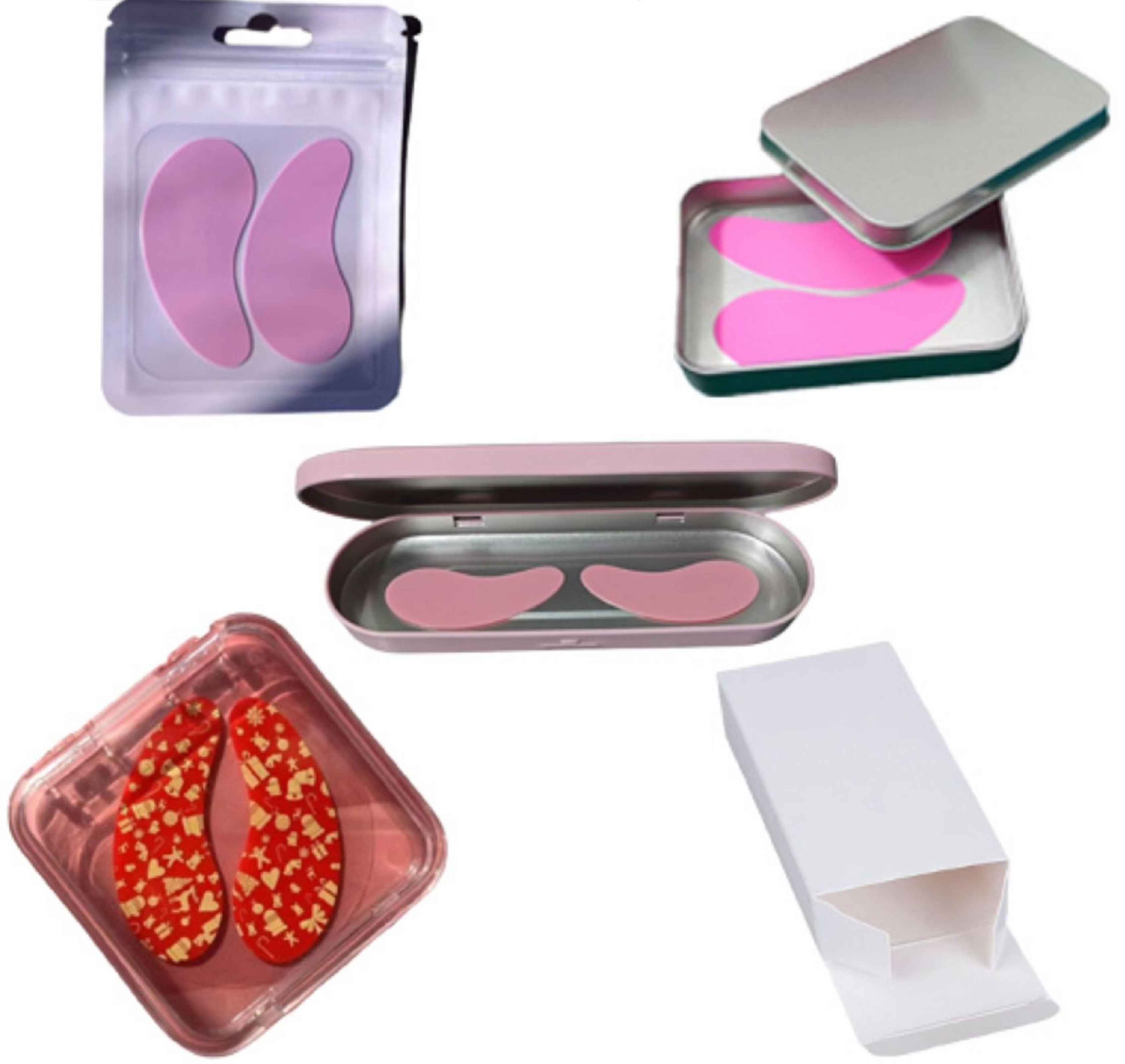
The silicone eye mask is only part of the finished product.
For a private label project, packaging is normally developed at the same time as the product. The packaging can carry the brand logo, product name, instructions, ingredients or material information, barcode, and other required information.
Common packaging formats include:
- Pouches
- Printed color boxes
- Tin boxes
- Plastic boxes
The choice usually depends on the target market, product positioning, retail requirements, and budget.
11. Pouch Packaging
Pouches are a practical option when the brand wants lightweight individual packaging.
The pouch can be customized with the company logo, product name, graphics, instructions, and other printed information.
Different pouch materials, finishes, sizes, and opening styles may be available depending on the packaging supplier and product requirements.
For silicone eye masks, pouches are often suitable when the product needs compact packaging for shipping or retail display.

Custom printed pouch packaging can be used for individually packed silicone eye masks.
12. Color Box Packaging
A printed color box gives the product more space for branding and product information.
The outside of the box can include:
- Brand logo
- Product name
- Product images
- Usage instructions
- Material information
- Company information
- Barcode
- Other required product information
Color boxes are commonly considered when the eye mask will be sold through retail channels or needs a more conventional product presentation.
The final box size should be based on the actual silicone eye mask rather than being selected only from the artwork dimensions. This helps ensure that the finished product fits properly inside the packaging.
13. Tin Box Packaging
Tin boxes offer a more rigid packaging option compared with flexible pouches.
A custom tin can be printed with the brand logo, product artwork, and other information. The size and internal space should be checked against the actual eye mask before production.
Tin packaging may also be selected when the packaging itself is intended to be reusable.
However, the packaging cost, weight, storage requirements, and shipping cost should be considered during product development.
14. Plastic Box Packaging
Plastic boxes are another option for individual silicone eye mask packaging.
Depending on the design, the box can be transparent, translucent, or printed with branding elements.
One advantage of a transparent or partially transparent design is that customers can see the product without opening the package.
The final packaging design should take into account the dimensions of the silicone mask, the required internal space, closure method, and transportation requirements.
15. Packaging Artwork and Printing
Once the packaging type has been selected, the packaging artwork needs to be prepared.
The factory or packaging supplier normally needs a print-ready file containing the customer's branding and product information.
Depending on the packaging format, the artwork may include:
- Logo
- Product name
- Product description
- Instructions
- Material information
- Warning information where applicable
- Barcode
- Website or contact details
- Manufacturer or importer information where required
It is important to check the actual dieline before finalizing the artwork.
Small differences in box dimensions, folding areas, sealing areas, or printing positions can affect how the final package looks.
16. Assembly and Individual Packing
After the silicone eye masks and packaging materials are ready, the products can be assembled and packed.
The exact packing method depends on the packaging selected.
For example:
Pouch:
Silicone eye mask → inspection → insert into pouch → seal → label if required
Color box:
Silicone eye mask → inspection → insert into box → close box → final check
Tin box:
Silicone eye mask → inspection → place into tin → close lid → final check
Plastic box:
Silicone eye mask → inspection → place into box → close or seal packaging → final check
The finished units can then be packed into cartons for transportation.
17. Final Quality Inspection
Before shipment, the finished products are checked against the agreed specifications.
The inspection may cover both the silicone product and the packaging.
For the silicone eye mask, the factory may check:
- Dimensions
- Shape
- Color
- Surface condition
- Edge quality
- Logo appearance
- Logo position
- General cleanliness
For packaging, the inspection may include:
- Printing quality
- Color consistency
- Packaging dimensions
- Logo position
- Sealing or closure
- Product fit
- Quantity per carton
The specific inspection requirements should ideally be confirmed before mass production. This gives both the manufacturer and customer a clear reference when checking the finished goods.
What Can Be Customized on a Silicone Eye Mask?
A custom silicone eye mask can usually be developed around several key product and packaging elements.
Product
- Shape
- Size
- Thickness
- Surface details
- Silicone color
- Logo
- Packaging
Branding
- Silk screen printed logo
- Embossed logo
- Debossed logo
- Custom artwork
- Brand colors
Packaging
- Pouch
- Color box
- Tin box
- Plastic box
- Custom printed packaging
The available options depend on the product design and production method, so it is useful to discuss the complete product rather than treating the silicone mask and packaging as two completely separate projects.
What Should You Prepare Before Ordering Custom Silicone Eye Masks?
If you are contacting a silicone eye mask manufacturer for an OEM or private label project, having the following information ready can make the quotation and sampling process much faster:
- Product reference or design
- Target product size
- Desired silicone color
- Logo file
- Preferred logo method
- Packaging type
- Packaging artwork, if available
- Estimated order quantity
- Target market
- Any specific quality requirements
You do not necessarily need to have everything finalized before contacting a manufacturer.
If the product is still at the concept stage, the manufacturer can normally review the basic requirements first and identify which specifications need to be confirmed before sampling.
How the Silicone Eye Mask OEM Process Usually Works
For a new custom project, the process generally follows this order:
Step 1 — Send the product requirements
Provide the product idea, reference sample, drawing, dimensions, logo, and packaging requirements if available.
Step 2 — Review and quotation
The manufacturer reviews the requirements and provides information about tooling, samples, unit pricing, packaging, and minimum order quantities.
Step 3 — Confirm the design
Product dimensions, silicone color, logo position, packaging, and other specifications are finalized.
Step 4 — Develop the mold
The production mold is manufactured according to the approved design.
Step 5 — Make samples
Samples are produced for checking the product shape, color, logo, and overall appearance.
Step 6 — Approve the sample
The customer reviews the sample and confirms whether it is ready for mass production.
Step 7 — Mass production
The manufacturer produces the silicone eye masks according to the approved specifications.
Step 8 — Logo and packaging
Printing, molded branding, packaging, and assembly are completed according to the approved requirements.
Step 9 — Final inspection
Finished products are inspected before packing and shipment.
This workflow may be adjusted depending on the project, especially when the customer already has an existing mold or product design.
How Long Does Silicone Eye Mask Manufacturing Take?
Production time depends on the product design, mold requirements, order quantity, packaging, and factory schedule.
A project involving a completely new mold generally takes longer than an existing product with only custom colors and packaging.
Packaging can also affect the overall lead time. For example, custom printed boxes or specially designed tin packaging may require their own sampling and production process.
For this reason, it is better to confirm the lead time after the product specifications, order quantity, mold requirements, and packaging have been finalized rather than relying on a fixed production time for every project.
Silicone Eye Mask Manufacturing: Common Questions
Can I customize the shape of a silicone eye mask?
Yes. A custom silicone eye mask can be developed with a specific shape and size, provided the design is suitable for the selected molding process.
Can I add my company logo?
Yes. Common options include silk screen printing and embossed or debossed silicone logos.
Can the silicone be made in a custom color?
Yes. Custom silicone colors can be developed according to the brand's requirements. A physical sample should be checked before mass production when exact color matching is important.
What packaging options are available?
Common options include pouches, printed color boxes, tin boxes, and plastic boxes. Packaging can also be printed with the customer's logo and product information.
Do I need my own mold?
Not necessarily. If the product is completely custom, a new mold may be required. If the manufacturer already has a suitable product design, customization may be possible without developing a completely new mold.
Can the eye mask and packaging be customized together?
Yes. OEM projects can include both the silicone eye mask and its retail packaging, allowing the product color, logo, packaging design, and branding to be developed as one product.
Can I request a sample before placing a bulk order?
For a new custom product, a pre-production sample is commonly used to confirm the design and appearance before mass production.
Final Thoughts
A silicone eye mask is a relatively simple-looking product, but getting a consistent finished product requires several production steps to work together.
The mold affects the shape and molded details. The silicone formulation and color affect the appearance and feel. Trimming and inspection affect the finish. Logo production affects the branding. Packaging then completes the final product.
For an OEM or private label project, the most efficient approach is to confirm the important specifications early and approve the sample before starting mass production.
If you are looking for a custom silicone eye mask manufacturer, it is useful to provide the product design, target dimensions, silicone color, logo requirements, packaging preference, and estimated order quantity when requesting a quotation. This gives the manufacturer enough information to evaluate the project and recommend a suitable production process.