
Reusable Silicone Eye Patches OEM Manufacturing
VEILTA
10/01/2025
TL;DR — What You Actually Need to Know Before Ordering The brand examples referenced throughout this guide are composite illustrations based on common patterns we've observed across the category. Details have been simplified and anonymized to illustrate typical scenarios rather than represent specific identifiable clients.
Building a reusable eye patch brand? The reusable silicone eye patch OEM manufacturing process is nothing like sourcing disposable hydrogel patches. Silicone performance lives or dies on four things: material grade, curing control, tolerance stability, and repeat-use testing. Get any of these wrong and you'll see returns fast.
Ask your supplier for these four things before signing anything: (1) full material spec sheet, (2) hardness and thickness test records by lot, (3) a written reuse-cycle test protocol, and (4) defect sampling photos from their last production run.
Why Reusable Eye Patches Are Harder to Manufacture
Here's the thing most first-time founders don't realize: disposable patches only need to work once. A reusable silicone eye patch has to survive 20+ wash-and-wear cycles without losing its shape, its grip, or its skin feel. That's a completely different engineering problem.
A reusable patch has to hold up across:
- Shape retention after being peeled off, washed, and stored repeatedly
- Surface smoothness after contact with cleansers and tap water
- Skin comfort on use 20 that matches use 1
- Visual quality after sitting in a warehouse or shipping container for weeks
You're not just buying a product from an OEM—you're buying a repeatable system. The factory needs to control every batch tightly enough that your customer's 20th use feels as good as their first. Most catalog suppliers can't do this consistently. That's the hard truth.
Silicone Material Selection: Medical vs Food vs Industrial
Material grade is the single biggest risk gate in the entire reusable silicone eye patch OEM manufacturing process. Get this wrong and nothing downstream can fix it.
1) Medical-Grade Silicone
This is what most serious skincare brands end up going with, and for good reason. Medical-grade silicone comes with biocompatibility documentation, lower extractables risk, and a compliance trail that retailers and Amazon actually respect. Suppliers working with this grade usually reference FDA guidance and ISO 10993-1 standards to back up their safety claims.
Go this route if your brand is built around:
- Sensitive-skin positioning
- Premium skincare tool category
- "Dermatologist-recommended" style claims
- Long-term repeat-use warranties
2) Food-Grade Silicone
Food-grade silicone can work for some beauty applications—but here's where founders get burned: "food-grade" does not mean "safe for repeated skin contact." The testing requirements are different. It might be fine for a mid-tier product, but only if your supplier can show you proper skin-contact testing data, not just a food-safety certificate.
This grade makes sense when:
- Cost is a real constraint and you need to hit a specific price point
- You're targeting the mid-market, not the premium tier
- Your supplier can provide additional testing beyond the base food-grade cert
3) General Industrial-Grade Silicone
We'd steer most first-time founders away from this. Yes, the raw material cost is lower. But the consistency and skin-contact confidence are noticeably weaker, and customer complaints on skincare products tend to be unforgiving—especially when you're still building brand trust. The few dollars you save per unit can cost you far more in returns and bad reviews.
One rule that saves headaches: ask for material documentation and test reports for every batch, not a one-time certificate from two years ago.
| Comparison Factor | Medical-Grade Silicone | Food-Grade Silicone | Industrial-Grade Silicone |
|---|---|---|---|
| Typical Use | Medical devices, scar sheets, reusable eye patches | Food-contact products, kitchenware | Industrial sealing and machinery |
| Skin Contact Safety | ⭐⭐⭐⭐⭐ Highest | ⭐⭐⭐ Good | ⭐ Low |
| Biocompatibility | Excellent | Moderate | Not tested for skin contact |
| Regulatory Testing | ISO 10993, USP Class VI, FDA biocompatibility | FDA food-contact compliance | Industrial standards only |
| Irritation / Allergy Risk | Very low | Low–moderate | Higher risk |
| Material Purity | Very high | High | Lower |
| Reusability Durability | Excellent | Good | Variable |
| Long-Term Skin Use | Suitable | Limited | Not recommended |
| Typical Cost Level | High | Medium | Low |
| Suitability for Reusable Eye Patches | ✅ Industry standard | ⚠️ Possible for budget products | ❌ Not suitable |
| Brand Positioning | Premium / professional skincare | Budget / entry-level | Non-cosmetic |
Medical-grade vs food-grade vs industrial-grade silicone comparison for reusable eye patches
Step-by-Step OEM Manufacturing Flow
A standard production line for reusable silicone eye patches runs through seven stages:
Silicone compounding → Mold injection/compression → Forming → Post-curing → Surface finishing → QC inspection → Packaging
| Step | Process Stage | Key Operation | Purpose | Typical Control Points |
|---|---|---|---|---|
| 1 | Silicone Compounding | Mixing medical / cosmetic-grade silicone raw materials | Ensure material consistency and performance | Raw material verification, mixing ratio control |
| 2 | Mold Injection / Compression | Injecting or compressing silicone into precision molds | Form eye patch shape and thickness | Mold temperature, pressure, cycle time |
| 3 | Forming | Initial shape stabilization after molding | Maintain structural integrity and dimensional accuracy | Shape inspection, thickness tolerance |
| 4 | Post-curing | Heat treatment to remove volatile residues | Improve durability, elasticity, and safety | Curing temperature and time validation |
| 5 | Surface Finishing | Edge trimming and surface smoothing | Ensure comfort and skin contact quality | Surface smoothness, edge uniformity |
| 6 | Quality Control Inspection | Adhesion, elasticity, and visual inspection | Verify product performance and appearance | Adhesion test, visual defect check |
| 7 | Packaging | Cleanroom packing and labeling | Protect product hygiene and traceability | Packaging integrity, batch labeling |
Step A: Silicone Compounding
This is where the base polymer gets mixed with curing agents and pigments. Sounds simple, but inconsistencies here cascade into hardness problems and color mismatches later.
What to look for:
- Mix temperature held at 20–25°C
- Mixing time of 8–15 minutes per batch (not rushed)
- Color delta target of ΔE < 1.0 so your patches look identical across production runs
Step B: Mold Injection or Compression
The compound goes into custom eye patch molds. This step is where tooling quality separates decent suppliers from cheap ones. A poorly machined mold gives you uneven edges, inconsistent thickness, and higher reject rates down the line.
The catch: better molds cost more upfront. A cheap mold saves you $2,000–$5,000 on tooling but can add 5–10% to your defect rate on every reorder. We worked with a California-based beauty startup last year that chose the cheap mold route to save $3,000. Their first batch had a 12% defect rate, and by the time they paid for air freight replacements and rebranded to distance themselves from bad reviews, they'd spent over $15,000 fixing problems that didn't exist for competitors who paid more upfront. Do the math before choosing.
Step C: Forming and Demolding
After the silicone cures in the mold, patches get demolded. Rush this step and you'll see edge distortion, micro-tears, and asymmetrical shapes. It's tedious work, and factories that prioritize speed over care always struggle here.
Step D: Post-Curing
Post-curing bakes out residual volatiles and locks in the silicone's mechanical properties. We see more quality problems from skipped or shortened post-curing than almost anything else. One UK skincare brand we audited had their supplier skip this step entirely to squeeze two extra production runs per week. Customers started complaining about a chemical smell after the third wash, and lab testing showed the patches lost 40% of their tensile strength after just 10 cycles. The factory offered to "fix it" on the next run, but the brand's Amazon rating had already dropped from 4.7 to 3.2. Some reputational damage doesn't wash off.
Standard process window:
- 150–200°C oven temperature
- 2–4 hours depending on the formulation
Step E: Surface Finishing
This step controls how the patch feels against skin—smoothness, friction, tackiness. It can include cleaning, anti-dust treatment, and texture adjustment. Small differences here are what separate a "premium feel" product from a cheap one.
Step F: Quality Inspection
Reliable OEMs run dimensional checks, Shore A hardness tests, tensile tests, and visual defect sampling on every lot. Trading companies and brokers almost never do this themselves—they just ship what the factory gives them. Ask who actually does the inspection and where.
Step G: Packaging
Packaging has to protect both shape and cleanliness. We've seen entire shipments arrive with deformed patches because the factory used a flimsy tray that couldn't handle summer container temperatures. An Australian brand learned this the hard way when their December shipment spent three weeks on a dock and 40% of the patches arrived warped. They couldn't fulfill holiday orders and had to refund $27,000 in sales. Don't treat packaging as an afterthought.
Critical Quality Control Points
Your supplier's QC system needs to cover at least four areas. If they can't show you documented procedures for all four, walk away—or at least proceed with extreme caution.
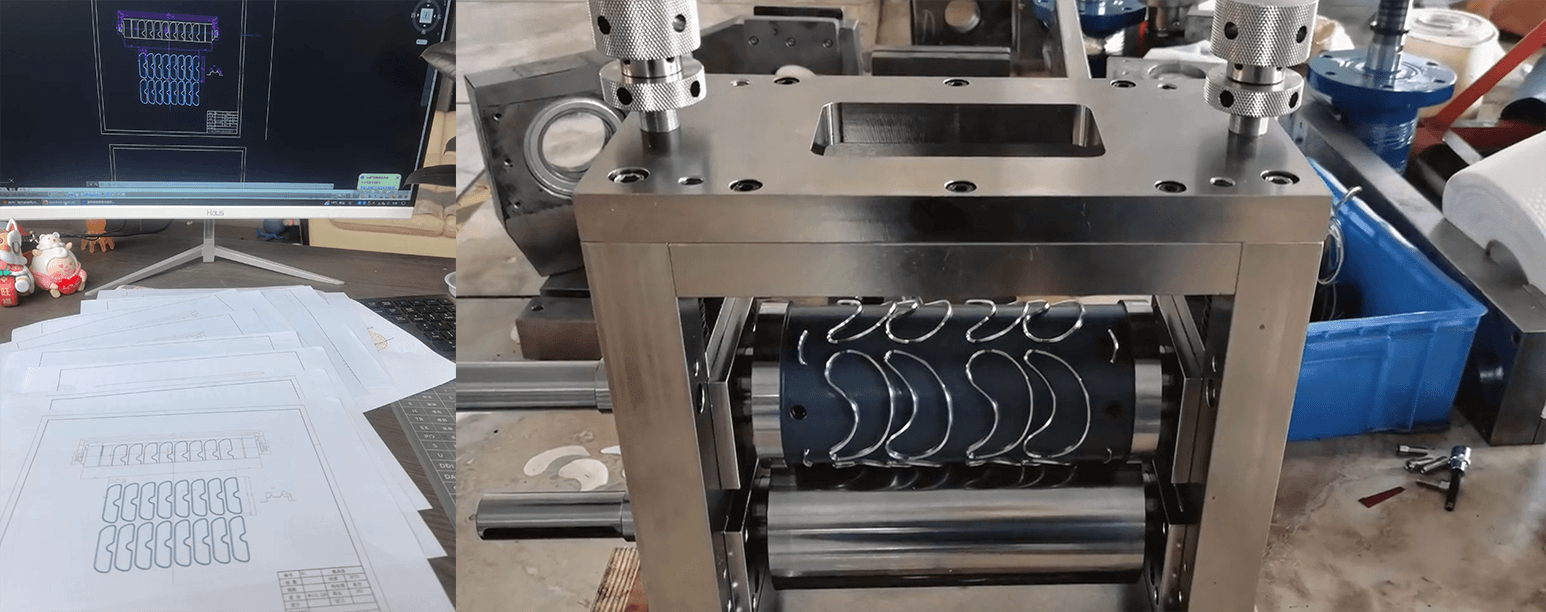
1) Thickness Tolerance
Inconsistent thickness means uneven pressure on skin and patches that don't sit right. For reusable products this matters more than for disposables because the user will notice any inconsistency across 20+ uses.
- Control range: ±0.10 mm to ±0.20 mm
- Minimum sampling: 5 measurement points per piece on defined zones
2) Hardness (Shore A)
Hardness directly affects both comfort and how well the patch grips skin (occlusion). Too soft and it won't stay in place; too firm and it's uncomfortable.
- Target band: Shore A 10–30 (exact range depends on your product design)
- Every lot should come with hardness records and calibration logs for the testing equipment
3) Tensile Strength and Elongation
Reusable patches get stretched during every cleaning cycle. If the material can't handle repeated stretching, you'll see tearing and deformation well before the claimed 20–30 uses.
- Test methods can align with ASTM International elastomer standards for tensile validation
- Compare initial test results against post-cycle results—performance drift is a warning sign
- Material-grade verification should reference frameworks like ISO standards
4) Skin Fit and Surface Integrity
Numbers on a test report don't tell the whole story. Push your supplier for practical wear simulation data, including edge-lift observation after 15–30 minutes of actual wear. If the patch starts lifting at minute 15, your customers will notice—and they won't be quiet about it.
How Reuse Claims (20–30 Uses) Are Tested
Here's something that bothers us: a lot of brands slap "reusable 20–30 times" on their packaging with nothing behind it. No protocol, no data, just a marketing sentence. If you're building a brand that intends to last, don't do that.
A credible reuse test protocol should spell out:
- What counts as one cycle: one wear session + one cleaning + one full dry
- Wear duration: fixed window (we'd suggest 20 minutes per cycle to simulate real use)
- Cleaning method: specified cleanser type and water temperature, kept identical across all cycles
- Checkpoints: evaluation at cycle 1, 5, 10, 20, and 30
- Pass/fail criteria: shape retention check, visible crack inspection, comfort score from a test panel
Ask your OEM for photo or video records from each checkpoint. This isn't just good practice—it becomes evidence you can show to retailers, Amazon compliance teams, and your own customer support staff when questions come in.
Common Defects and How to Spot Them Fast
Defect 1: Air Bubbles
What you see: tiny trapped dots under or near the surface.
Why it matters: these become weak points that crack after a few use cycles.
How to catch it: hold random samples up to a backlight—bubbles show up immediately.
Defect 2: Irregular Edges
What you see: rough trim lines or patches where the left and right sides don't match.
Why it matters: causes skin discomfort and screams "low quality" to anyone who unboxes it.
How to catch it: overlay the left and right patches on top of each other against a golden sample.
Defect 3: Uneven Hardness
What you see: some areas of the patch feel noticeably firmer than others.
Why it matters: inconsistent feel reduces repeat-use comfort and leads to uneven skin contact.
How to catch it: multi-point Shore A testing on every incoming lot, not just a spot check.
Defect 4: Surface Dust Adhesion
What you see: the patch picks up lint the moment you take it out of the package.
Why it matters: hygiene complaints, bad unboxing experience, and negative reviews.
How to catch it: audit the packing environment (is it a clean room or an open workshop?) and run a simple tape-lift or wipe test.
Factory Audit Checklist for Silicone Eye Patch Projects
Use this as a screening tool before signing a contract or during annual reviews. Score each section and compare factories head-to-head.
Documentation
- Material traceability by lot number (not just by order)
- Incoming inspection records for silicone compounds
- Written SOPs for curing and post-curing steps
- Calibration logs for hardness and thickness testing equipment
Process Control
- Documented process windows (temperature/time) for every production step
- In-process QC gates—not just end-of-line inspection
- Golden sample control with revision history
- Defect classification standard (critical / major / minor)
Testing Capability
- In-house Shore A hardness testing
- Dimensional measurement with documented tolerance protocol
- Tensile/elongation testing (in-house or via certified third-party lab)
- Reuse-cycle simulation protocol with archived test reports
Packaging and Shipment
- Anti-deformation tray or custom insert design
- Dust control in the final packing area
- Carton drop-test and compression validation for export shipping
- Lot codes printed on packaging for post-sale complaint tracking
Red line: if a supplier can't demonstrate at least 80% of the items above, treat the partnership as high risk—especially for a first product launch where you have zero margin for quality failures.
FAQ
1) What is the biggest mistake first-time founders make when sourcing reusable silicone eye patches?
Picking a supplier based on the lowest quote. For reusable products, post-curing consistency, hardness control, and actual cycle-test evidence matter a lot more than a cheap per-unit price. We've seen founders save $0.30 per patch on their first order, then spend thousands handling returns and rebranding after bad reviews rolled in. Get the process right first—optimize cost later.
2) Is medical-grade silicone always required for reusable eye patches?
Not always, but it's the safest bet if you're going after a premium or sensitive-skin market. Food-grade can work for mid-tier products—but only if the supplier backs it up with real skin-contact testing data, not just a food-safety certificate. What actually matters is traceable material records plus documented repeat-use validation. The label alone doesn't protect you.
3) How should I verify a "20–30 uses" claim before launch?
Demand the full protocol in writing: exact cycle definition, wear duration, cleaning method, evaluation checkpoints, and failure thresholds. Then ask for test records—photos or videos—from cycle 1 through cycle 30. If the factory can't produce this, don't put the claim on your packaging. It's not worth the regulatory and reputational risk.
Conclusion and Next Step
The reusable silicone eye patch OEM manufacturing process isn't something you "set and forget." It's a system, and every step from material selection to post-curing to final inspection affects whether your customer's 20th use feels as good as their first. Start by locking down four things: material grade, post-curing stability, measurable QC standards, and a transparent reuse-cycle validation.
For the full strategic overview of reusable eye patches as a product category, read our parent guide: Silicone Eye Patch Reusable OEM Solutions.
Once the manufacturing basics are clear, the next challenge is figuring out how to actually sell reusable patches—because the marketing playbook is completely different from disposables. We break this down in how to position and market reusable eye patches.
If sustainability is part of your brand story, packaging and eco-certifications deserve their own strategy. See our guide on sustainable eye patch packaging and eco certifications.
Want a faster, safer path to your first batch? Request a sample development plan that includes: target hardness range, thickness tolerance specification, a 30-cycle validation protocol, and a factory audit scorecard template.