Pimple Patch Designs: Trends & Ideas for 2026
VEILTA
10/20/2025
Pimple Patch Designs: The Rising Trend in Skincare Branding (2026 Edition)
In recent years, pimple patches have evolved from simple hydrocolloid stickers into fashion-forward skincare accessories. Once a discreet tool for acne treatment, they’re now part of self-expression — shaped like stars, hearts, and even cartoon characters.
In 2026, brands are no longer asking, “Does it work?” — they’re asking, “Does it stand out?”
This shift has opened a new design frontier in the skincare industry, where form meets function, and where companies like Veilta help global brands bring their creative visions to life.
Why Pimple Patch Design Matters in 2026
The skincare market is saturated, and differentiation is everything. A unique pimple patch design does more than look cute — it conveys brand identity, consumer trust, and trend relevance.
Today’s Gen Z and Gen Alpha consumers prefer brands that align with their personal style. They view skincare as part of fashion, not just self-care. That’s why eye-catching patch designs—from pastel hearts to minimalist transparent dots—are increasingly featured on social media, turning acne care into a visible and confident statement.
From Functional to Fashionable — The Evolution of Pimple Patch Aesthetics
Originally, acne patches were designed for invisibility. Transparent hydrocolloid circles blended seamlessly into skin. But social media changed everything. Influencers began showcasing colorful or shaped patches to normalize acne care and make it fun.
Let’s explore the main design directions shaping the market today:
1. Minimalist Transparent Designs
Still the go-to for day use and professional settings. These patches emphasize clarity, comfort, and natural texture, often enhanced with ultra-thin hydrocolloid or matte finishes that disappear on all skin tones.
2. Cute and Playful Shapes
Hearts, stars, clouds, and smiley faces are dominating youth markets. These designs combine acne care with mood-boosting aesthetics, making self-care feel positive rather than clinical.
3. Custom OEM Cartoon & Brand Icons
Brands now design exclusive patch shapes—such as their logo silhouettes or mascots—to strengthen brand recognition. OEM manufacturers like Veilta provide die-cut customization and color printing, helping skincare brands create distinct product identities.
4. Luxury & Premium Styles
For high-end skincare lines, metallic holographic finishes, pearlescent coatings, or gradient foil effects add a luxurious touch. These designs are often paired with elegant, resealable packaging to align with prestige skincare aesthetics.
Beyond Looks — The Science Behind Beautiful Designs
While aesthetics attract customers, performance retains them. Every successful pimple patch design must balance beauty with efficacy.
Key scientific and material considerations include:
- Hydrocolloid Layer Thickness: Impacts both absorption speed and transparency.
- Adhesive Type: Determines comfort and residue control.
- Material Flexibility: Ensures patches adhere well on facial contours.
- Ink & Pigment Safety: For colored designs, all dyes must meet cosmetic-grade safety standards.
Veilta integrates skin-safe colorants and ISO/GMP-certified manufacturing to ensure each decorative patch remains as effective as it is attractive.
Customization Trends in Pimple Patch Design (OEM/ODM Insights)
As skincare brands expand globally, custom pimple patch design has become a key competitive edge.
OEM/ODM partners like Veilta provide full-spectrum customization — from shape and color to packaging and branding.
1. Shape Customization
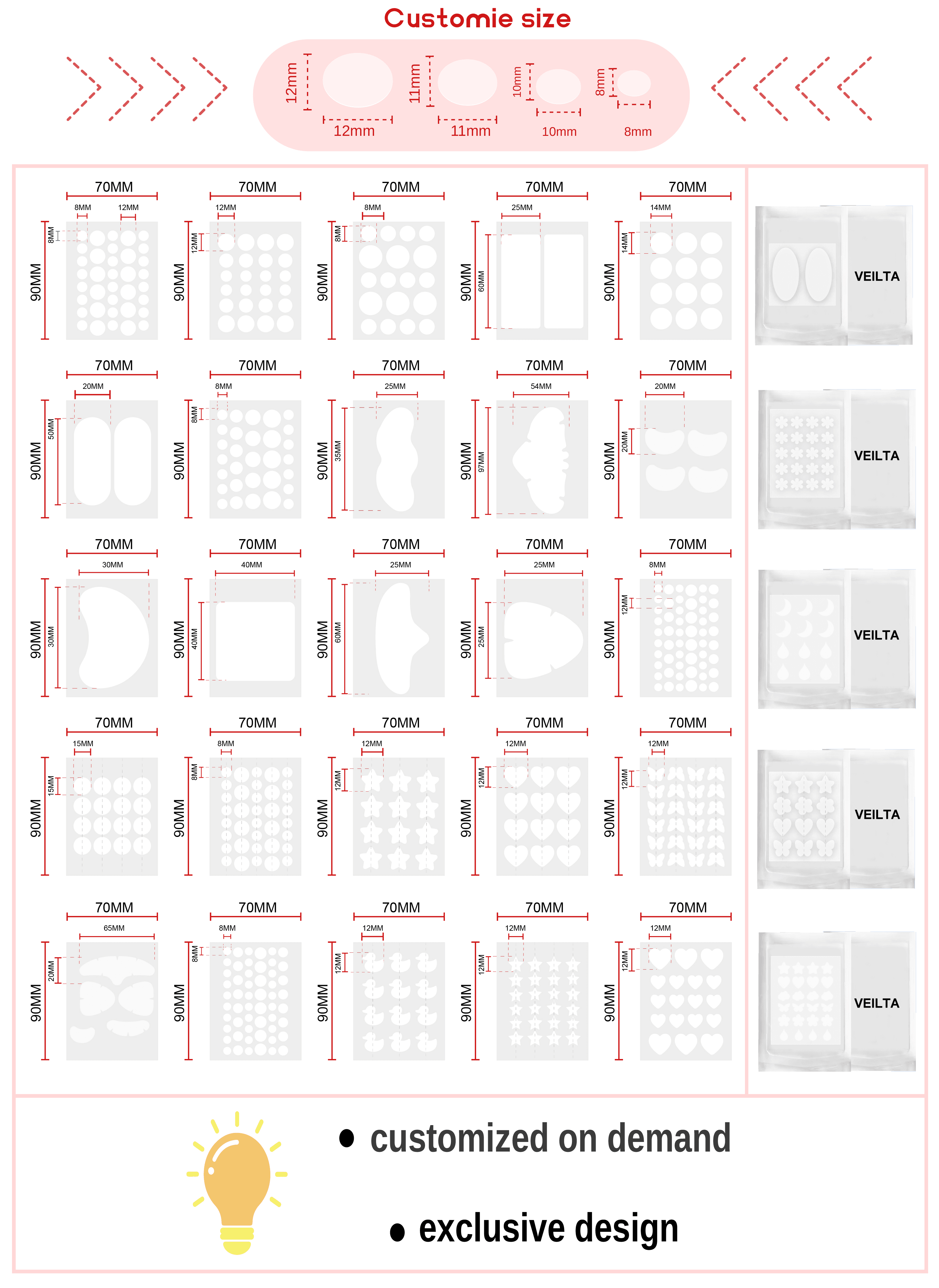
Round, heart, star, flower, and even brand-logo-shaped designs are available. Unique shapes instantly distinguish your brand and make it Instagram-worthy.
2. Material & Function
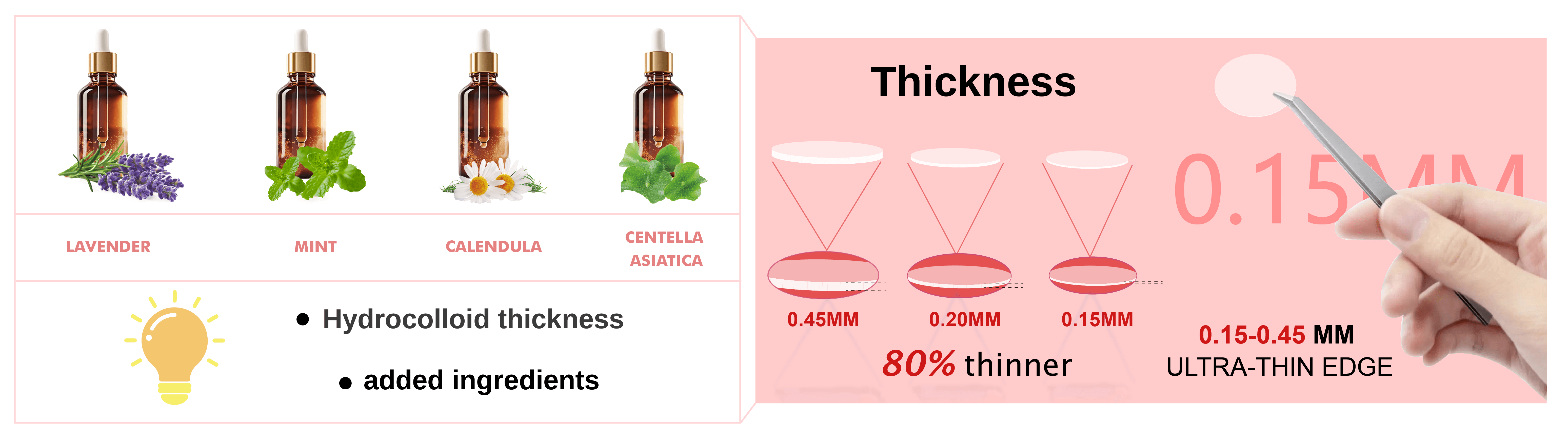
- Invisible hydrocolloid for subtle daily use
- Microneedle patches for deep acne care
- Tea tree or salicylic acid-infused patches for enhanced performance
Brands often mix functional and aesthetic variants within one series to reach multiple target groups.
3. Packaging Design
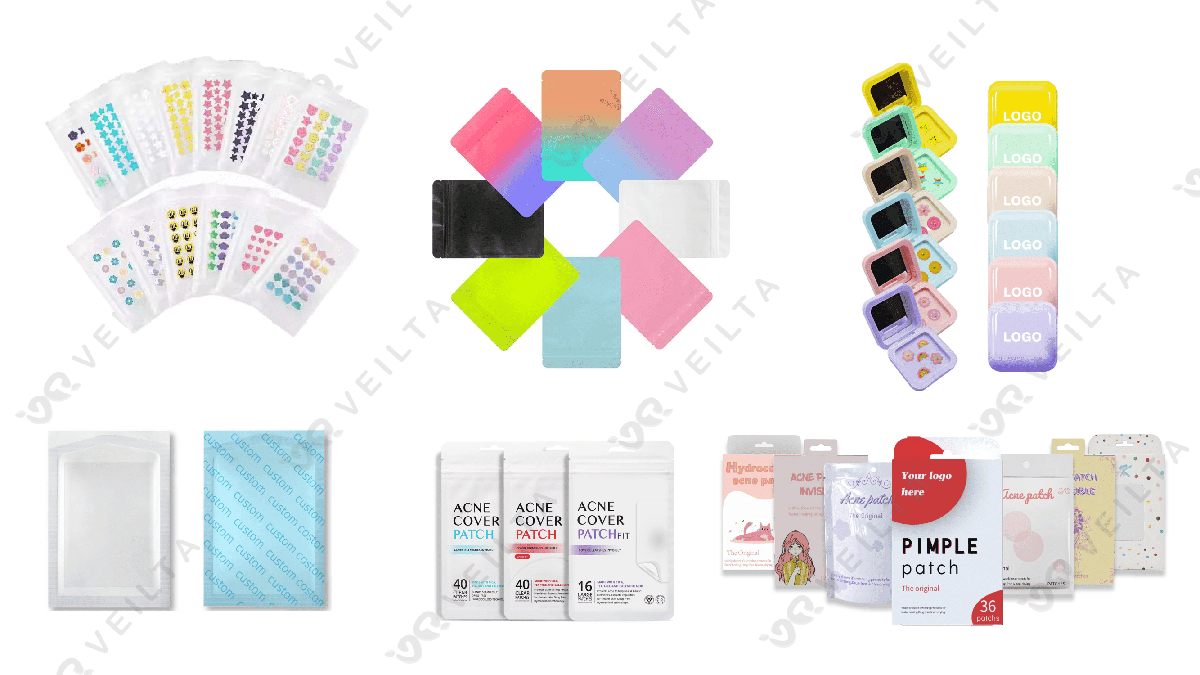
Packaging has become part of the product’s visual storytelling.
Trends include:
- Soft pastel tones and minimalist typography
- Holographic foil pouches
- Resealable and travel-friendly packets
- QR-coded packaging linking to brand content
Veilta’s design team collaborates with clients to align packaging visuals with their brand DNA, ensuring each SKU stands out both online and on shelves.
2026 Design Trends Forecast — What’s Next?
As we move deeper into 2026, three macro-trends define the future of pimple patch design:
- Inclusivity in Skin Tones — Brands will expand color ranges for hydrocolloid patches to better match diverse complexions.
- Smart Skincare Integration — The rise of electronic acne patches and sensor-based materials will blend technology with design.
- Sustainability & Eco Packaging — Biodegradable films and recyclable pouches will dominate as eco-consciousness becomes standard.
Consumers increasingly expect their skincare choices to reflect values, style, and sustainability—and brands that align these three will lead the next wave of growth.
Conclusion — Design as the New Differentiator
Pimple patch designs are no longer an afterthought; they’re a strategic branding tool.
From concept to creation, successful brands combine science, style, and storytelling.
Companies like Veilta empower skincare brands to customize everything—from shape to packaging—to perfectly express their brand personality and connect with modern consumers.
In 2026, design is not just about appearance. It’s about identity.