VEILTA
03/21/2026
Two years ago, PDRN was an ingredient that lived primarily in dermatology clinics. Patients encountered it in post-procedure gels and injectable skin boosters — not in retail eye patches.
That's changed.
PDRN eye patches are now on the shelves at Sephora, trending on TikTok, and showing up in the product development briefs of brands that have never previously worked with medical-grade actives. The ingredient has made the jump from clinical to consumer — and the brands that understand it early are building real competitive advantage in the PDRN K-beauty patches space, where polydeoxyribonucleotide under-eye treatments now command some of the category's highest retail prices.
This guide covers what PDRN actually is, what the science says about its effects on under-eye skin, and everything a private label brand owner needs to know about sourcing, formulating, and positioning a PDRN eye patch line.
TL;DR
- PDRN (polydeoxyribonucleotide) is a DNA-derived biopolymer originally used in medical aesthetics for wound healing and tissue regeneration. It works by activating the adenosine A2A receptor.
- In eye patches, PDRN addresses fine lines, dark circles, puffiness, and post-procedure recovery — the full spectrum of under-eye concerns.
- Plant-derived PDRN (from ginseng, rice, yeast) is an emerging alternative to salmon-derived PDRN for brands with vegan or clean beauty positioning.
- PDRN eye patches belong in the premium segment — retail pricing under $15 per pair is difficult to sustain with authentic PDRN at meaningful concentrations.
- Sourcing PDRN requires documentation: origin traceability, purification method, and stability data are non-negotiable before committing to any manufacturer.
PDRN stands for polydeoxyribonucleotide. It's a DNA-derived biopolymer — a chain of deoxyribonucleotide units with molecular weights ranging from 50 to 1,500 kDa — primarily extracted from the sperm cells of chum salmon (Oncorhynchus keta) or rainbow trout (Oncorhynchus mykiss).
The salmon source isn't arbitrary. Research published in PMC explains that salmon DNA shares sufficient structural similarity with human DNA to be biocompatible, while the extraction and purification process removes active proteins and peptides that could trigger immune reactions. What remains are purified DNA fragments — structurally inert carriers of the pharmacological activity.
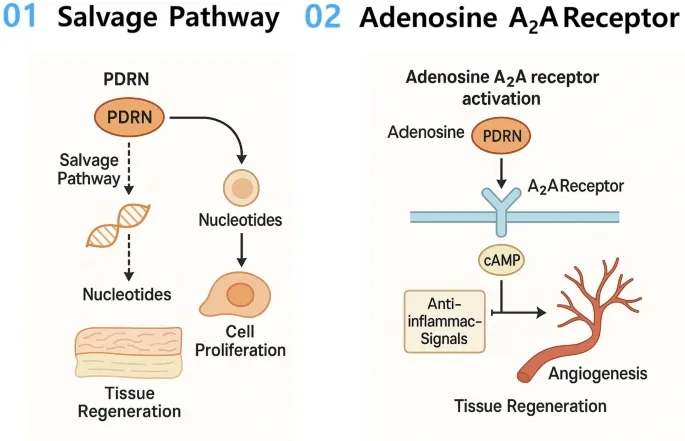
The active mechanism is well-established: PDRN selectively activates the adenosine A2A receptor, triggering a cascade of anti-inflammatory responses, angiogenesis, and collagen synthesis. Alongside this receptor pathway, PDRN also supplies nucleosides and nucleotides for the "salvage pathway" — a cellular process that recycles DNA building blocks to support new cell growth. These two mechanisms working together explain PDRN's breadth of effect on skin.
It's worth noting that PDRN is not the same as PN (polynucleotide), though the two are often used interchangeably in marketing. Both are DNA-derived, but PDRN consists of shorter oligonucleotide sequences and works primarily through the A2A receptor; PN uses longer fragments with more emphasis on extracellular matrix remodeling. The distinction matters when evaluating manufacturer claims — a product marketed as "PDRN" should be confirmed as the shorter-chain variant, not simply relabeled PN.
The periorbital area is one of the most demanding zones in skincare. The skin here is thinner than anywhere else on the face — roughly 0.5mm compared to 2mm on the cheeks — with limited sebaceous gland activity, constant movement from facial expressions, and direct exposure to UV radiation and environmental stress.
The concerns that show up in this zone (fine lines, dark circles, puffiness, loss of firmness) are the result of multiple converging processes: collagen degradation, microcirculation impairment, inflammation, and barrier breakdown. An ingredient that addresses multiple processes simultaneously is genuinely valuable here — which is exactly what PDRN does.
Collagen synthesis and anti-aging: A review in ScienceDirect confirms PDRN promotes collagen synthesis, soft tissue regeneration, and skin revitalization through A2A receptor activation. By downregulating matrix metalloproteinase-1 (MMP-1) — the enzyme primarily responsible for collagen breakdown — PDRN shifts the balance toward collagen preservation and new synthesis.
Anti-inflammatory effects: PDRN suppresses NF-κB and MAPK signaling pathways, reducing pro-inflammatory cytokine expression. For the under-eye area, where inflammatory responses contribute to both puffiness and dark circle formation, this has direct clinical relevance.
Wound healing and recovery: A systematic review on PubMed covering 34 studies confirmed PDRN's ability to promote tissue repair through both the salvage pathway and A2A receptor activation, with encouraging results on healing time and wound regeneration. For brands targeting post-procedure recovery positioning, this clinical heritage is directly usable.
Anti-melanogenic effects: PDRN inhibits MITF (Microphthalmia-associated transcription factor), the master regulator of melanin production. This makes it genuinely useful for dark circle reduction — not just as a brightening claim, but through a documented molecular mechanism.
Cell proliferation and migration: PMC research demonstrates PDRN promotes proliferation and migration of both keratinocytes and fibroblasts — the two cell types most responsible for skin repair and barrier maintenance. For under-eye skin that shows signs of thinning and dehydration, this cellular activity is a relevant benefit.
Traditional PDRN is salmon-derived. Most of the clinical research, most commercial production infrastructure, and most of the market's existing PDRN products use chum salmon or rainbow trout sperm as the source material.
This creates a positioning challenge for brands with vegan, clean beauty, or sustainability commitments. "Salmon sperm extract" is not a label claim that plays well with every consumer audience — even if the actual product is highly purified and contains no active biological material.
Plant-derived PDRN is a direct response to this challenge. Research published in PMC demonstrated that PDRN purified from the adventitious roots of Korean ginseng (Panax ginseng) activates the same A2A receptor pathway as salmon-derived PDRN, promoting keratinocyte and fibroblast proliferation and strengthening the skin barrier. The study concluded that plant-derived PDRN can function as a viable alternative — "PhytoPDRN" — without sacrificing the core pharmacological activity.
Other plant sources under investigation include rice, yeast, and various botanical DNA sources. A 2025 study found that PDRN derived from Gynostemma pentaphyllum — a plant used in traditional Asian medicine — significantly improved keratinocyte viability and exhibited wound healing effects comparable to salmon PDRN, further validating the category's direction. The common thread across all plant-derived PDRN research is the same A2A receptor mechanism, with the advantage of a supply chain that doesn't involve animal harvesting — a meaningful credential for polydeoxyribonucleotide under-eye patches targeting the K-beauty and clean beauty crossover segment.
For brand owners, the sourcing decision comes down to positioning and available supply. Salmon-derived PDRN has the deeper clinical track record and more established manufacturing infrastructure. Plant-derived PDRN has stronger clean beauty and vegan credentials but a less mature supply chain. When briefing a manufacturer, ask explicitly which source they use, whether they can provide traceability documentation, and whether plant-derived options are available at your required concentration.
| Criteria | Salmon-Derived PDRN | Plant-Derived / Vegan PDRN |
|---|---|---|
| Source | Salmon / trout DNA (typically from fish sperm) | Plant, microalgae, or biotech fermentation-derived DNA |
| Technology Maturity | ⭐⭐⭐⭐⭐ (well-established in medical & aesthetic use) | ⭐⭐⭐ (emerging, mainly cosmetic applications) |
| Molecular Nature | DNA fragments (50–1500 bp) | Same DNA structure (biologically equivalent) |
| Mechanism of Action | Activates A2A receptors → anti-inflammatory, tissue repair, collagen synthesis | Same theoretical mechanism |
| Clinical Evidence | ✅ Strong (wound healing, regenerative medicine, injectables) | ⚠️ Limited (mostly in vitro / brand-level data) |
| Perceived Efficacy | ⭐⭐⭐⭐⭐ (industry “gold standard”) | ⭐⭐⭐⭐ (~75–85% comparable activity, depending on source) |
| Absorption / Optimization | Moderate penetration | Can be bioengineered for smaller fragments → better penetration |
| Safety / Allergen Risk | ⚠️ Potential fish allergen concern | ✅ Low allergen risk |
| Odor / Sensory | Possible slight fishy odor | Neutral, easier formulation |
| Raw Material Cost | ? Lower (mature supply chain) | ?? Higher (biotech processing cost) |
| Supply Stability | Dependent on marine sourcing | ✅ Scalable (fermentation / plant extraction) |
| Sustainability (ESG) | ⚠️ Environmental concerns (marine sourcing) | ✅ Sustainable & eco-friendly |
| Regulatory / Certification | Not vegan / limited clean beauty claims | ✅ Vegan, cruelty-free, clean beauty compliant |
| Market Perception | “Clinical repair”, “medical-grade ingredient” | “Biotech skincare”, “clean & ethical beauty” |
| Brand Positioning | Performance-driven / dermatological | Value-driven / sustainability-focused |
| Typical Applications | Post-procedure repair, intensive serums, medical-grade masks | Daily serums, clean beauty lines, sensitive skin products |
| Best-fit Markets | Korea, China, professional skincare channels | Europe, US, Southeast Asia (vegan demand growth) |
Salmon PDRN vs plant-derived PDRN comparison for cosmetics sourcing and vegan positioning
PDRN can be delivered through multiple topical formats — serums, ampoules, creams, sheet masks. Eye patches are not the only option. But they are arguably the best format for this specific ingredient in this specific body zone.
Occlusion enhances penetration: An eye patch creates an occlusive environment against the skin, which increases local hydration and improves percutaneous absorption. For a molecule like PDRN that needs to reach the dermis to engage fibroblasts and activate the A2A receptor, the occlusive effect of a patch is a delivery advantage that an open serum can't match.
Extended contact time: Most eye patches are designed for 15–30 minute wear or longer. This sustained contact allows PDRN to diffuse steadily into the skin rather than relying on brief massage absorption. The extended delivery window is particularly relevant for PDRN's collagen synthesis effects, which operate over hours rather than minutes.
Targeted delivery: Under-eye skin is thin, mobile, and sensitive. Applying PDRN in a precisely shaped patch format minimizes product waste, maximizes contact with the target area, and reduces the risk of migration to surrounding skin. For a premium active, this precision matters.
Consumer experience alignment: The ritualistic nature of eye patch application — the 20-minute pampering moment — aligns well with the clinical, results-oriented positioning that PDRN demands. Consumers who invest in PDRN patches are typically engaged, ingredient-literate skincare users who will wear the patch, wait the full duration, and look for results. That's the right consumer context for an active ingredient story.
PDRN works well in combination, and the most commercially successful PDRN eye patches don't rely on it as a single hero ingredient. Understanding compatible actives helps you build a more compelling product story and a more effective formula.
Hyaluronic Acid / Sodium Hyaluronate: The baseline hydration pairing. HA maintains the moisture environment that supports PDRN's cellular activity. Multiple molecular weights create a layered hydration effect.
Niacinamide: Complements PDRN's anti-melanogenic effect on dark circles. While PDRN works through MITF inhibition, niacinamide reduces melanin transfer between melanocytes and keratinocytes. The two mechanisms are additive.
Caffeine: Vasoconstrictor for immediate puffiness reduction. Caffeine provides the fast visible result (de-puffing within 15 minutes) while PDRN works over a longer time horizon on structural concerns. Together they address both immediate and sustained benefits — a strong dual-claim product story.
Peptides (Palmitoyl Tripeptide-1, Acetyl Hexapeptide-8): Signal peptides for collagen synthesis and expression relaxation. Peptides and PDRN both target collagen through different mechanisms, making them genuinely complementary rather than redundant.
Centella Asiatica (Cica): Anti-inflammatory and barrier-supportive. Reinforces PDRN's anti-inflammatory mechanism and adds botanical credibility. Particularly relevant for post-procedure recovery positioning.
Retinol / Retinaldehyde: Advanced anti-aging pairing for brands targeting mature skin. PDRN's tissue regeneration activity can help offset potential irritation of retinol in the sensitive periorbital area. Stability in the patch format requires careful formulation and testing.
What doesn't pair well: Vitamin C (ascorbic acid) is challenging in patch formats due to oxidative instability in aqueous environments. If vitamin C brightening is a brand goal, use stabilized derivatives (ascorbyl glucoside, sodium ascorbyl phosphate) and confirm stability data with your manufacturer.
| Ingredient | Compatibility with PDRN | Function Mechanism |
|---|---|---|
| Hyaluronic Acid | ✅ Fully compatible | Provides a hydrated environment and enhances PDRN activity |
| Caffeine | ✅ Compatible | Reduces puffiness and improves vascular dark circles |
| Niacinamide | ✅ Conditionally compatible | Brightening and barrier repair (recommended at 2–5%) |
| Peptides | ✅ Strong synergy | Anti-aging and collagen stimulation |
PDRN eye patch formulation with compatible actives including hyaluronic acid caffeine niacinamide and peptides
PDRN is a premium ingredient. This isn't just a pricing recommendation — it's a structural reality driven by raw material cost, formulation complexity, and the clinical heritage that gives the ingredient its credibility.
A PDRN eye patch retail priced under $15 per pair is either using PDRN at concentrations too low to be clinically relevant, or compressing margin to the point where quality control becomes a risk. Neither outcome serves your brand. The sweet spot is $22–35 per pair, with luxury positioning viable at $35+.
Within that premium positioning, PDRN fits several distinct brand archetypes:
The Clinical Brand: Leads with the science — A2A receptor activation, clinical study citations, specific PDRN concentration on pack. Targets skincare-literate consumers who read ingredient lists and follow aesthetic medicine trends. Strong in US and UK specialty retail.
The K-Beauty Innovation Brand: Leans into PDRN's Korean medical aesthetics heritage. "Used in Korean clinics" is a credible and compelling claim. Strong in East Asia and among K-beauty consumers globally.
The Post-Procedure Recovery Brand: Positions the eye patch as the at-home extension of a professional treatment. "Your skin after a facial, every day." Targets the growing segment that receives professional aesthetic treatments and wants to extend results at home.
The Regenerative Skincare Brand: PDRN as part of a larger "skin regeneration" story alongside stem cells, growth factors, and other regenerative actives. Positions the brand at the intersection of beauty and biotech.
Building a PDRN eye patch line? VEILTA's formulation team works with brand owners from ingredient sourcing through to production-ready samples — including full PDRN traceability documentation for US, EU, and Southeast Asian markets. Talk to our team →
PDRN is not a commodity ingredient. Quality varies significantly depending on source, purification method, and concentration in the finished product. A manufacturer offering "PDRN eye patches" without supporting documentation should not be your first choice.
PDRN sourcing documentation: The manufacturer should provide traceability records for their PDRN raw material — species source (salmon or plant), extraction and purification method, and the supplier facility. Without this, you cannot substantiate any PDRN claims on your packaging.
Concentration and stability data: Ask for the PDRN concentration in the finished product (in ppm or %) and stability testing data confirming that concentration is maintained throughout the product's shelf life. A product with 1000ppm PDRN at production and 200ppm at month 18 is not delivering what's on the label.
Clinical formulation experience: A manufacturer that has produced PDRN-based products for regulated markets (US, EU, South Korea) will have worked through the regulatory, labeling, and claims substantiation challenges that a first-time PDRN brand will face.
Patch substrate expertise: PDRN works best in bio-cellulose or premium hydrogel formats. Confirm the manufacturer has existing capability with both substrates and can provide samples demonstrating PDRN stability in their specific patch matrix.
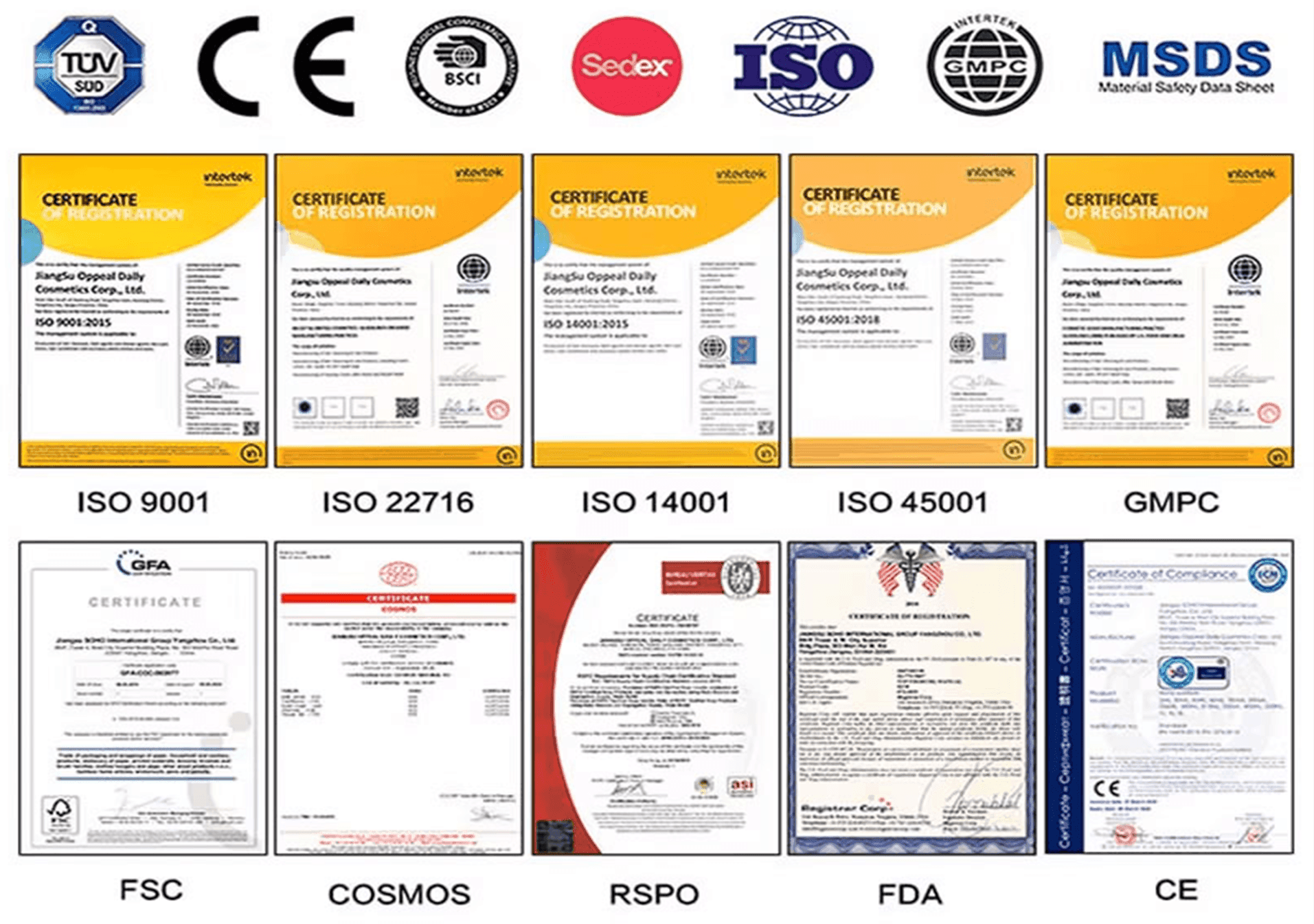
Certifications: ISO 22716 GMP certification is the baseline. FDA facility registration for US distribution, CPNP documentation for EU markets.
PDRN's clinical origins create legitimate regulatory considerations that standard hydrocolloid patches don't face. Most are manageable — they just require intentional label copy.
Cosmetic vs. medical device: In most markets, a PDRN eye patch with cosmetic claims ("hydrates and firms the under-eye area," "visibly reduces the appearance of fine lines") is classified as a cosmetic. Claims that cross into therapeutic territory ("repairs damaged skin cells," "treats dark circles caused by poor microcirculation") risk medical device classification in the EU under MDR 2017/745 or similar frameworks elsewhere.
South Korea — MFDS: South Korea is the origin market for much of the clinical PDRN research. The Ministry of Food and Drug Safety (MFDS) regulates both cosmetics and quasi-drugs. PDRN-based products with stronger efficacy claims may require quasi-drug registration. If South Korea is a target market, confirm classification requirements with a local regulatory consultant before finalizing label copy.
EU/UK: PDRN is not on the restricted or prohibited ingredient lists under EU Cosmetics Regulation (EC) No 1223/2009. Stay in cosmetic claim territory and CPNP notification is the path. Salmon-derived PDRN raises no EU-specific ingredient concerns as long as the purification process removes active biological material.
US FDA: No pre-market approval for cosmetics. Facility registration and product listing under MoCRA apply. Avoid any language implying the product treats or prevents a disease.
Vegan claims: If using salmon-derived PDRN, the product is not vegan and standard vegan certification bodies (Vegan Society, PETA) would not certify it. If vegan certification matters for your brand, confirm plant-derived PDRN availability before briefing.
On PDRN sourcing:
On formulation:
On regulatory:
On commercial terms:
PDRN (polydeoxyribonucleotide) is a DNA-derived biopolymer extracted from salmon sperm cells. It works by activating the adenosine A2A receptor, which triggers anti-inflammatory responses, promotes collagen synthesis, and accelerates tissue regeneration. In eye patches, it targets the specific concerns of the periorbital area — fine lines, dark circles, puffiness, and post-procedure recovery — delivering regenerative actives directly to delicate under-eye skin over an extended wear period.
Yes. Topical PDRN has a well-established safety profile, supported by decades of clinical use in medical aesthetics. The purification and sterilization process removes active proteins and peptides that could cause immune reactions. Multiple clinical studies have demonstrated that PDRN is well-tolerated with minimal side effects. It is classified as a cosmetic ingredient in most markets when used in topical formulations without therapeutic claims.
Commercial PDRN eye patches typically range from 500ppm to 2000ppm (0.05%–0.2%). Higher concentrations are not necessarily better — stability, delivery format, and complementary actives matter as much as concentration. Ask your manufacturer for efficacy data at the specific concentration they propose, not just the number on the label.
Traditional PDRN is extracted from salmon sperm cells. Plant-derived PDRN, such as Panax PDRN from Korean ginseng, activates the same A2A receptor pathway and shows comparable skin regeneration results in research — while addressing vegan and sustainability concerns. For brands with clean beauty or vegan positioning, plant-derived PDRN is worth discussing with your manufacturer, though supply chains are currently less established than salmon-derived sources.
Both are DNA-derived biopolymers, but they differ in molecular weight and mechanism. PDRN consists of shorter oligonucleotide sequences (50–1,500 kDa) and works primarily through adenosine A2A receptor activation. PN, composed of longer DNA fragments, plays a more prominent role in extracellular matrix remodeling. In practical terms for cosmetic formulation, the distinction matters less than the quality of sourcing and the concentration used.
PDRN eye patches sit firmly in the premium segment — typically $18–45 per pair at retail. A retail price under $15 is difficult to sustain with authentic PDRN at meaningful concentrations and proper stability testing. Most successful PDRN eye patch launches are priced at $22–35 per pair, with luxury positioning at $35+.
Both formats can carry PDRN effectively, but bio-cellulose is generally preferred at premium price points. The nanofiber matrix maintains closer skin contact than hydrogel, which supports more consistent ingredient delivery — particularly relevant for larger bioactive molecules like PDRN. Hydrogel PDRN patches are commercially viable and more cost-effective. The right choice depends on your retail price target and brand positioning.
At minimum: ISO 22716 GMP certification, FDA facility registration (for US market), and CPNP compliance documentation (for EU market). Beyond these, ask specifically about PDRN sourcing documentation — the manufacturer should provide traceability records showing the origin and purification process of their PDRN raw material. Stability testing data for PDRN at the proposed concentration is essential before committing to bulk production.
VEILTA manufactures PDRN eye patches for private label brands entering the US, EU, and Southeast Asian markets. We work with both salmon-derived and plant-derived PDRN sources, provide full traceability documentation, and offer formulation support across hydrogel and bio-cellulose substrates.
Our facilities are ISO 22716, FDA registered, and CPNP compliant — with the clinical formulation experience that PDRN-based products require.