
Microneedle Acne Patch Ingredients: How to Choose the Right Active for Your Brand
VEILTA
12/13/2025
In a standard acne patch, the ingredient story matters. In a microneedle acne patch, it matters even more.
That is because microneedle patches do not just sit on the skin surface. They rely on a dissolvable microneedle structure, which means the formula has to work with the patch format itself. A good ingredient in a serum or cream is not automatically a good ingredient in a microneedle project.
For skincare brands planning a microneedle acne patch OEM launch, ingredient selection affects more than marketing. It shapes formulation feasibility, active loading, stability, claims direction, market fit, and compliance risk.
This guide explains how to choose the right active ingredients for a private label microneedle acne patch, what each common ingredient does, and what brands should consider before sending a formula brief to a manufacturer.
Quick Takeaways
- Microneedle patch ingredients must work with a dissolvable microneedle structure, not just with acne positioning.
- The best active depends on your brand concept, target customer, skin sensitivity, and export market.
- Salicylic acid is strong for acne positioning, but it can create more regulatory and formulation complexity.
- Niacinamide, hyaluronic acid, centella, and peptides are often easier for cosmetic positioning.
- Ingredient concentration, active loading, stability, and compatibility matter as much as the ingredient name.
- A good OEM brief should define your ingredient priority, not just list popular actives.
Why Ingredient Choice Matters More in a Microneedle Patch
A standard hydrocolloid acne patch mainly works at the surface. A microneedle patch adds a dissolvable delivery structure.
That changes the formula logic in three ways:
- the ingredient has to be compatible with the microneedle matrix
- the ingredient has to remain stable through development and production
- the ingredient has to make sense for the product's claims and target market
This is why ingredient selection for a custom microneedle acne patch should never be treated like a simple serum formula copy. In many OEM projects, the first problem is not marketing. It is whether the active can be loaded, stabilized, and positioned in a commercially workable way.
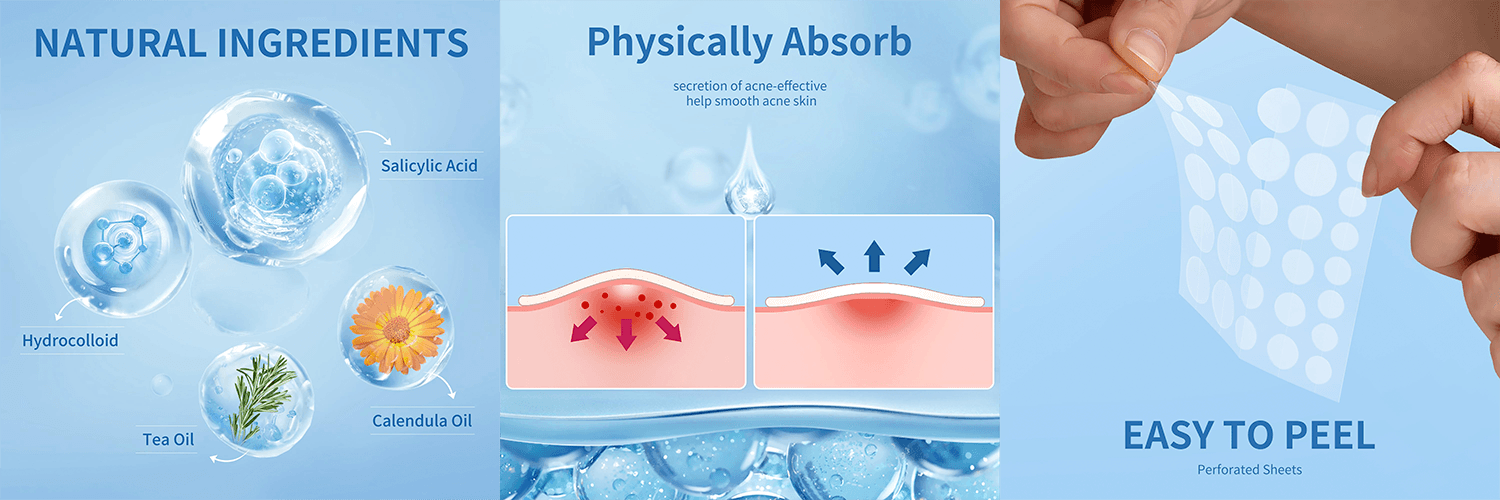
What Makes a Good Microneedle Patch Ingredient?
For OEM development, a good ingredient is usually one that performs well across four areas:
| Question | Why It Matters |
|---|---|
| Is it compatible with the microneedle system? | Some actives are harder to load or stabilize in dissolvable structures |
| Does it support the intended product story? | The ingredient should match the brand's positioning and claims |
| Is it commercially realistic? | Some actives raise cost, complexity, or sample revision time |
| Does it fit the target market? | Ingredient rules and claims tolerance differ by market |
A practical ingredient decision balances efficacy story, technical feasibility, and launch risk.
Main Ingredient Options for Microneedle Acne Patches
Below are some of the most common ingredients brands consider for microneedle acne patch OEM projects.
Salicylic Acid
Salicylic acid is one of the most recognizable acne-care actives. For brands that want a more treatment-oriented product story, it is often one of the first ingredients considered.
Best fit
- acne-focused positioning
- oil-control and pore-clearing story
- clinical or results-led brand concepts
Strengths
- strong acne association
- familiar to consumers
- easy to market in blemish-care products
Watch-outs
- can create more regulatory sensitivity depending on concentration and claims
- may be less suitable for very sensitive-skin positioning
- requires careful handling in formula strategy and market review
In OEM work, salicylic acid is often the ingredient that creates the strongest acne signal, but it is also one of the first actives that needs a more careful market and claims review.
Niacinamide
Niacinamide is one of the most flexible ingredients for cosmetic acne patch positioning.
Best fit
- post-acne care
- calming and brightening support
- broader skin-type compatibility
Strengths
- versatile cosmetic positioning
- easier to combine with premium or gentle-care narratives
- useful for brands that want acne plus tone-improvement messaging
Watch-outs
- less aggressive than salicylic acid for a pure treatment story
- needs the right support ingredients and positioning to avoid sounding too generic
For many brands, niacinamide works well as a hero ingredient when the goal is a balanced cosmetic acne story rather than a stronger treatment-led image.
Hyaluronic Acid
Hyaluronic acid or sodium hyaluronate is often used as both a structural and story-support ingredient in microneedle patches.
Best fit
- hydration-focused positioning
- barrier-support messaging
- premium or K-beauty-style concepts
Strengths
- strong compatibility with microneedle systems
- familiar and easy for consumers to understand
- supports a smoother premium skincare narrative
Watch-outs
- on its own, it may not create a strong acne-treatment identity
- often works best as a support ingredient rather than the only hero active
It is also one of the most commercially useful support ingredients because it often fits both structure needs and consumer-friendly product storytelling.
Retinol
Retinol is a stronger-positioning ingredient, but it also adds complexity.
Best fit
- premium night-care concepts
- acne plus texture-renewal positioning
- more advanced skincare audiences
Strengths
- high perceived value
- strong premium skincare identity
- helps position the product as more than a basic blemish patch
Watch-outs
- more stability-sensitive than many other actives
- not suitable for every skin type or market
- requires more careful compliance and claims review
Retinol can help a brand stand out, but it is rarely the easiest first route for a microneedle patch launch.
Centella Asiatica
Centella is often chosen for brands that want a calmer, gentler acne-care direction.
Best fit
- sensitive-skin positioning
- soothing and recovery messaging
- clean beauty or skin-barrier concepts
Strengths
- easy to understand in soothing skincare stories
- useful for post-blemish comfort positioning
- pairs well with niacinamide or hyaluronic acid
Watch-outs
- may feel too soft for brands that want a stronger acne-treatment image
- often works best in a supporting role rather than as the only selling point
Centella is especially useful when the brand wants a lower-risk cosmetic direction that feels calming rather than aggressive.
Peptides
Peptides are more common in premium or hybrid acne-repair concepts than in basic acne treatment positioning.
Best fit
- premium repair-oriented positioning
- post-acne support
- innovation-led beauty concepts
Strengths
- strong premium signal
- useful for elevated product storytelling
- supports a more sophisticated brand image
Watch-outs
- usually more expensive than simpler actives
- can make the product story less focused if the acne angle is not clear enough
Peptides often make more sense when the SKU is positioned as acne plus repair, not just acne alone.
Ingredient Comparison Table
| Ingredient | Main Benefit | Best For | Skin-Type Fit | OEM Difficulty | Main Watch-Out |
|---|---|---|---|---|---|
| Salicylic Acid | Acne-focused treatment story | Clinical acne products | Oily, blemish-prone skin | Medium to High | Higher regulatory and sensitivity considerations |
| Niacinamide | Calming, tone, barrier support | Balanced acne-care concepts | Broad skin-type range | Low to Medium | May feel less treatment-led on its own |
| Hyaluronic Acid | Hydration and structure support | Premium and gentle-care concepts | Most skin types | Low | Often needs stronger supporting actives |
| Retinol | Premium renewal positioning | Advanced night-care concepts | More selective use | High | Stability and compliance complexity |
| Centella Asiatica | Soothing support | Sensitive-skin and clean beauty concepts | Sensitive or reactive skin | Low | Softer acne positioning |
| Peptides | Premium repair story | Elevated or hybrid concepts | Broad skin-type range | Medium | Higher cost and weaker direct acne signal |
How to Match Ingredients to Brand Positioning
The right ingredient choice depends on what kind of product you want the market to see.
If your brand wants a clinical acne story
Start by evaluating stronger acne-recognized actives such as salicylic acid, then balance them with support ingredients that improve the user experience.
If your brand wants a premium beauty story
Ingredients such as hyaluronic acid, peptides, niacinamide, or selected premium combinations may create a better fit than a pure treatment-led formula.
If your brand wants a gentle or clean-beauty story
Centella, niacinamide, and hydration-support ingredients often create a more commercially natural direction.
In other words, the best ingredient is not just the most powerful one. It is the one that matches your SKU strategy.
How Target Market Changes Ingredient Choice
Ingredient selection for a private label microneedle acne patch is not only a formulation decision. It is also a market-entry decision.
Different export markets may treat ingredients, concentrations, and claims more cautiously.
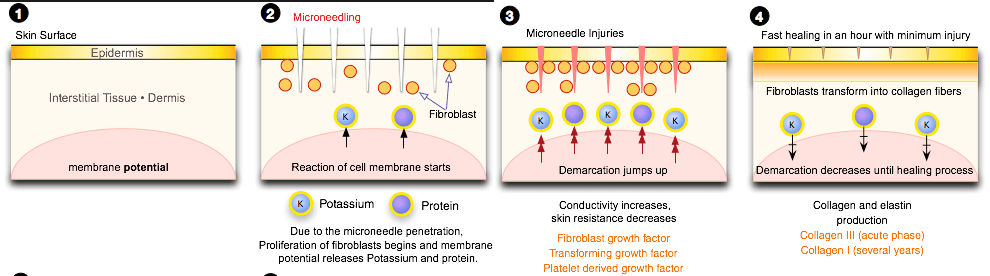 Ingredient planning considerations vary by export market — see breakdown below.
United States
In the US, acne-related positioning can become more sensitive depending on the ingredient and the strength of the claims. This is especially relevant when the product story moves from cosmetic support toward direct acne-treatment language.
What brands should keep in mind
- stronger acne claims create more review pressure
- salicylic acid needs more careful positioning review
- cosmetic-safe wording matters as much as the ingredient itself
For many brands, the practical question is not only what ingredient they want to use. It is whether the final claims language keeps the product within a commercially workable cosmetic route.
European Union
In the EU, the relationship between formula, claims, and documentation is often more tightly reviewed.
What brands should keep in mind
- ingredient choice should be considered together with claims and compliance support
- sensitive or stronger-positioning actives may need more internal review before launch
- documentation readiness is part of ingredient planning, not a later step
For EU-focused launches, brands often benefit from choosing an ingredient strategy that is easier to document and position cleanly from the start.
Southeast Asia
In Southeast Asia, market treatment can vary by country. Some brands assume one export strategy will work across the whole region, but that is often too simple.
What brands should keep in mind
- country-by-country differences matter
- a lower-risk ingredient strategy can make regional launch easier
- brands expanding across multiple markets often benefit from a more commercially flexible formula direction
This is one reason many brands avoid overcomplicating the first formula when planning wider regional rollout.
Concentration and Stability Matter More Than Most Brands Expect
A popular ingredient name does not guarantee a workable microneedle patch.
For many OEM projects, the real question is not whether an ingredient sounds attractive. It is whether the ingredient can stay stable, fit the structure, and perform consistently through development and production.
Common problem areas include:
- unstable active systems
- formula and matrix incompatibility
- over-ambitious concentration targets
- mismatch between marketing ambition and technical feasibility
For many brands, a simpler ingredient system with better execution performs better commercially than a more crowded formula brief.
Single-Hero Ingredient vs Multi-Ingredient Formula
Some brands want one clear hero ingredient. Others want a richer ingredient story.
Both can work, but they serve different goals.
Single-hero approach
Best for:
- simple acne positioning
- cleaner messaging
- easier user communication
Multi-ingredient approach
Best for:
- premium positioning
- broader skincare story
- hybrid concepts such as acne plus calming or acne plus repair
The important thing is not to overload the formula brief. More ingredients do not automatically create a better product.
In practice, one strong hero ingredient supported by one or two compatible supporting actives is often easier to develop and easier to sell than a crowded formula concept.
How to Brief Your OEM Manufacturer on Ingredient Needs
When talking to a microneedle acne patch manufacturer, avoid sending only a list of trendy ingredients.
A stronger OEM brief usually includes:
- target customer
- target market
- desired product positioning
- preferred hero ingredient
- optional support ingredients
- skin-type direction
- desired price band
- packaging concept
- claims direction to avoid or prioritize
A brief like this gives the supplier enough context to recommend a formula direction that is commercially and technically realistic.
One of the most common OEM mistakes is asking for too many active ingredients before the product positioning is clear. In most projects, the better starting point is the brand story first, then the ingredient system.
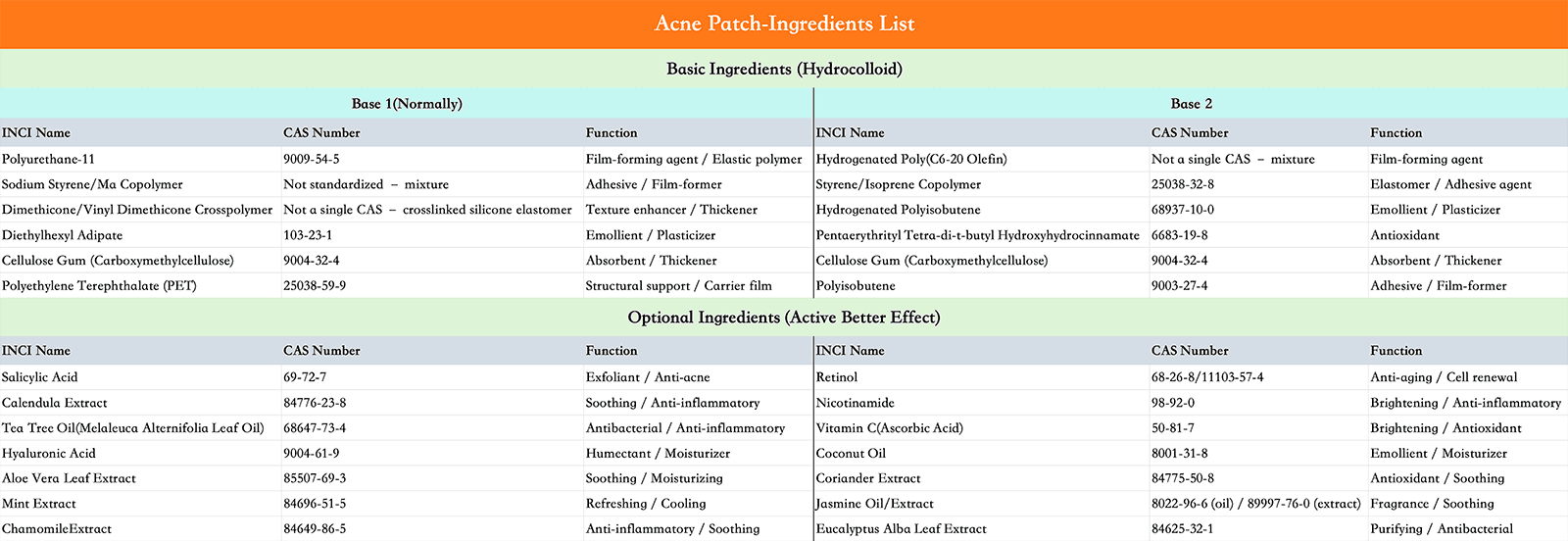
Ingredient Brief Template for Brands
| Item | Example |
|---|---|
| Target market | US and Southeast Asia |
| Product positioning | Premium acne patch with calming support |
| Hero ingredient | Niacinamide |
| Support ingredients | Hyaluronic acid and centella |
| Skin-type fit | Blemish-prone but sensitivity-aware users |
| Price level | Mid-premium |
| Claims direction | Clearer-looking skin, soothing, post-blemish care |
| Avoid | Strong drug-style treatment claims |
Final Thoughts
Choosing ingredients for a microneedle acne patch OEM project is not only about what sounds effective. It is about finding the ingredient system that fits your format, market, pricing, and brand direction.
A strong formula brief usually starts with one clear question: what kind of product does your brand actually want to launch?
If you already have a target market and hero ingredient in mind, VEILTA can help assess whether the formula direction is commercially workable for microneedle patch OEM.
If you want the broader OEM framework behind project planning, MOQ, testing, and launch timing, read our Microneedle Pimple Patch Private Label Guide.
FAQs About Microneedle Acne Patch Ingredients
What ingredients work best in a microneedle acne patch?
The best ingredient depends on the product concept. Salicylic acid is strong for acne-led positioning, while niacinamide, hyaluronic acid, centella, and peptides often work well for cosmetic, premium, or sensitivity-aware concepts.
Can salicylic acid be used in a microneedle acne patch?
Yes, but it usually needs more careful formulation and market review than gentler cosmetic-support ingredients. It can create a stronger acne-treatment story, but it may also increase complexity.
Is niacinamide a good ingredient for private label microneedle acne patches?
Yes. Niacinamide is one of the more flexible ingredients for OEM microneedle acne patch projects because it fits calming, brightening, and barrier-support positioning while staying commercially versatile.
Why does ingredient choice affect compliance risk?
Ingredient choice affects not only formulation feasibility but also how a product is positioned in different markets. The same active may create different levels of review depending on concentration, claims, and export destination.
Should a brand choose one hero ingredient or a multi-ingredient formula?
Both can work. A single-hero formula is often easier to communicate, while a multi-ingredient formula can support a more premium or layered skincare story. The best choice depends on the brand strategy and product goal.