Medical-Grade Silicone Eye Patches: OEM Buyer's Guide
VEILTA
04/24/2026
When a manufacturer says their silicone eye patches are "medical-grade," that phrase can mean three different things depending on who is saying it. It can mean the raw silicone polymer passes ISO 10993 biocompatibility testing. It can mean the finished product was manufactured in a GMP-certified cleanroom. Or it can mean neither — and someone just added the phrase to a product listing because it sounds reassuring.
For brand owners sourcing silicone eye patches through OEM, the distinction is not academic. It affects what safety claims you can make, what documentation your target market will require, and whether your manufacturer can back up the language with paperwork.
This guide explains what medical-grade silicone actually means, how it differs from cosmetic-grade, and what to ask your manufacturer before you commit to a production run.
What medical-grade means
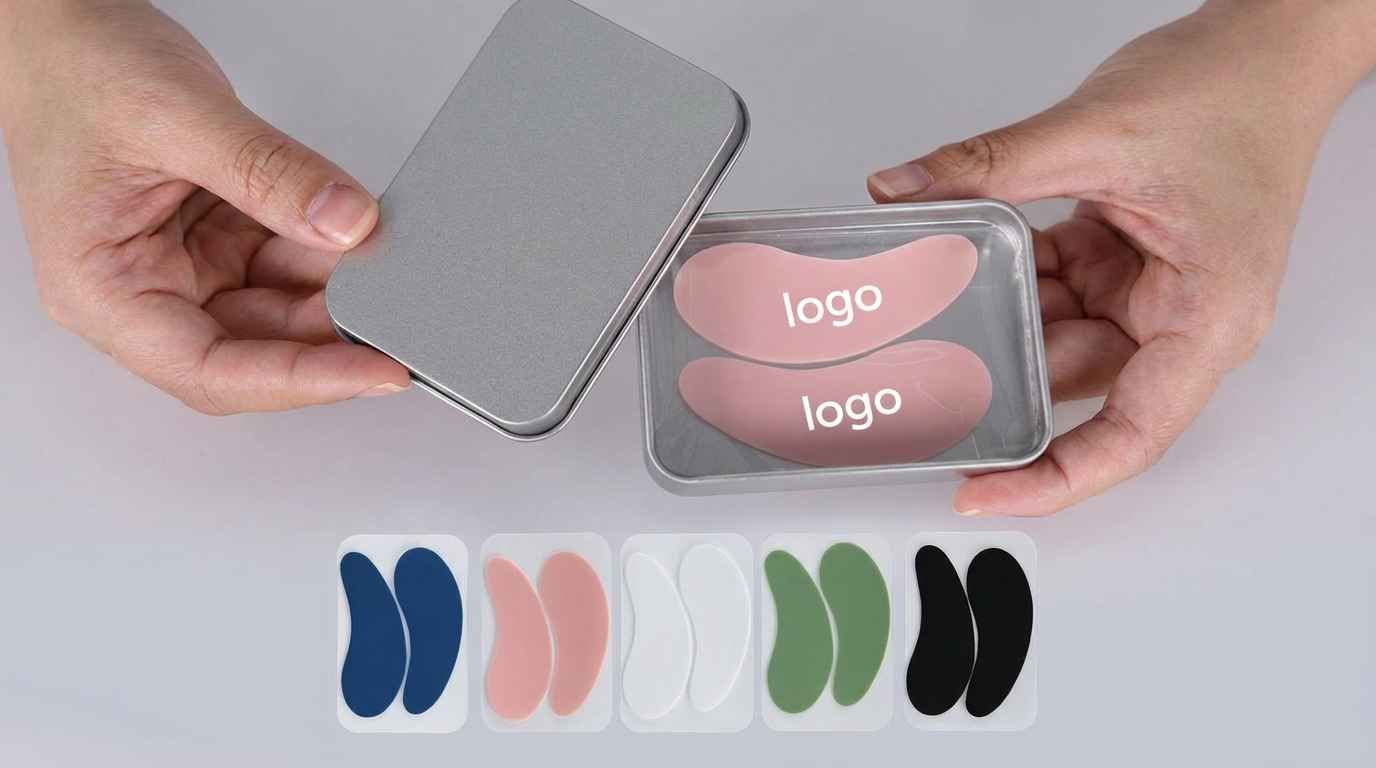
The term "medical-grade" is not a regulated classification for cosmetic products in most markets. There is no single global standard that grants a silicone the right to be called medical-grade. What the term typically refers to in practice is a combination of two things: the raw material specification and the manufacturing process.
Raw material specification. Medical-grade silicone polymers are formulated to meet biocompatibility standards — most commonly ISO 10993, which is the international standard for evaluating the biological safety of materials that come into contact with the human body. ISO 10993 testing covers cytotoxicity, sensitization, irritation, and systemic toxicity, among other endpoints. A silicone raw material that has passed the relevant ISO 10993 tests can legitimately be described as biocompatible. Manufacturers or raw material suppliers should be able to provide the test reports on request.
Curing process. Silicone can be cured — cross-linked to create its final elastic structure — using different methods. Peroxide-cured silicone leaves trace byproducts in the final material that can cause skin irritation in some users. Platinum-cured silicone uses a platinum catalyst that leaves no residue and is considered the cleaner option for skin contact applications. Most reputable silicone eye patch manufacturers use platinum-cured silicone, but it is worth confirming explicitly. At Veilta, our silicone eye patches use platinum-cured, ISO 10993-documented silicone raw material.
What cosmetic-grade means
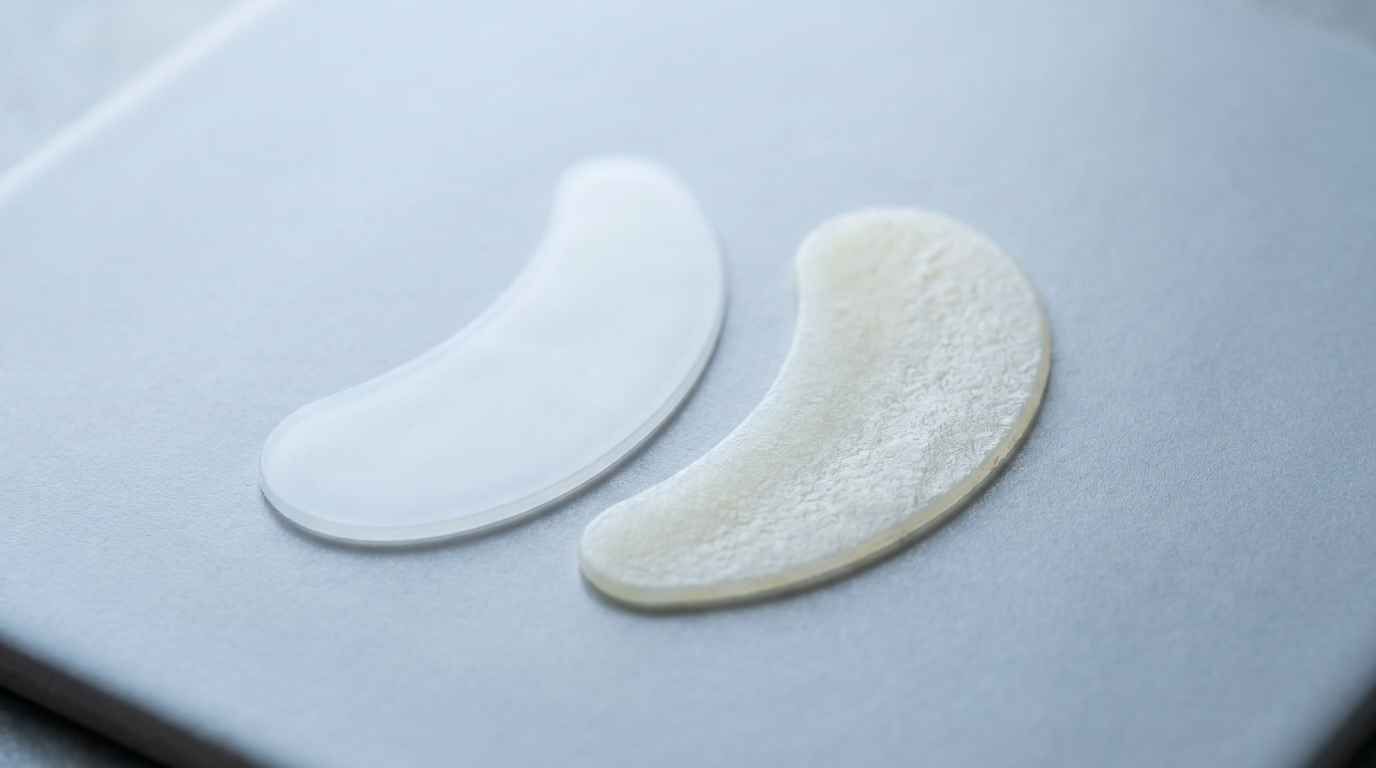
Cosmetic-grade silicone is a broader category. It refers to silicone materials that are considered safe for use in cosmetics and personal care products under standard regulatory frameworks — the EU Cosmetics Regulation, FDA guidelines for cosmetic ingredients, and equivalent national standards. Most cosmetic silicones are well-tolerated and have strong safety records.
The difference from medical-grade is not necessarily that cosmetic-grade silicone is unsafe. It is that cosmetic-grade silicone has not necessarily been tested to the same biocompatibility standards, may not have ISO 10993 documentation, and may be manufactured under less stringent process controls.
For a product like an eye patch — which sits on the delicate under-eye skin for 15 to 30 minutes, repeatedly, over many uses — the distinction starts to matter. The under-eye area is thinner and more sensitive than most facial skin, and it is close to the eyes themselves. The risk profile is low for a well-made silicone patch, but not negligible if the material quality is uncontrolled.
Why it matters for your brand
The practical consequences show up in three places: what you can say, how fast you can sell, and how much your safety assessment costs.
On claims, the logic is straightforward. If your packaging or marketing says "medical-grade silicone," you need documentation to back it up. In the EU, any claim must be substantiated under the Cosmetics Regulation. The UK's Advertising Standards Authority takes the same position. In the US, the FTC requires that advertising claims be truthful and substantiated. A certificate from a testing lab confirming ISO 10993 compliance for your specific material is the minimum you need to make that claim responsibly — not a general statement from your manufacturer, but a lab report tied to the actual silicone grade in your product.
The retail channel adds another layer. Pharmacy buyers and professional beauty distributors routinely ask for material safety documentation as part of vendor onboarding. A brand that walks in with ISO 10993 test reports and a GMP certificate gets through that process faster. One that cannot produce them gets put on hold while documentation is chased — sometimes long enough to miss a seasonal window.
EU compliance is where the material grade most directly affects your costs. The CPSR required for every cosmetic entering the EU market is completed by a qualified safety assessor who reviews everything, including the silicone. A platinum-cured silicone with ISO 10993 documentation is a straightforward review — the assessor has what they need. A silicone without that documentation may require additional testing commissioned by the assessor, which adds both cost and several weeks to the timeline. The difference in CPSR fees between a well-documented product and an undocumented one can easily reach €500 to €1,500 depending on the assessor and the gaps.
Premium retail is the third pressure point. Sephora, Ulta, and their EU and UK equivalents have vendor standards that go beyond regulatory minimums. Material safety documentation is commonly required. Brands entering those channels without it are not automatically rejected, but they are asked to produce it — and producing it retroactively, after a product is already in production, is slower and more expensive than building it in from the start.
Verifying your manufacturer
The right question is not "is your silicone medical-grade?" — a manufacturer will almost always say yes. The right questions are more specific.
Ask for the raw material specification sheet. This is the technical data sheet (TDS) from the silicone raw material supplier, not the finished product manufacturer. It should name the silicone polymer, the curing system (platinum or peroxide), and the intended applications.
Ask for ISO 10993 test reports. Specifically, ask which ISO 10993 endpoints have been tested and by which laboratory. The most relevant for an eye patch are ISO 10993-5 (cytotoxicity), ISO 10993-10 (sensitization and irritation), and ISO 10993-23 (irritation testing). A reputable manufacturer will have these for the specific silicone grade they use.
Ask whether the manufacturing environment is GMP-certified. ISO 10993-compliant raw material manufactured in an uncontrolled environment can still be contaminated during processing. GMP certification — ISO 22716 for cosmetics is the relevant standard — ensures the production environment meets defined cleanliness and process control requirements.
Ask for the MSDS (Material Safety Data Sheet) for the finished product. This documents the composition and any known hazards of the finished patch. For a plain silicone patch with no added ingredients, this is a simple document. If a manufacturer is reluctant to provide it, that is worth noting.
At Veilta, all three documents — raw material TDS, ISO 10993 reports, and ISO 22716 GMP certificate — are available to OEM clients on request before production commitment.
Why GMP matters too
A silicone patch made from ISO 10993-compliant raw material can still present quality issues if it is manufactured in a poorly controlled environment. Particulate contamination, inconsistent curing, surface defects — these are process problems, not material problems.
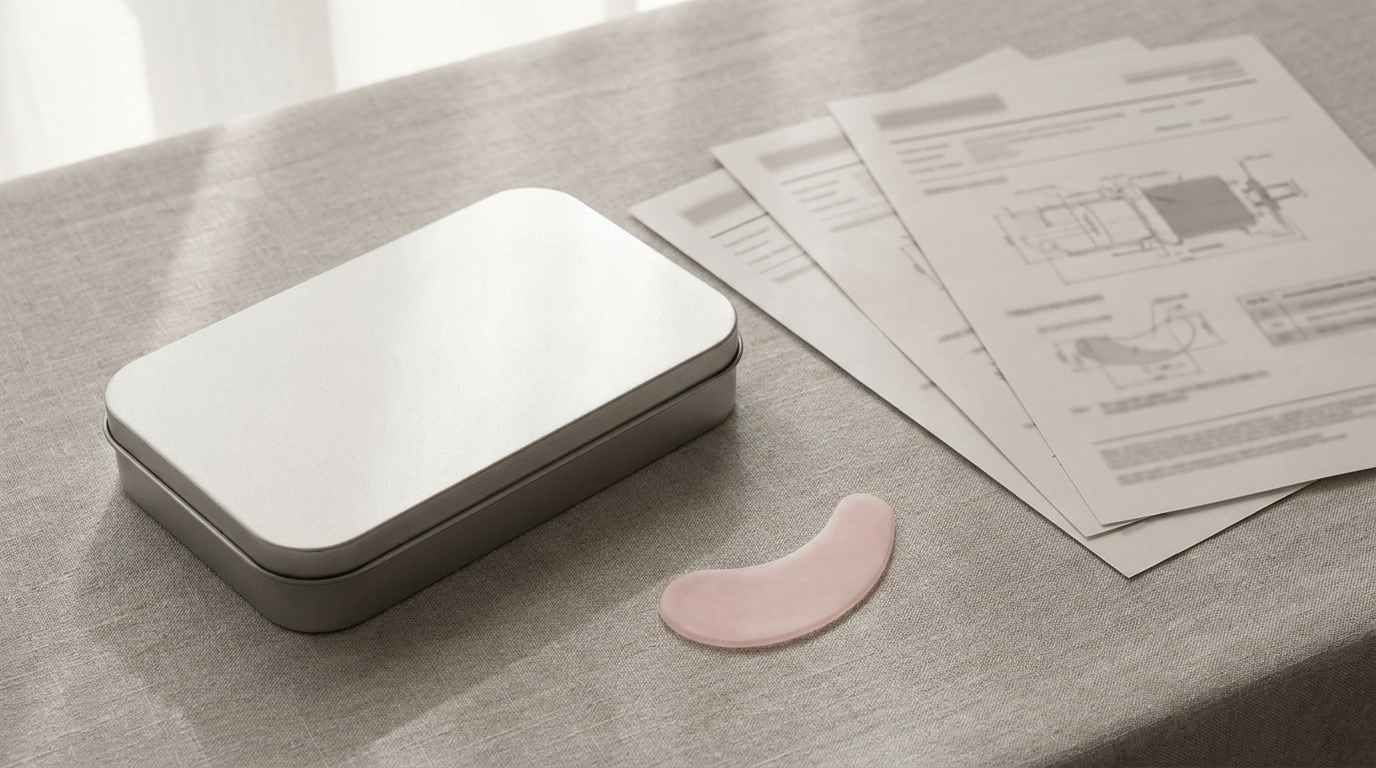
GMP-certified manufacturing addresses this. ISO 22716 defines the Good Manufacturing Practices for cosmetics, covering personnel hygiene, facility cleanliness, equipment qualification, batch documentation, and recall readiness. A factory with ISO 22716 certification has been audited against these requirements by a third-party body.
When evaluating a silicone eye patch manufacturer, both dimensions matter: the material (what the patch is made from) and the process (how it is made). A manufacturer with strong material documentation but no GMP certification, or GMP certification but vague material sourcing, is only half the story.
Your OEM brief
When briefing a silicone eye patch OEM manufacturer, build these requirements into the specification document from the start rather than asking about them after sampling:
Specify platinum-cured silicone explicitly. Do not leave material grade open to interpretation — different grades have different costs, and a manufacturer optimizing for price will use the cheapest compliant material unless you specify otherwise.
Request ISO 10993 documentation as a contractual deliverable, not just an optional request. Include it in your purchase order terms so it is part of what you are paying for.
Ask for GMP certification documentation before signing any agreement. An ISO 22716 certificate with a current validity date is the standard expectation for any professional OEM skincare manufacturer serving export markets.
If you plan to make any "medical-grade" claim on your packaging or marketing, have your regulatory advisor or CPSR assessor review the claim and the supporting documentation before going to print. Changing packaging after production is expensive.
FAQ
Is platinum-cured silicone always better than peroxide-cured for eye patches?
For sustained skin contact applications like reusable eye patches, platinum-cured silicone is the preferred option. Peroxide curing can leave trace volatile byproducts in the finished material that may cause irritation in sensitive users, particularly with repeated use. Platinum curing leaves no residue and produces a cleaner, odorless finished product. The cost difference between the two is modest at production volume — typically less than 5% of the unit cost — and not a meaningful reason to choose peroxide-cured silicone for a skin contact product.
Can I use "medical-grade" on my packaging if my manufacturer has ISO 10993 certification?
ISO 10993 documentation for the raw material is the substantiation you need to support a "medical-grade silicone" claim. However, the claim applies to the material, not the finished product — your packaging should reflect that accurately. A phrase like "made with medical-grade, platinum-cured silicone" is more defensible than simply "medical-grade" with no qualifier. Before finalizing any claim, have it reviewed by your CPSR safety assessor (for EU) or a regulatory advisor familiar with your target market.
Does my silicone eye patch need a CPSR even if it contains no formula?
Yes. In the EU, a reusable silicone eye patch is classified as a cosmetic product and requires a Cosmetic Product Safety Report (CPSR) completed by a qualified safety assessor, regardless of whether it contains active ingredients. The assessor will evaluate the silicone material, the manufacturing process, and the intended use. ISO 10993 documentation and GMP certification make this assessment faster and less expensive. Without them, the assessor may require additional testing, which adds both cost and time.
What is the difference between ISO 10993 and ISO 22716?
ISO 10993 is a biocompatibility standard for materials that contact the human body. It evaluates whether a specific material — in this case, the silicone polymer — is safe for skin contact based on toxicology and biological testing. ISO 22716 is a Good Manufacturing Practice standard for cosmetics. It governs how a product is manufactured — the facility, the process controls, the documentation, and the traceability — not what the product is made from. Both are relevant for silicone eye patches: ISO 10993 for the material, ISO 22716 for the factory.